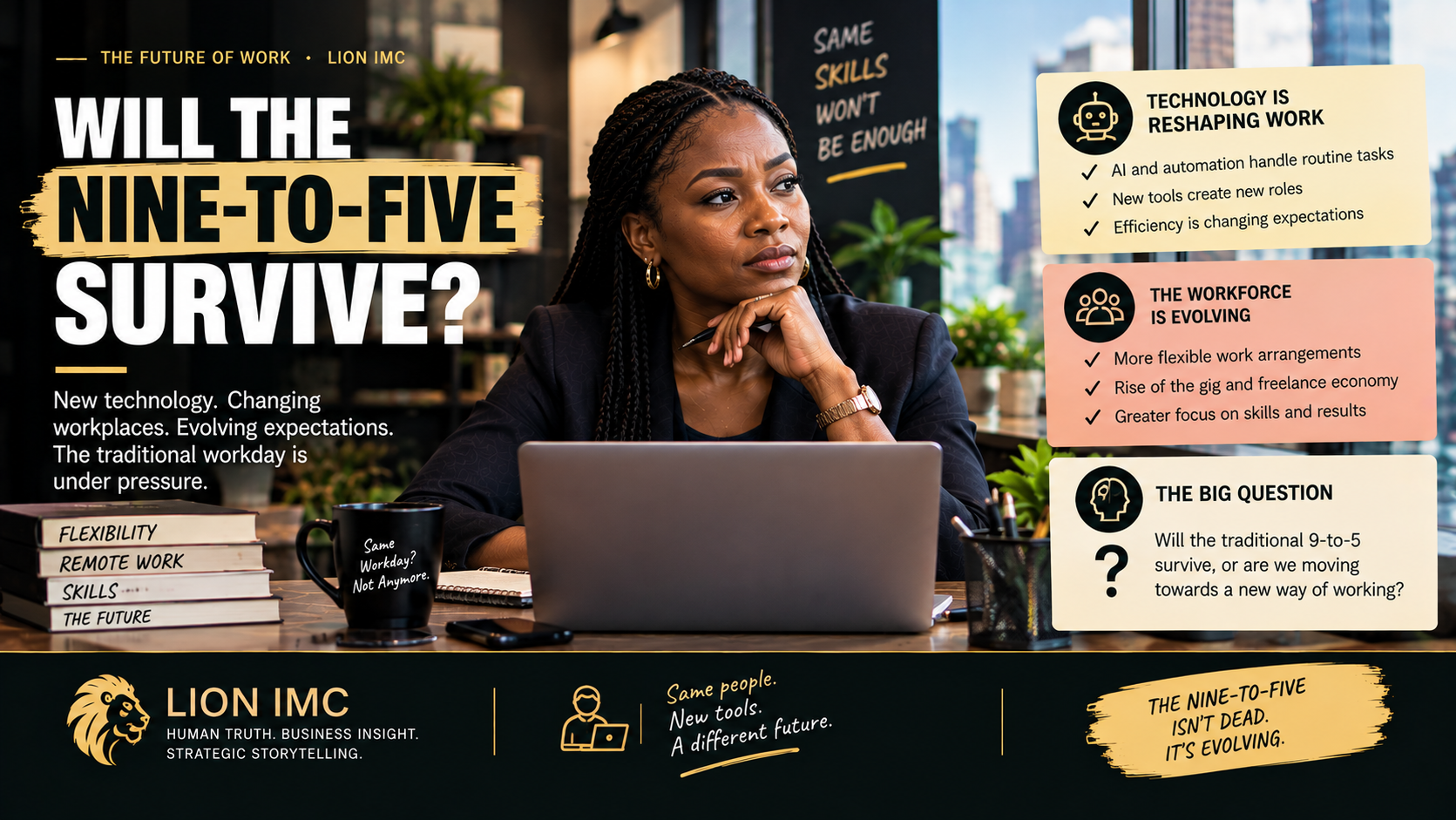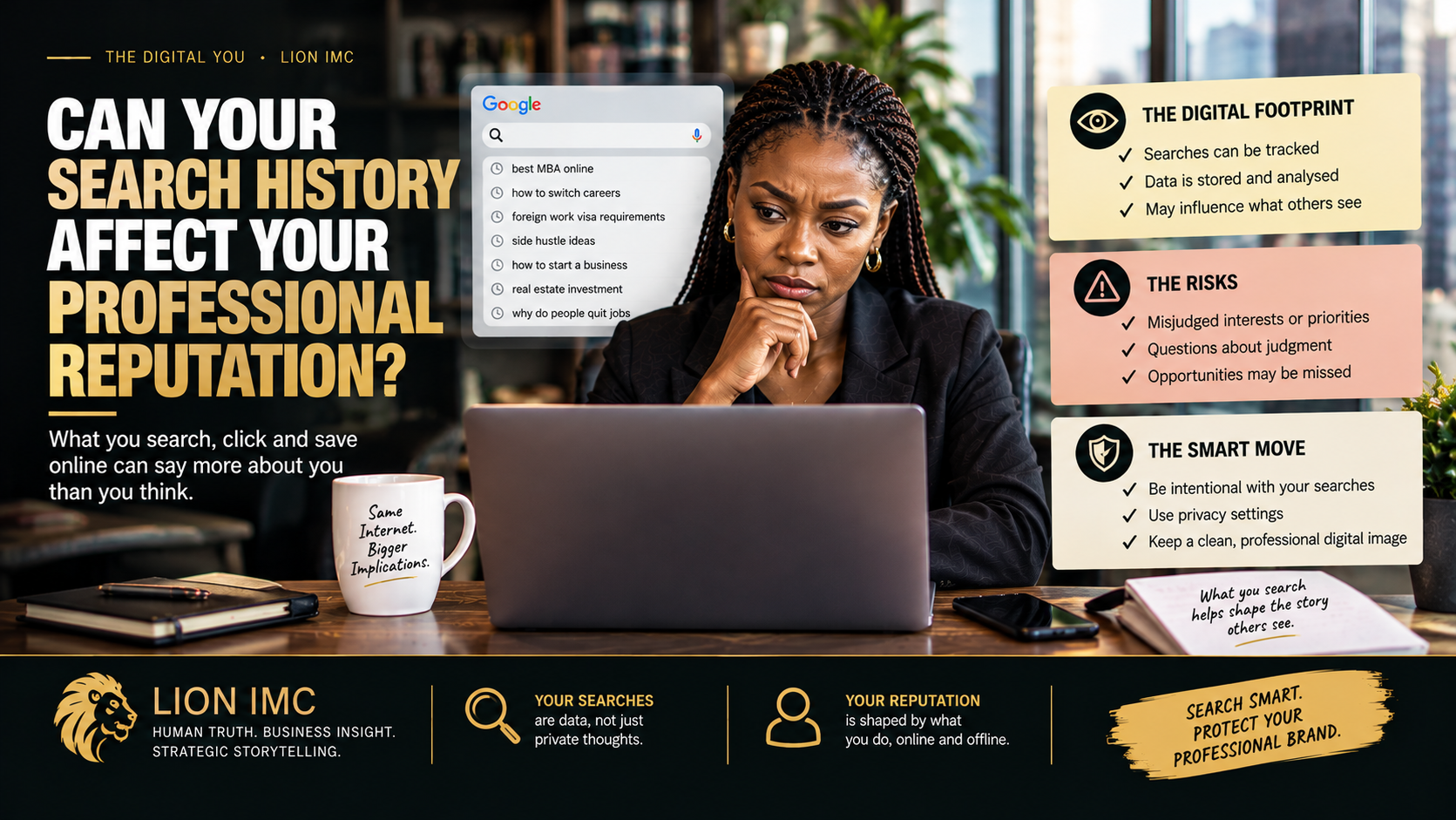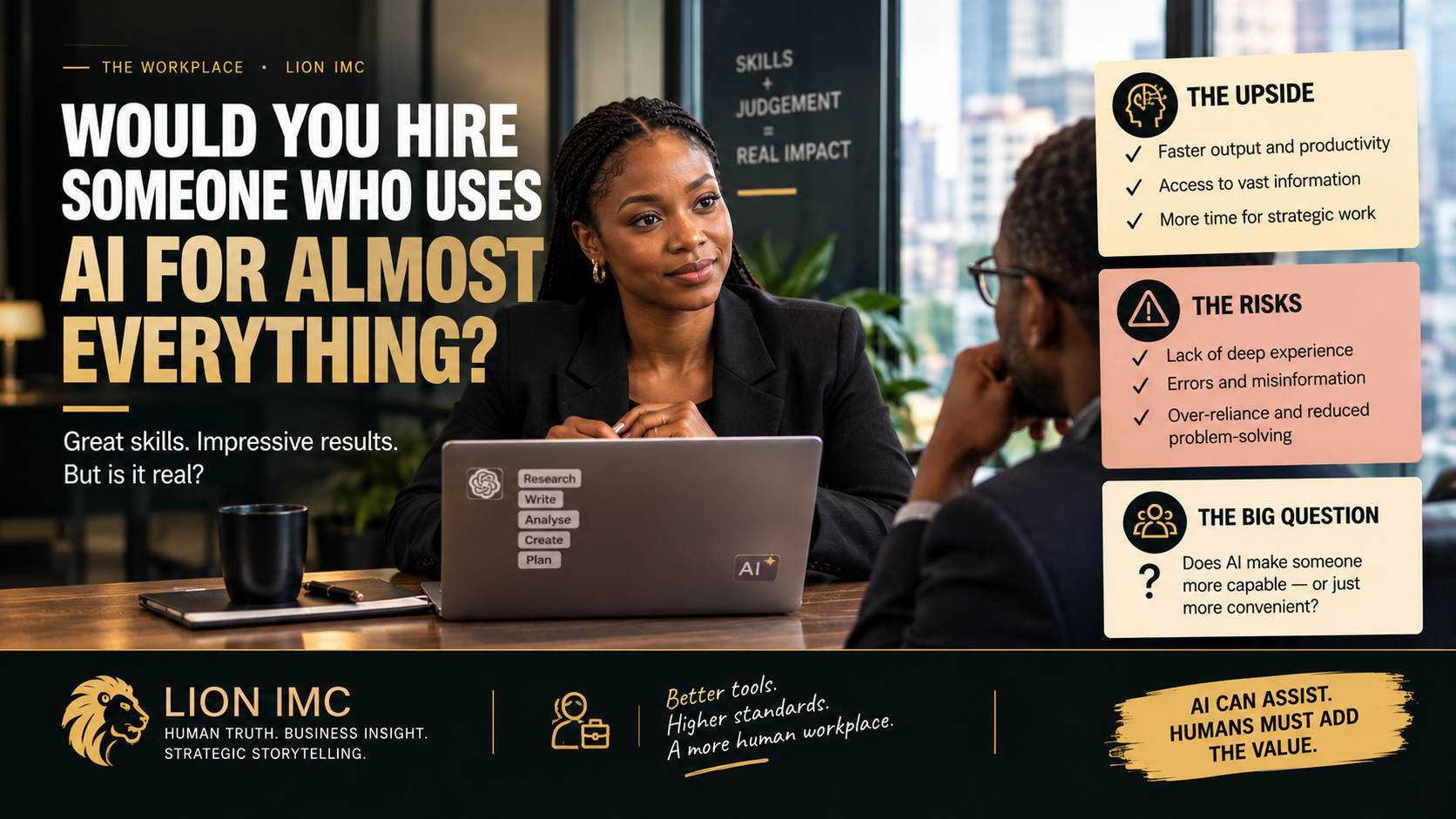





Lion, this is a very Lion story because “digital identity” sounds like a tech concept, but the real story is much more human:
What happens when your name becomes searchable evidence of your professional value?
And let’s try to avoid turning this into another “build your personal brand on LinkedIn” article. The sharper idea is asset thinking: An asset can appreciate, generate returns, lose value, require maintenance and become useful when opportunity arrives.
Your CV tells people what you say you have done. Your digital identity can show them.
There was a time when your professional reputation lived mostly in places you could see.
Your office.
Your business card.
Your CV.
The people who had worked with you.
The person who knew your boss.
The conference where you spoke.
The company you worked for.
Today, your professional identity can exist somewhere much bigger and much less under your control.
The internet.
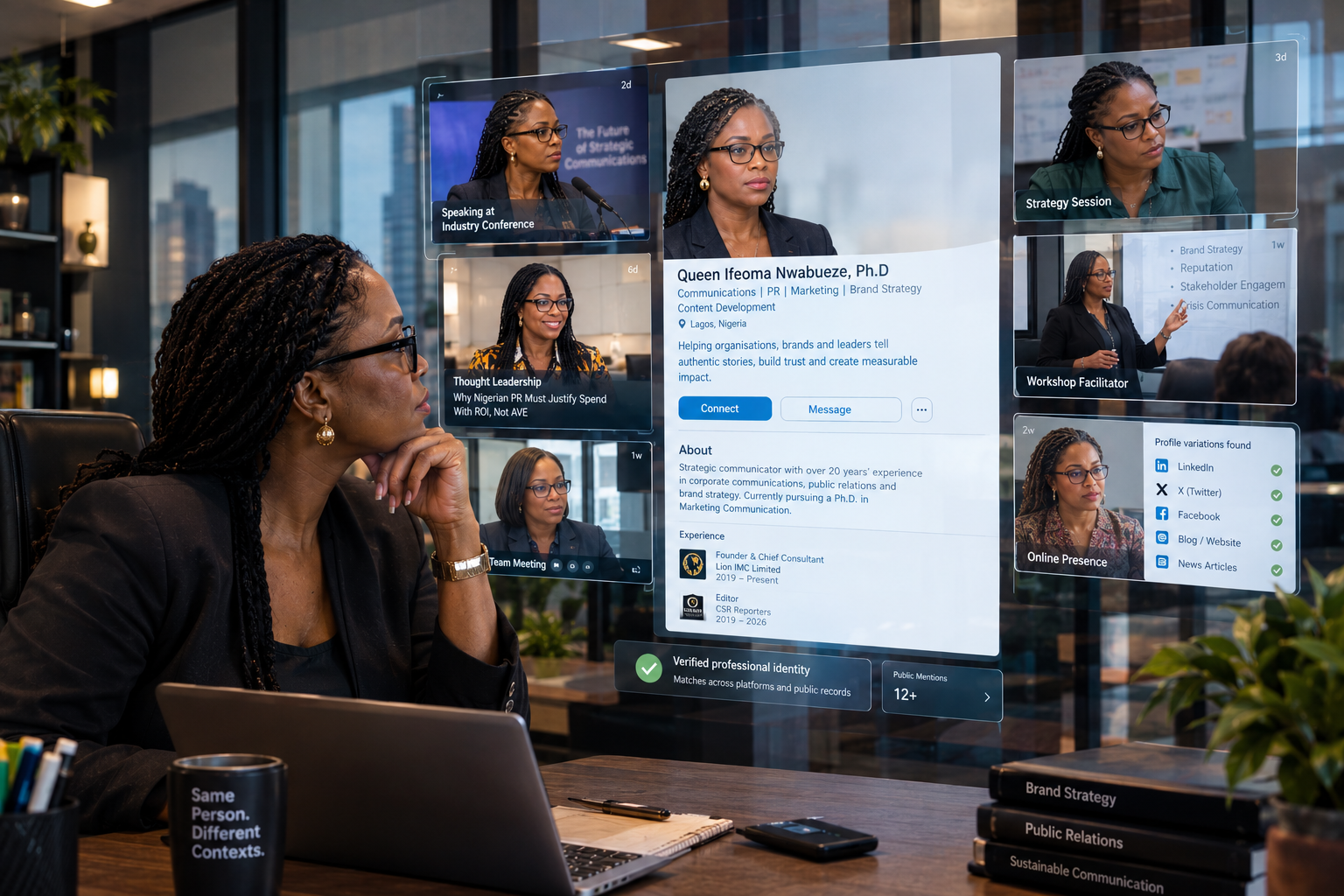
Someone can hear your name today and search for you before they ever meet you.
A recruiter can look you up.
A potential client can look you up.
A business partner can look you up.
A conference organiser can look you up.
A journalist can look you up.
A prospective employer can look you up.
And sometimes, they may form an impression before you have had the opportunity to introduce yourself.
That changes the economics of professional reputation.
Your digital identity is no longer simply a collection of social-media accounts.
It is becoming an asset.
And like every asset, it can appreciate.
It can depreciate.
It can generate opportunities.
It can create risk.
And it can sit completely unused.
Your name now has a digital footprint
Think about what happens when somebody searches your name.
What appears?
Perhaps your LinkedIn profile.
An old Facebook account.
A company website.
A conference programme.
An article you wrote five years ago.
A photograph from an event.
A professional certification.
A comment you made.
A portfolio.
A business profile.
A publication that mentioned you.
Or… nothing much at all.
That collection is part of your digital identity.
It is not necessarily the whole truth about you.
But it may be part of the truth other people can see.
LinkedIn itself describes its platform as a real-identity professional network where content can be visible to colleagues, employers, potential future employers and business partners.
That matters because professional opportunity increasingly involves discovery, not just application.
LinkedIn reported in 2025 that 58% of surveyed people globally expected to look for a new job that year, while 73% of HR professionals surveyed said less than half of applications they received met all the listed criteria. Its recruiting research also points to growing use of AI and skills-based approaches in hiring.
In other words, the professional marketplace is becoming more searchable.
And when people can search, being invisible becomes a professional condition.
Your CV is a document. Your digital identity is a living record.
This is the distinction many professionals miss.
A CV is usually produced when you need something.
A job.
A promotion.
A contract.
A fellowship.
A consulting opportunity.
A new client.
You update it.
You send it.
You wait.
Your digital identity works differently.
It can be encountered when you are not looking for anything.
Someone might discover you because you commented intelligently on a subject.
Because you published an article.
Because somebody mentioned your work.
Because you spoke at an event.
Because your company listed you as part of a project.
Because you have built a visible body of work.
Or because someone simply searched your name.
That is why thinking about your digital identity as an asset changes the question.
Instead of asking:
“What should I post?”
you start asking:
“What am I building that will still have value when I am not online?”
That is a much more interesting question.
An asset should do something for you
Money sitting somewhere can earn interest.
Property can generate rent.
Shares can appreciate.
A business can generate revenue.
Intellectual property can generate licensing income.
So what does a professional digital asset generate?
It can generate visibility.
It can generate credibility.
It can generate discoverability.
It can generate connections.
It can generate proof of expertise.
It can generate opportunities.
And sometimes, it can shorten the distance between your ability and the person looking for that ability.
This is particularly important as recruitment becomes increasingly digital.
LinkedIn’s 2025 recruiting research found that 93% of talent-acquisition professionals surveyed considered accurately assessing candidates’ skills crucial to improving quality of hire, while its platform data linked skills-based searching with better hiring outcomes.
The implication is not that a beautiful LinkedIn profile will get you a job.
It won’t.
A polished digital identity cannot compensate for incompetence.
But when two professionals have credible qualifications, the person whose competence is easier to verify may have an advantage in being understood.
That is the difference between branding and evidence.
Your digital identity needs evidence
There is a dangerous version of personal branding that tells professionals to keep announcing themselves.
“Thought leader.”
“Strategist.”
“Visionary.”
“Passionate leader.”
“Results-driven professional.”
“Change-maker.”
The internet is now full of people describing themselves in increasingly impressive language.
But a digital asset becomes more valuable when it contains proof.
If you say you are a marketing strategist, what can somebody find that demonstrates strategic thinking?
If you say you are a writer, what have you written?
If you say you are a project manager, what have you delivered?
If you say you understand finance, what ideas have you explained?
If you say you are an entrepreneur, what have you built?
If you say you are an expert, what evidence exists?
This is where your digital identity becomes more than self-promotion.
It becomes an evidence locker.
Your articles.
Your projects.
Your presentations.
Your case studies.
Your professional opinions.
Your portfolio.
Your certifications.
Your interviews.
Your speaking engagements.
Your contributions to professional conversations.
Your work.
The strongest digital identities do not repeatedly say, “Look at me.”
They quietly make it possible for someone to look at the work.
But there is another side to the asset
Assets can lose value.
So can digital identities.
An old post can resurface.
A careless argument can become searchable.
A contradictory professional history can create questions.
A profile that says one thing while your visible behaviour says another creates inconsistency.
A LinkedIn profile that has not been updated since 2019 can make a successful professional look inactive.
A website with broken links can make an established business look abandoned.
A professional who claims expertise but has no visible evidence creates a credibility gap.
And there is another problem:
digital clutter.
Some professionals have spent years accumulating online accounts without ever deciding what those accounts collectively say about them.
LinkedIn says one thing.
Instagram says another.
Their website says something else.
Their CV says something else again.
Their most recent public post belongs to a completely different professional era.
The result is not necessarily a bad digital identity.
It is an unclear one.
And unclear assets are difficult to value.
You don’t need to become an influencer
This is important.
Thinking about your digital identity as an asset does not mean you need 100,000 followers.
It does not mean dancing on TikTok.
It does not mean posting motivational quotes every morning.
It does not mean turning your private life into public content.
It does not even mean posting every day.
Some professionals will need a highly visible public profile.
Others may need something much quieter.
A lawyer may need credibility.
A software engineer may need a portfolio.
A consultant may need case studies.
A researcher may need publications.
A designer may need a body of work.
A CEO may need an executive presence.
A freelancer may need discoverability.
An academic may need a searchable record of scholarship.
A salesperson may need evidence of expertise and relationships.
A young professional may simply need to stop being digitally invisible.
The asset should fit the professional.
The Nigerian professional has an interesting problem
For many Nigerian professionals, the traditional career system has depended heavily on relationships.
Someone knows someone.
A former boss recommends you.
A friend sends your CV.
An alumnus calls.
A colleague mentions an opening.
Those relationships still matter.
But digital identity can extend the professional network beyond the people who already know you.
This becomes particularly interesting as digital work expands.
The World Bank describes digital skills as increasingly important for workers across sectors and links digital platforms to new forms of employment and online work. Its more recent work on digital jobs in Africa also highlights the importance of connecting skills development with changing labour-market demand.
The opportunity is obvious:
your next opportunity does not necessarily have to come from somebody who already knows you.
But there is a condition.
They have to be able to find you.
And once they find you, there needs to be something worth finding.
The quiet professionals may have the biggest problem
There are extraordinarily competent people whose digital presence says almost nothing about their competence.
They have spent fifteen years building companies.
They have led teams.
They have solved difficult problems.
They have managed millions of naira.
They have trained people.
They have negotiated major contracts.
They have created systems.
They have survived industries that nearly destroyed them.
But online?
Silence.
No portfolio.
No professional biography.
No visible work.
No thoughtful contributions.
No evidence.
Their professional capital exists almost entirely inside the memories of other people.
That is risky.
Because memories do not scale particularly well.
A former boss may retire.
A colleague may relocate.
A company may restructure.
A relationship may disappear.
A recommendation is powerful.
But documented evidence can travel further.
Your digital identity should appreciate
So what does appreciation look like?
Not necessarily more followers.
It could mean that six months from now, somebody searching your name understands what you do faster than they do today.
It could mean that your profile contains stronger evidence.
It could mean that your portfolio has three excellent projects instead of none.
It could mean that your professional opinions have become recognisable.
It could mean that your name appears alongside credible organisations, publications, conferences or projects.
It could mean that someone who has never met you can understand your professional value in ten minutes.
That is appreciation.
And like a financial asset, it is usually the result of consistent contributions over time.
But assets need maintenance
Nobody buys a house and never checks the roof.
Nobody owns a business and never looks at the books.
Yet professionals build online identities and abandon them.
Your digital identity needs periodic auditing.
Search your own name.
Look at the first page of results.
Check your LinkedIn profile.
Check old public social accounts.
Look at your biography.
Look at your photographs.
Look at your portfolio.
Check whether your current career is reflected in your online presence.
Ask somebody who does not know you well:
“If you found me online today, what would you think I do?”
The answer may be revealing.
Because there can be a huge difference between who you are professionally and what the internet can currently prove about you.
The most valuable digital identity may be the one that works while you sleep
Imagine two professionals.
Both are excellent.
Both have similar qualifications.
Both have fifteen years of experience.
One has a dormant LinkedIn profile, an old CV and almost no visible work.
The other has a clear professional profile, several examples of work, thoughtful contributions, relevant credentials and a consistent record of what they know.
Neither has to become an influencer.
Neither needs millions of followers.
But one has made their professional value easier to discover.
That matters.
Because opportunities do not always arrive through applications.
Sometimes they arrive through search.
A client searches.
A recruiter searches.
A conference organiser searches.
A journalist searches.
A potential business partner searches.
And increasingly, AI-powered systems and digital recruitment tools are helping organisations find and assess talent through digital information. LinkedIn’s 2025 recruiting research, for example, describes AI as increasingly embedded in recruiting workflows.
The professional question therefore changes.
It is no longer simply:
“Am I good enough?”
It becomes:
“Is there credible evidence of what I can do?”
Your name is an asset. Treat it accordingly.
Not every post needs to be brilliant.
Not every photograph needs to be professional.
Not every part of your life needs to be public.
You are allowed to have a private life.
You are allowed to be offline.
You are allowed to disagree.
You are allowed to change careers.
You are allowed to evolve.
But your professional identity should not be left entirely to chance.
Build it.
Document it.
Protect it.
Update it.
Correct it when it becomes outdated.
Add evidence.
Remove confusion.
And give it time to compound.
Because your digital identity is not merely the version of yourself you put on the internet.
It is the professional evidence trail you leave behind when you are not in the room.
And one day, someone you have never met may be deciding whether you are worth calling.
They may search your name first.
What will your digital asset say?
THE LION TAKE
Your CV asks people to believe you.
Your digital identity gives them something to investigate.
Build accordingly.
If someone who has never met you searched your name today, what would they learn about you professionally and… be honest, would it be enough?