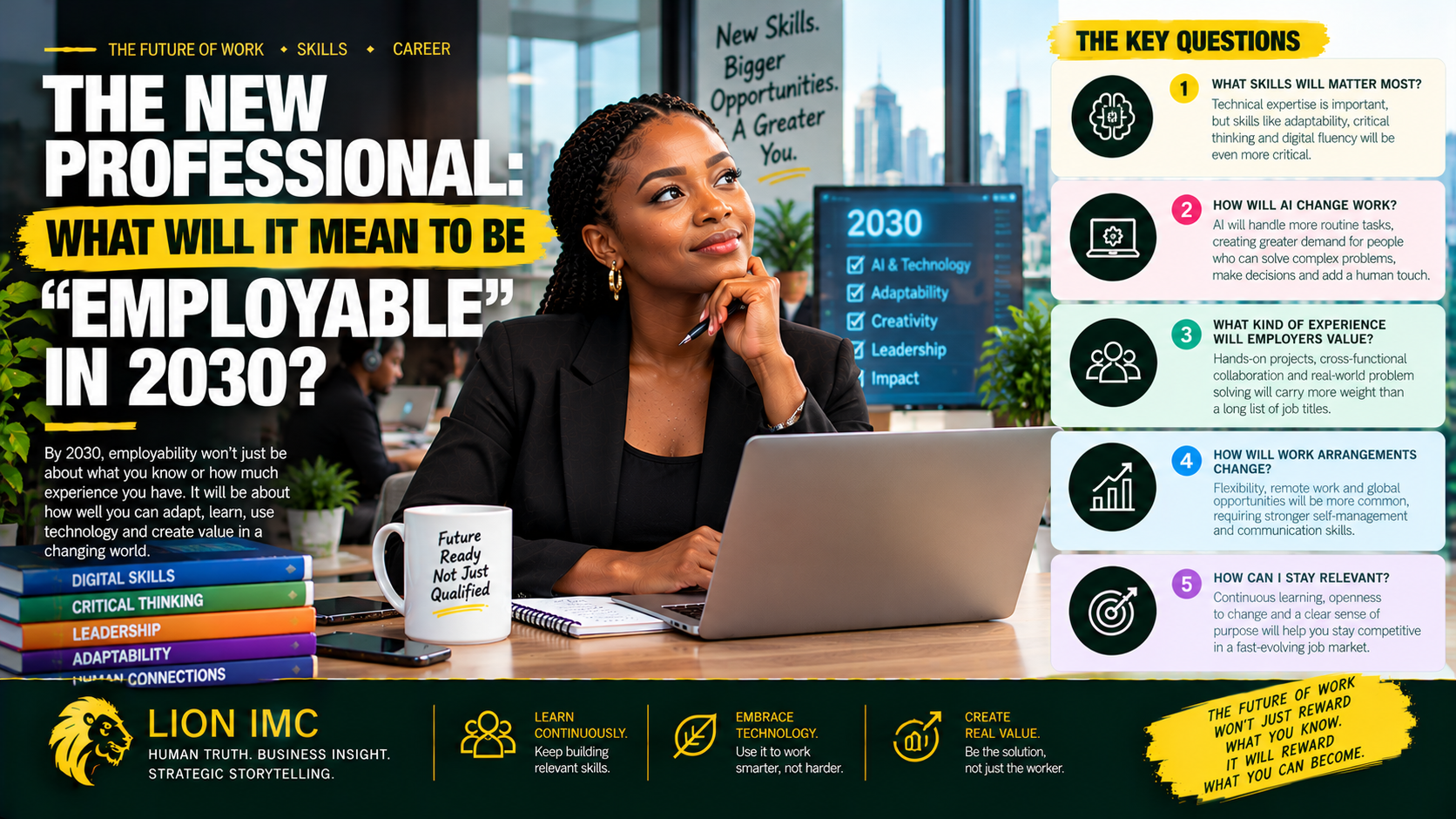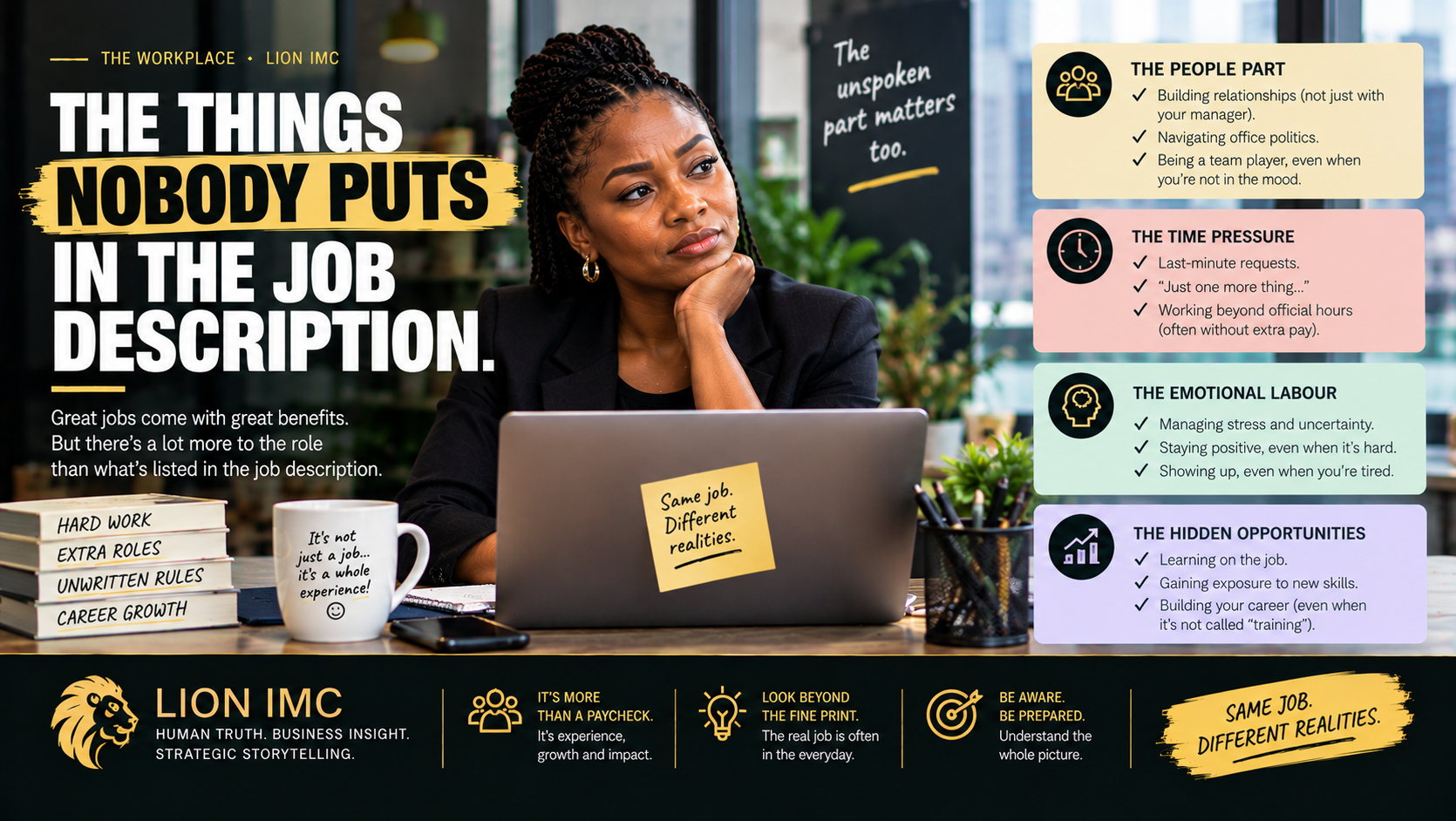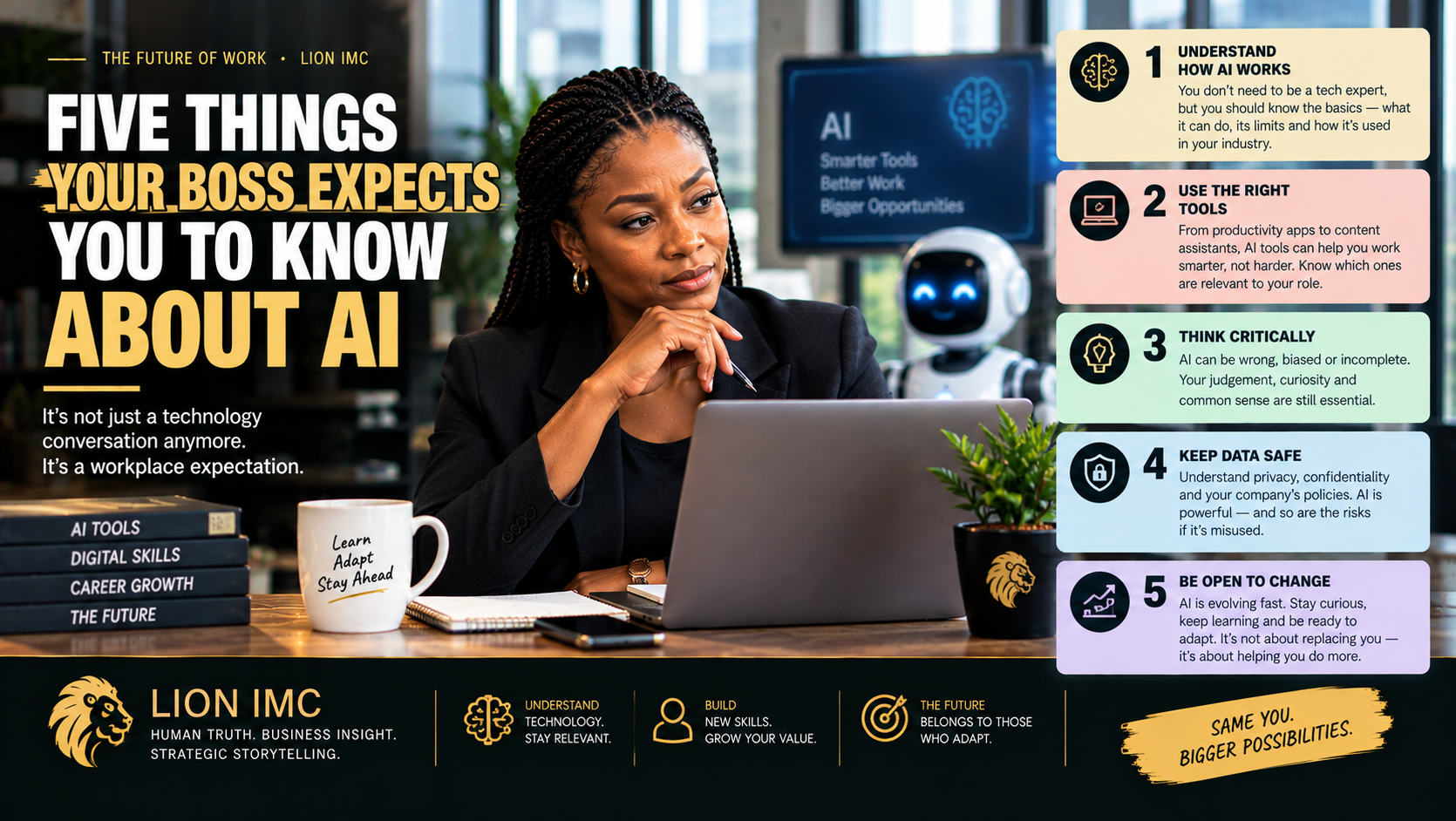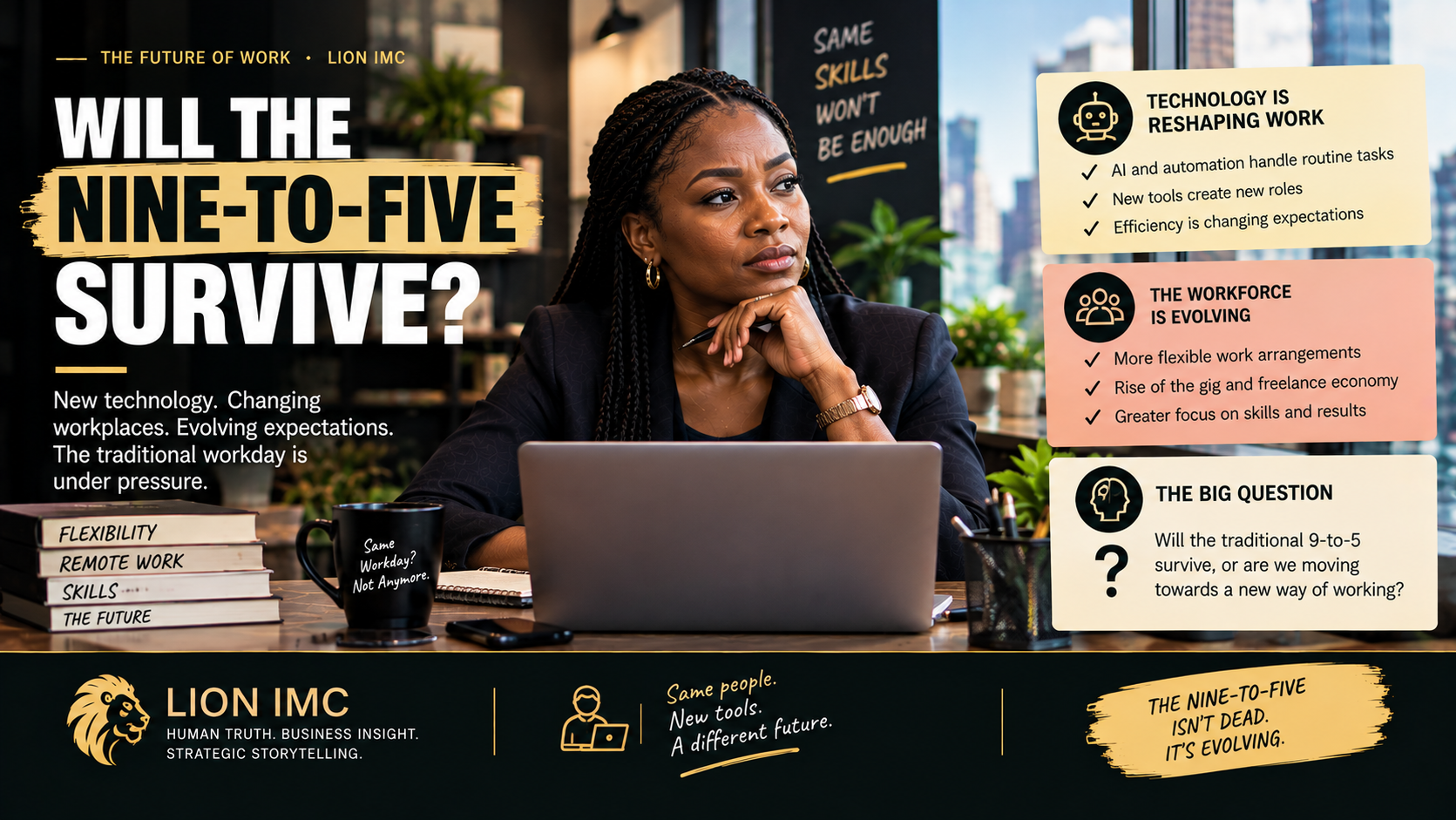








There was a time when working from home sounded like something you did when you were sick.
Or when the plumber was coming.
Or when you had a baby.
Or when Lagos traffic had finally defeated you.
Then the pandemic happened.
The laptop went home.
The meetings went online.
The office became a room in someone’s house.
And something strange happened.
The work continued.
Not perfectly.
Not for everybody.
But enough for millions of organisations to discover that the office was not the only place where work could happen.
Now, years later, something else is happening.
The office is calling people back.
Some companies want employees in three days a week.
Some want four.
Some want five.
Some have introduced stricter attendance expectations.
And some leaders are openly arguing that something important was lost when everyone stopped working together physically.
So what exactly are companies trying to get back?
Because if the answer is simply “We want to see you working,” that raises a rather uncomfortable question.
Why?
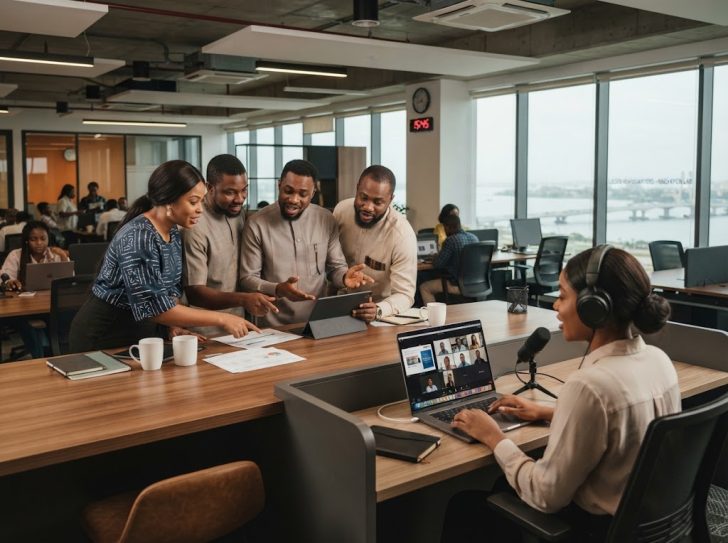
The office was never just a building
This is where the return-to-office debate becomes more interesting.
An office is a physical location.
But organisations use it for many other things.
It is where people meet colleagues they did not schedule a meeting with.
Where a junior employee can overhear how a senior manager handles a difficult client.
Where an idea can emerge during a conversation that was never on the calendar.
Where a new employee learns how things actually work.
Where relationships develop.
Where people build networks.
Where company culture becomes something you experience rather than something written in an employee handbook.
Microsoft’s research has repeatedly found this tension in hybrid work: employees value flexibility, but many also value the social connection and collaboration that come from being together.
So perhaps companies aren’t simply trying to bring people back to the office.
Some are trying to bring back what the office used to make possible.
That is a very different proposition.
Then there is the visibility problem
Let’s be honest.
Some managers find remote work psychologically difficult.
Not necessarily because their employees are less productive.
Because they cannot see them.
The old workplace provided visual reassurance.
You walked past someone’s desk.
They were there.
Laptop open.
Headphones on.
Looking serious.
You felt they were working.
Remote work removed that visual signal.
Microsoft’s research found a significant gap between employee-reported productivity and leaders’ confidence in productivity, describing this as “productivity paranoia.”
That creates a dangerous temptation:
If I cannot see work happening, perhaps I need people where I can see them.
But visibility is not the same as productivity.
The employee sitting at a desk for nine hours may be accomplishing less than the employee who works intensely for six.
The person attending every meeting may be producing less than the person quietly solving the problem.
The person who looks busy may not be the person creating the most value.
And we already know how easily professional busyness becomes theatre.
The office can create connection that Zoom struggles to reproduce
There are things technology has made remarkably easy.
You can join a meeting from anywhere.
You can send a document instantly.
You can collaborate on a presentation.
You can message somebody in seconds.
But there is another category of professional interaction that is harder to schedule.
Human proximity.
The five-minute conversation after a meeting.
The senior executive asking a junior employee:
“How are you settling in?”
The colleague who overhears a problem and says:
“I’ve dealt with this before.”
The spontaneous idea.
The informal mentoring.
The relationship that develops because two people happen to sit near each other.
Microsoft found that many employees said they would be more motivated to come into the office when their colleagues or direct teams were also going to be there.
That matters.
Because nobody particularly wants to commute for the privilege of spending eight hours on Microsoft Teams from an office.
If people are going to return, the office has to offer something they cannot get equally well at home.
But here is where companies can get it badly wrong
If the office is genuinely valuable, the organisation should be able to explain why.
Not:
“Because that’s company policy.”
Not:
“Because we used to do it this way.”
Not:
“Because I want to see everyone.”
And certainly not:
“If you can work from home, why can’t you come to the office?”
The better question is:
What work is better done together?
That could be mentoring.
Brainstorming.
Client meetings.
Training.
Team building.
Sensitive discussions.
Complex collaboration.
Creative work.
Relationship-building.
Certain kinds of leadership.
The answer will differ by organisation and role.
That is precisely why one blanket rule may be less useful than companies think.
Nigeria has a different office problem
For Nigerian professionals, the conversation cannot simply copy what happens in London or Silicon Valley.
Because commuting is work too.
If someone spends two hours getting to work and another two hours getting home, that time does not disappear because the company calls it “office attendance.”
It is part of the employee’s working reality.
There is also electricity.
Internet reliability.
Transport costs.
Childcare.
Housing.
Security.
Food.
And the sheer physical exhaustion associated with navigating some Nigerian cities.
A 9am meeting may begin at 9am.
But the employee may have started preparing for it several hours earlier.
So when a company says:
“Come back to the office,”
the employee may hear:
“Give us more of your time.”
That does not automatically mean the employer is wrong.
It means the cost of the policy has to be part of the conversation.
Interestingly, Nigerian research is beginning to examine the question directly
A study published in August 2026 examined hybrid, remote and on-site work arrangements across selected Nigerian organisations, surveying 386 employees. It looked specifically at flexibility, technological support, work structure and employee productivity.
That matters because much of the global conversation about hybrid work has historically been dominated by research from the US and Europe.
Nigeria needs its own evidence.
Because the Nigerian workplace is not simply an imported version of the American workplace.
Our infrastructure is different.
Our commuting patterns are different.
Our management cultures can be different.
Our power and connectivity realities are different.
Our family structures are different.
Our expectations around physical presence can be different.
So perhaps Nigerian companies should stop asking:
“What are companies abroad doing?”
and start asking:
“What actually works for our people and our business?”
There is another reason some leaders want people back: culture
Culture is one of those corporate words that can mean almost anything.
But there is a legitimate issue underneath it.
How does a new employee learn an organisation?
Not just its policies.
Its unwritten rules.
Who makes decisions.
How disagreements are handled.
What happens when a client is angry.
Who actually has influence.
What behaviour gets rewarded.
What the CEO really cares about.
Some of that knowledge is transmitted through proximity.
And this may be particularly important for young professionals.
If you start your career remotely, you can learn the technical aspects of a job without necessarily absorbing the informal knowledge that comes from watching experienced professionals operate.
That doesn’t mean remote workers cannot learn.
They can.
It means organisations have to become more intentional about teaching what the office once transmitted naturally.
The return to office may actually be a leadership problem
Here is the uncomfortable possibility.
Perhaps some organisations are not struggling with remote work.
Perhaps they are struggling with management.
If the only way a manager knows whether an employee is working is by seeing them at a desk, there is a management problem.
If objectives are unclear, physical presence will not fix them.
If employees are poorly supervised, attendance will not automatically create accountability.
If performance is measured by activity rather than outcomes, the office can simply produce more visible activity.
More meetings.
More emails.
More people walking around.
More “quick discussions.”
More time at desks.
And perhaps fewer excuses for not being productive.
But not necessarily more value.
Microsoft’s research has explicitly warned leaders against measuring productivity through activity and visibility rather than impact.
That distinction is becoming even more important as AI changes what knowledge workers actually spend their time doing. Microsoft’s 2025 Work Trend Index argues that organisations are entering a period where human work and AI-agent work will increasingly be combined.
If AI can handle more routine tasks, what exactly are we asking employees to commute for?
That is a question worth answering.
The office may need to earn its place
Perhaps the future isn’t:
Office vs remote.
Perhaps it is:
What should happen where?
Some work needs concentration.
Some work benefits from proximity.
Some work needs privacy.
Some work benefits from spontaneity.
Some employees perform better with flexibility.
Some teams need more physical interaction.
Some roles cannot be remote.
Some absolutely can.
The intelligent organisation may therefore stop asking:
“How many days should everyone be in the office?”
and start asking:
“What is the purpose of bringing these people together?”
That is a much harder question.
But it is also a much more useful one.
And employees have responsibilities too
This should not become another article where employers are the villains and employees are the heroes.
Remote work requires discipline.
Communication.
Availability.
Reliable technology.
Clear deliverables.
Professional boundaries.
The ability to collaborate without somebody physically standing beside you.
If an employee consistently misses deadlines, disappears during working hours and communicates poorly, “but I work remotely” is not a defence.
Flexibility requires trust.
And trust requires evidence.
The employer has to build a system that measures outcomes.
The employee has to deliver those outcomes.
Both sides have responsibilities.
So, is the office coming back?
In many organisations, yes.
But perhaps the office that returns will not be the same office that employees left.
The old office was built around presence.
The new office may have to be built around purpose.
You don’t commute simply because the company wants bodies in chairs.
You come because there is something worth doing together.
Something that requires collaboration.
Something that builds relationships.
Something that teaches.
Something that creates.
Something that cannot be replicated quite as effectively alone.
That is a much stronger reason to return.
THE LION TAKE
The question is not:
“Should people work from the office?”
Nor is it:
“Should everyone work from home?”
Those are too simple.
The better question is:
What kind of work deserves a physical room — and what kind doesn’t?
Because the office survived remote work.
But its next job may be very different.
The future workplace may not be the place where work happens.
It may be the place where the right kind of work happens together.
And if companies want people back, perhaps the office should give them a reason to come.
If your company asked you to return to the office tomorrow, what would make the commute feel genuinely worth it?