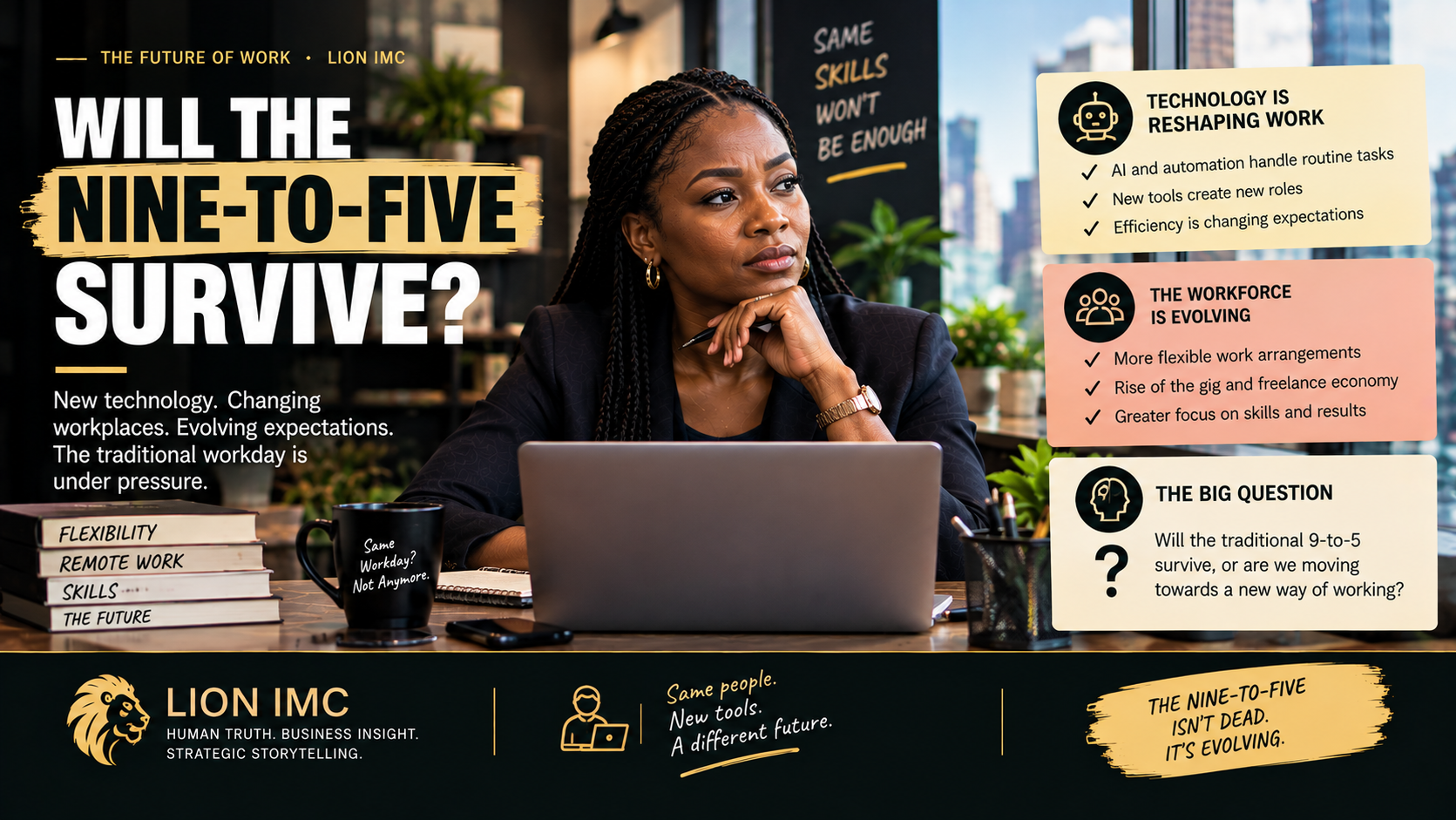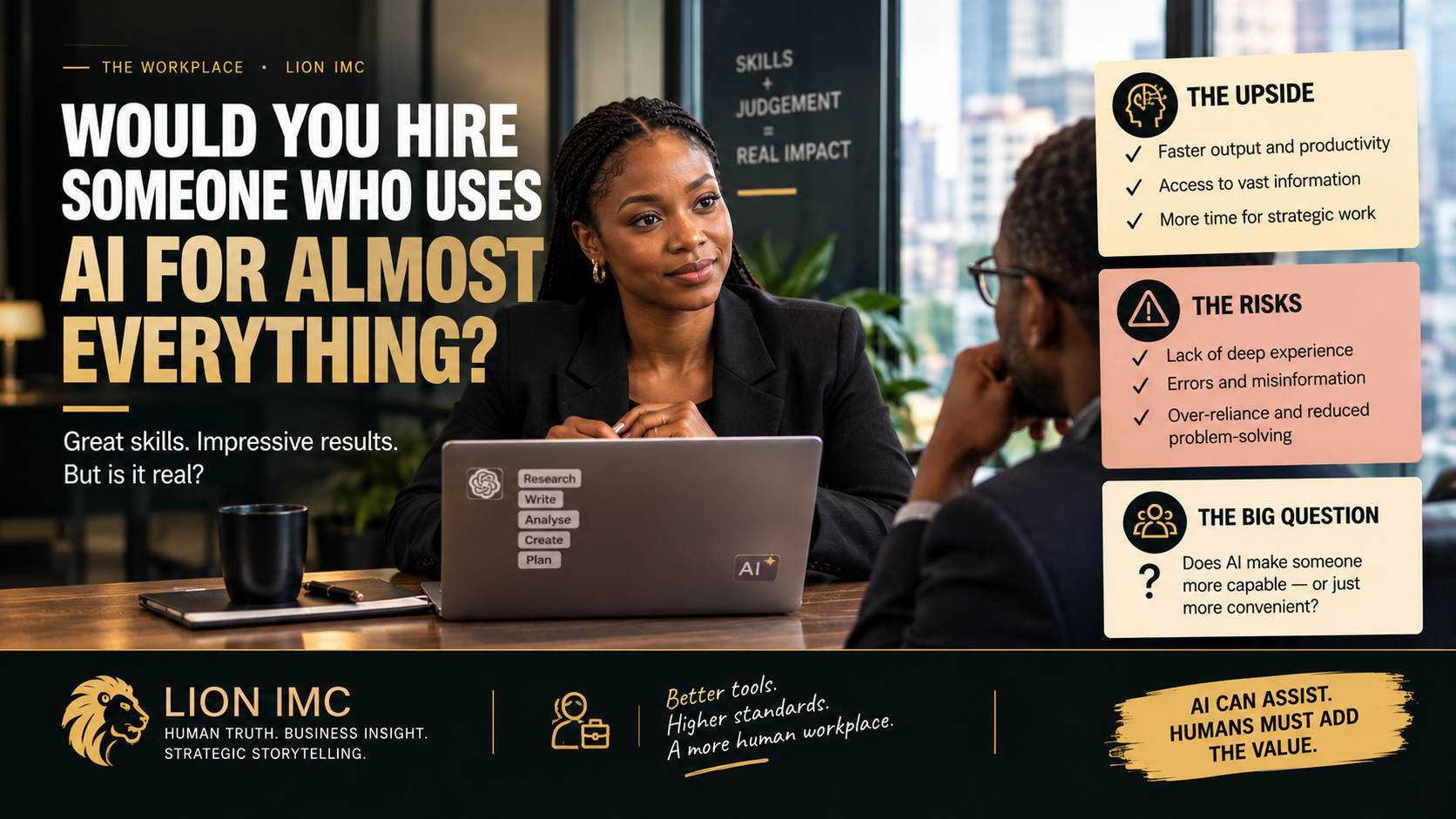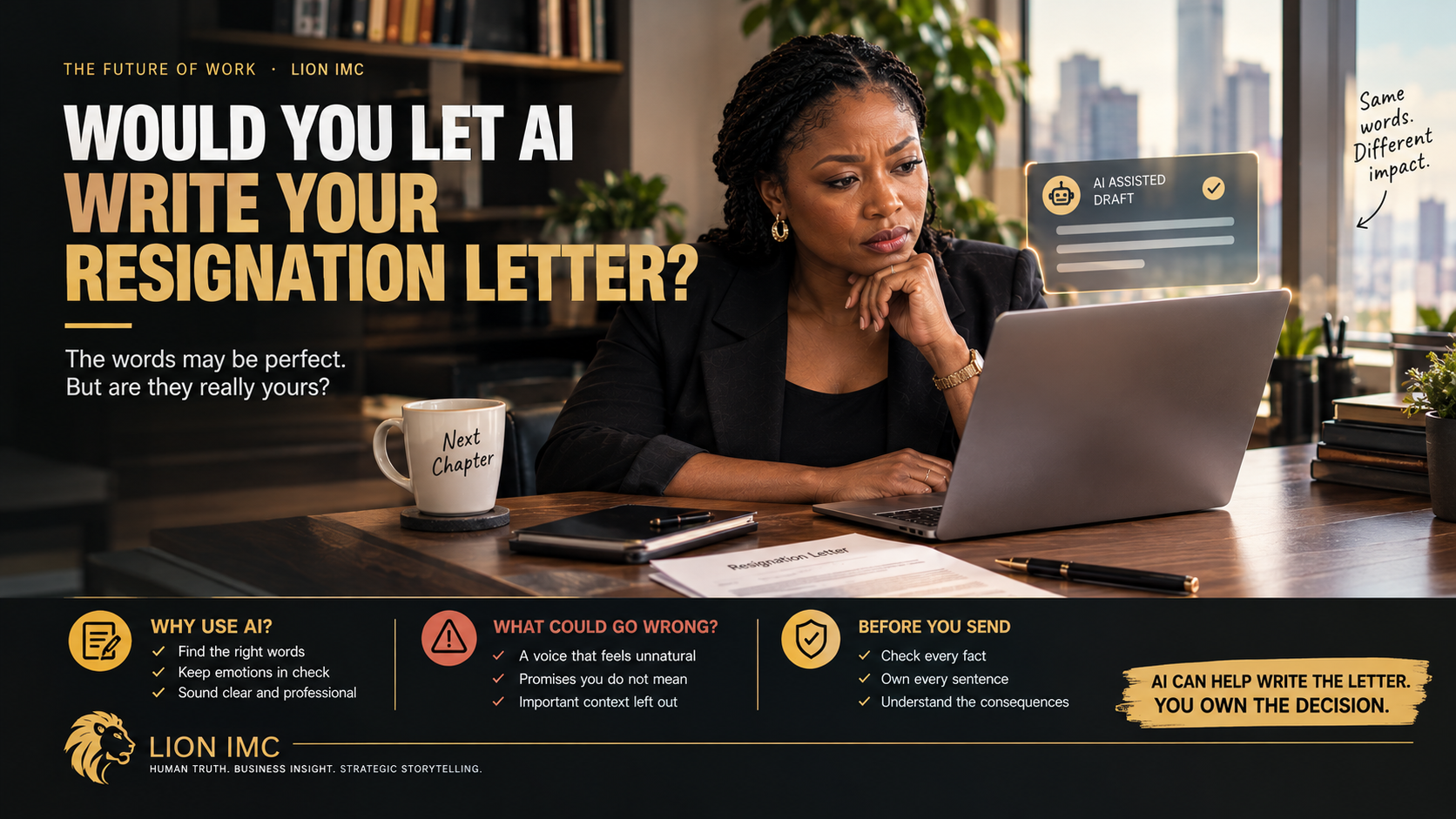







AI is changing the workplace conversation. It is no longer just about whether your organisation will adopt artificial intelligence but actually about whether you know how to use it to do your job better and whether you understand when not to use it.
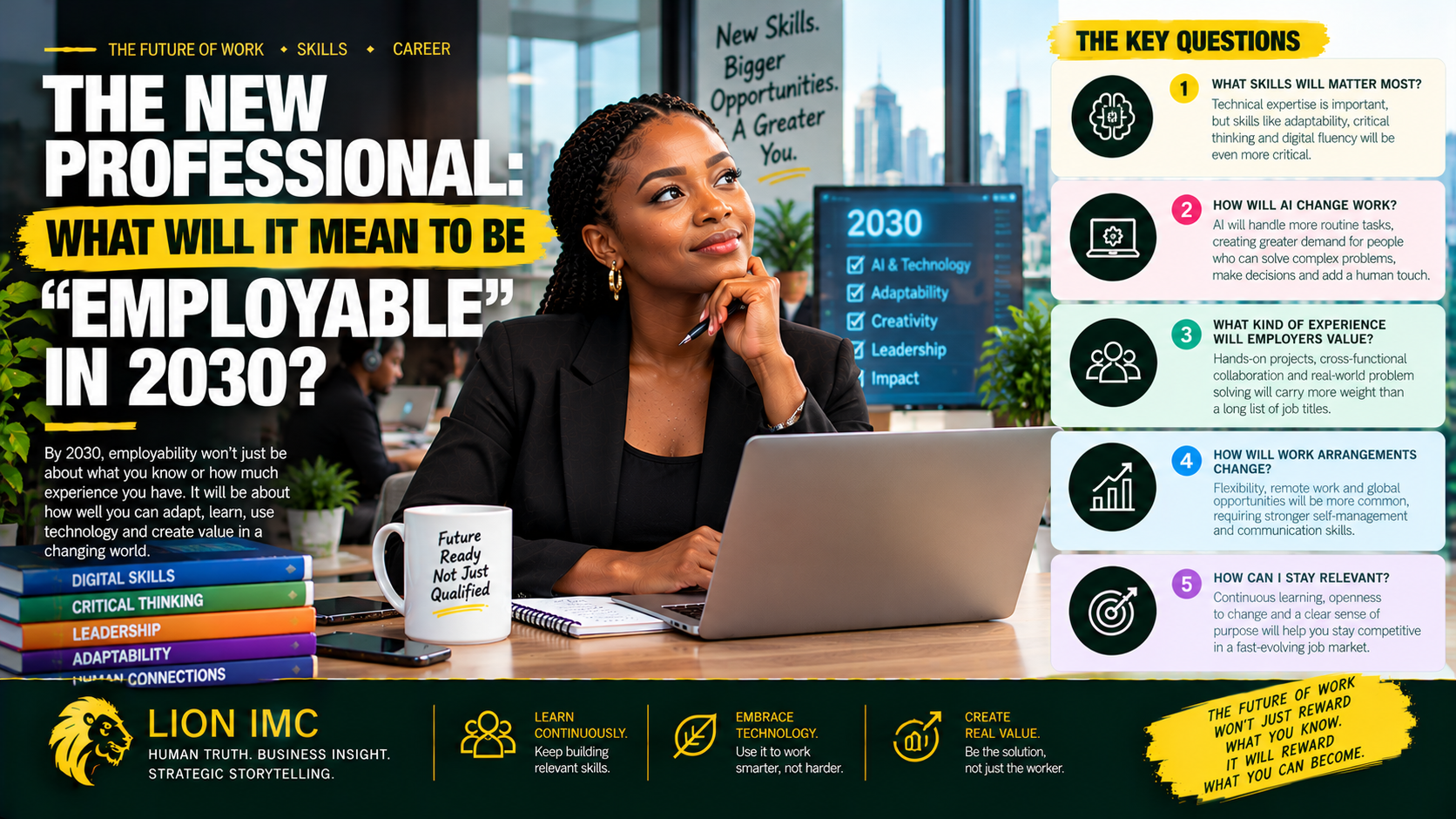
The World Economic Forum’s Future of Jobs Report 2025, based on a survey of more than 1,000 employers representing over 14 million workers, identified AI and big data, technological literacy, analytical thinking and adaptability among the skills shaping the future of work. The report is global, so it should not be mistaken for a survey of Nigerian employers specifically.
For professionals in Nigeria, from marketing and communications to finance, HR, sales, administration and customer service, the practical question is this: what does being AI-ready actually look like at work?
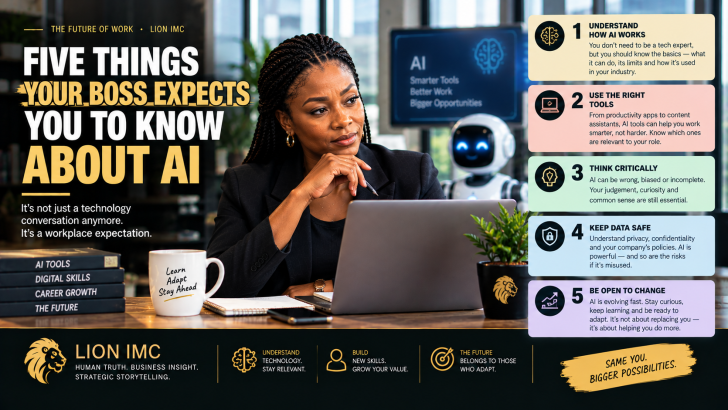
You do not need to become a software engineer. But there are five things your boss may reasonably expect you to understand.
1. Know what AI can and cannot do
You do not need to understand the mathematics behind artificial intelligence to use it effectively. You do need to understand its practical capabilities and limitations.
AI can help you draft emails, summarise long documents, analyse information, generate ideas, prepare presentations and organise tasks. Depending on the tool, it may also help with spreadsheets, research, coding and customer service.
But AI can also produce convincing answers that are inaccurate, outdated or incomplete.
Imagine your manager asks you to analyse why sales declined last quarter. You ask an AI tool for an explanation, and it confidently blames poor advertising. Unless you verify the sales data, campaign performance and market conditions, you could present a plausible explanation that is simply wrong.
What your boss wants to see: someone who understands that AI can accelerate work, but cannot automatically guarantee that the work is correct.
2. Know which AI tools are useful for your job
Being AI-ready does not mean collecting dozens of AI apps or jumping on every new platform.
It means identifying the tasks that consume too much time and determining which approved tools can help you perform them better.
Administration and HR
Draft routine communications, summarise policies, organise meeting notes and develop interview questions—while protecting employee information.
Marketing and communications
Develop campaign ideas, adapt content for different audiences, analyse customer feedback and create first drafts for human review.
Finance and operations
Assist with spreadsheet formulas, explain patterns in data and document processes, subject to appropriate checks and approved systems.
Sales and business development
Prepare proposal outlines, practise responses to objections, summarise permitted customer feedback and tailor pitches.
The key is to connect the tool to a business outcome: less time spent on routine work, better analysis, faster turnaround or improved service.
Microsoft’s 2025 Work Trend Index describes a shift towards human–AI collaboration and reports that organisations are exploring AI agents for business processes. The pace and relevance of that shift will vary by organisation and role.
3. Know how to question AI’s answers
This is where an average AI user can distinguish themselves from a valuable professional.
AI can generate an impressive report. But can you identify unsupported assumptions? Can you tell when a statistic needs a source? Can you spot a recommendation that sounds intelligent but does not fit your organisation?
Consider these two employees:
- Employee A asks AI to prepare a market analysis and forwards the result to the manager.
- Employee B asks AI for a first analysis, checks the source data, questions its assumptions, identifies gaps and presents a recommendation supported by evidence.
Both use AI. Only one demonstrates that the technology has strengthened their professional judgement.
The World Economic Forum’s 2025 report continues to rank analytical thinking among the most important core skills employers seek, alongside technological literacy and other human capabilities.
Your practical checklist should be simple:
- Verify important facts, figures and citations.
- Question assumptions and missing context.
- Compare recommendations against real business conditions.
- Use your own expertise to judge whether the answer makes sense.
- Take responsibility for the final work.
Your value is not measured by how much AI produces. It is measured by what you can reliably achieve with it.
4. Know what must never be fed into an AI tool carelessly
This is not the most glamorous AI skill, but it may be one of the most important.
Imagine uploading a confidential business proposal to a free AI tool to improve its wording. The document contains pricing, client information and an unpublished commercial strategy.
You may have improved the document’s grammar while creating a data-protection or confidentiality risk.
Before using any AI platform, understand your employer’s rules about approved tools, data retention, access permissions and confidential information. Do not assume that a tool is safe for sensitive material simply because it is popular or easy to access.
Be especially careful with:
- Customer records and personal information.
- Employee details, salaries and HR documents.
- Passwords, access credentials and security information.
- Confidential contracts, financial reports and commercial proposals.
- Unpublished business strategies or legally sensitive material.
The OECD’s 2025 work on generative AI and the SME workforce identifies data protection, copyright and legal issues among the risks organisations need to manage.
The right question is not merely, “Can AI process this document?” It is, “Am I authorised to put this information into this particular tool?”
5. Know how to keep learning and show that it matters
AI tools evolve quickly. A workflow that works today may change next month, while a new feature may make a previously tedious task much easier.
Your boss does not necessarily expect you to know every new tool. A more realistic expectation is that you remain curious, learn relevant capabilities and demonstrate how they improve your work.
Start with one recurring task. Learn how to use AI for it, test the results, measure the difference and document what works.
For example, if preparing a weekly report takes four hours, experiment with an approved AI-assisted workflow. Check whether it reduces the time without compromising accuracy. If it does, explain the improvement. If it does not, adjust the process or stop using the tool for that task.
That is more valuable than claiming to be an AI expert because you have tried twenty applications.
The World Economic Forum projects substantial changes in the skills employers need through 2030 and identifies upskilling as a major response to technological change. These are employer expectations at a global level, not a guarantee that every Nigerian employer will adopt the same approach.
The real expectation behind all five
Your boss may say, “We need people who understand AI.”
But the deeper business question is whether you can use new technology to produce better work, make sound decisions, protect the organisation and continue developing your skills.
You do not need to pretend you know everything. In fact, pretending to have AI expertise you do not possess can be more damaging than admitting you are learning.
Start small. Choose one task. Learn one useful workflow. Verify the output. Protect sensitive information. Show the result.
Then repeat.
The Lion Take
AI literacy is no longer just about knowing which buttons to press. It is about knowing what to delegate, what to question, what to protect and what you must still be able to do yourself.
The professionals who get the most from AI will not necessarily be those who use it for everything. They will be those who know how to combine its capabilities with their own judgement, expertise and accountability.
The Big Question
If your boss asked you tomorrow to demonstrate one meaningful way AI has improved your work, would you have a convincing example or would you still be talking about the tools you intend to learn?