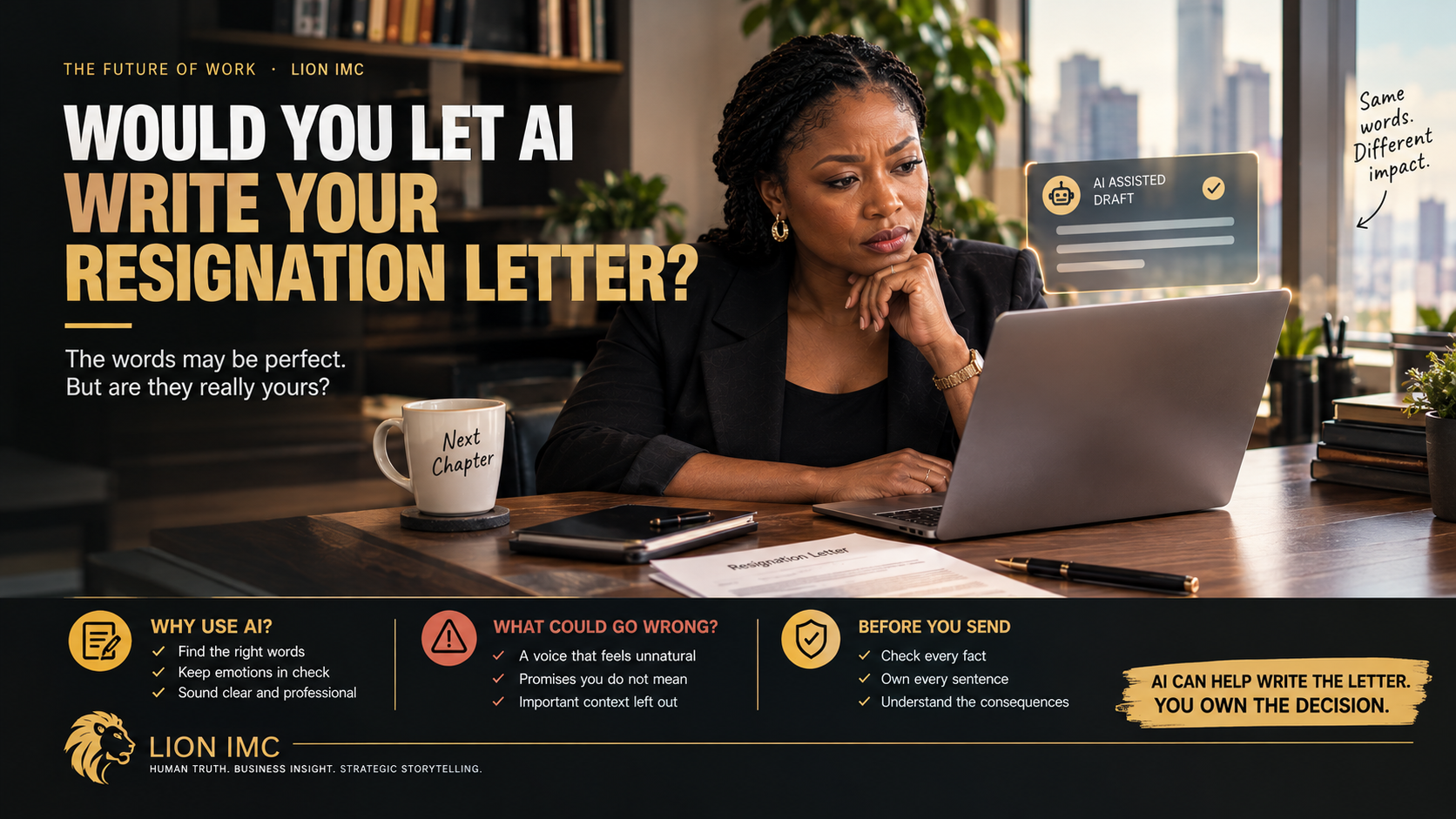





Absolutely. This is the natural sequel to the digital-identity-as-an-asset story. If the previous story says build the asset, this one asks: what happens when AI makes that asset harder to authenticate?
Here we’ve grounded the AI/deepfake claims in current 2026 developments, including the EU’s transparency rules that began applying on 2 August 2026.
When almost anyone can manufacture convincing evidence of expertise, how will we know what is real?
Imagine receiving a LinkedIn message from a senior executive you have admired for years.
The photograph looks right.
The writing sounds right.
The career history checks out.
The profile has hundreds of connections.
You arrange a video call.
The face looks right.
The voice sounds right.
The conversation feels right.
And yet, the person on the other side is not who you think they are.
That may sound like a problem for cybersecurity teams.
It is.
But it may eventually become a problem for professional reputation itself.
Because artificial intelligence is changing something we have quietly relied on for years:
the assumption that the evidence attached to a person’s identity is probably genuine.
And when that assumption becomes weaker, professionals may have to work harder to prove something that once seemed obvious:
“Yes. This is really me. And yes. This is really my work.”
The reputation problem is not simply fake people
When people hear “AI and professional reputation,” they may immediately think about deepfakes.
Someone steals your photograph.
Someone clones your voice.
Someone creates a fake video.
Someone impersonates you online.
Those are serious problems.
The European Commission’s AI Act transparency rules, which began applying on 2 August 2026, explicitly address some of these risks. The rules require certain AI systems to inform people when they are interacting with AI, while certain AI-generated or manipulated content — including deepfakes — must be disclosed or labelled. The Commission says the objective includes reducing deception and manipulation and helping people calibrate their trust.
But there is another, quieter problem.
What happens when the person is real, but the evidence around them becomes increasingly synthetic?
That is where things get interesting.
What if your professional reputation can be manufactured?
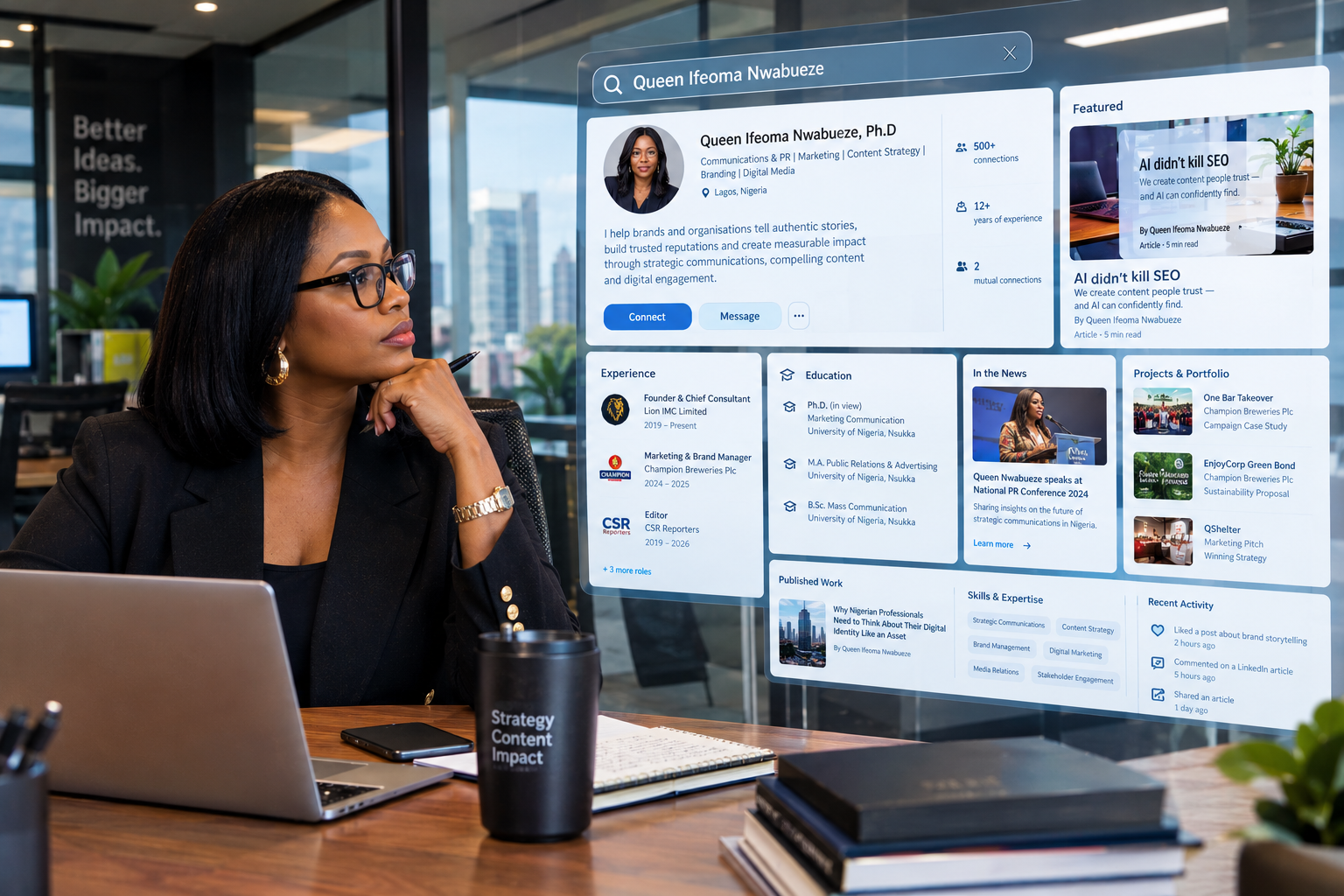
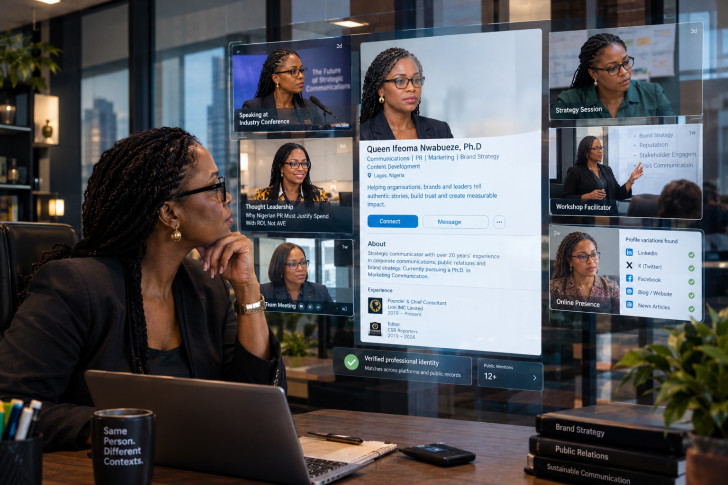
Consider the modern professional profile.
A photograph.
A biography.
A CV.
A portfolio.
Articles.
Testimonials.
Speaking appearances.
Social-media posts.
Videos.
Podcasts.
Recommendations.
Emails.
Messages.
All of these can contribute to the impression that someone is competent, experienced and credible.
Now imagine that AI can help produce increasingly convincing versions of many of them.
A polished biography can be generated in seconds.
A professional headshot can be synthetically created.
An article can be produced without the person doing the underlying thinking.
A video can be manipulated.
A voice can be cloned.
A portfolio can contain work that the supposed professional did not actually create.
A recommendation can be fabricated.
A professional can appear to have a much larger intellectual output than they actually produced.
Suddenly, visibility is no longer the same thing as evidence.
And that could create a very strange professional economy.
The people who once struggled because nobody could find them may now compete with people whose digital identities are extraordinarily visible — but partly manufactured.
We are entering the age of synthetic proof
For years, professionals were told:
Show your work.
That was good advice.
But AI introduces a new question:
How do we know the work is yours?
That distinction matters.
Suppose two consultants have equally impressive websites.
Both have case studies.
Both publish thoughtful articles.
Both have polished presentations.
Both appear articulate on video.
Both have excellent LinkedIn profiles.
One has actually spent fifteen years doing the work.
The other has become extraordinarily good at producing the appearance of expertise with AI.
From a distance, the two may look remarkably similar.
This does not mean AI-generated work is automatically dishonest.
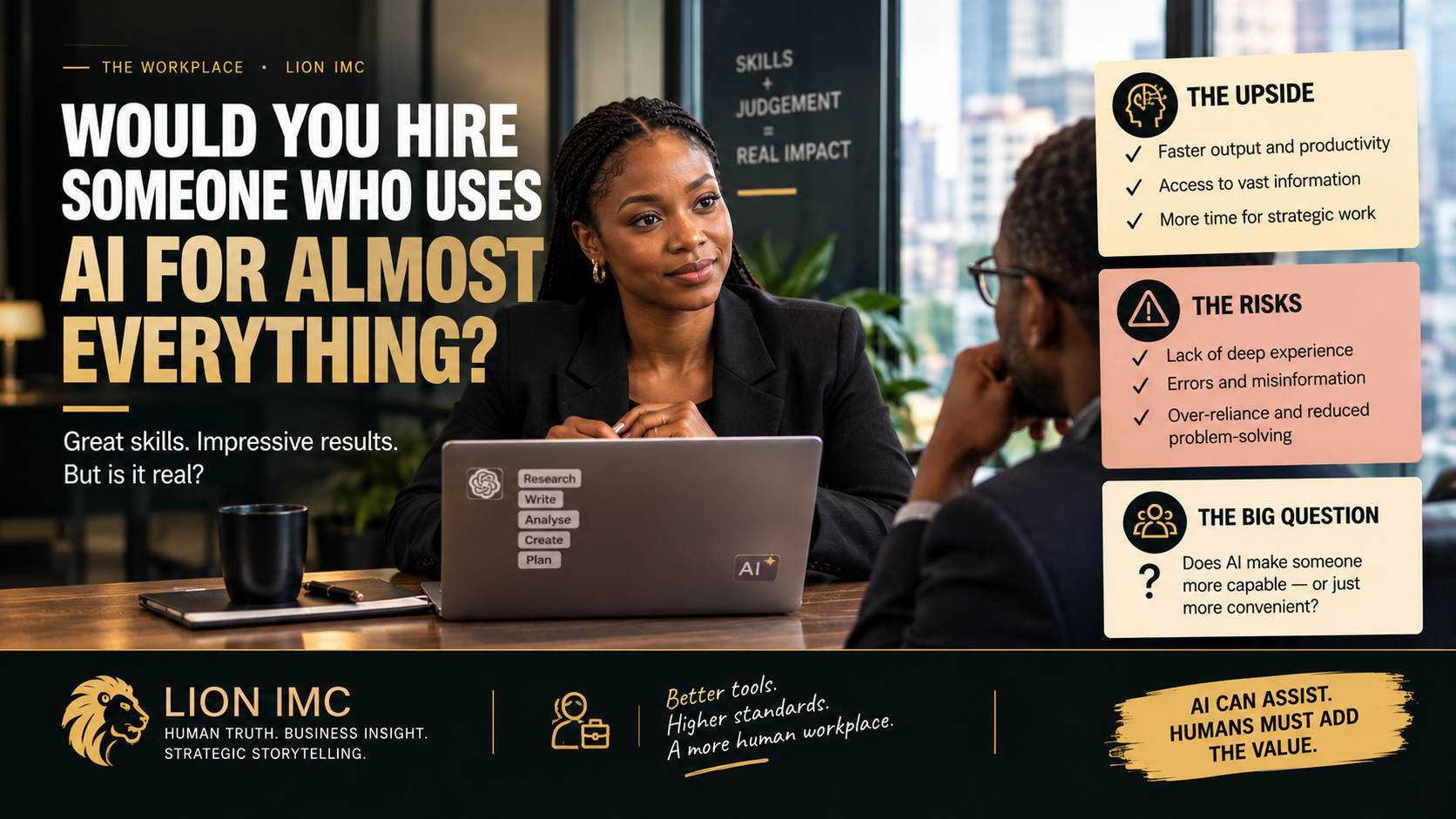
Professionals can legitimately use AI to brainstorm, research, edit, analyse, design or accelerate parts of their work.
The issue is representation.
If AI helped you polish a report, that is one thing.
If AI manufactured an experience you never had, a client you never served, a result you never achieved or a qualification you never earned, that is something else entirely.
The professional reputation problem begins at that boundary.
The internet used to reward evidence. AI could reward appearance.
That may be one of the biggest changes.
Before generative AI became so capable, creating a convincing professional presence still required considerable effort.
You had to write.
Design.
Photograph.
Record.
Edit.
Build.
Publish.
Network.
Appear.
Now much of the production process can be accelerated.
That is enormously useful.
But it also lowers the cost of manufacturing professional-looking output.
And when the cost of producing appearance falls, appearance becomes less informative.
This is not an argument against AI.
It is an argument for becoming better at distinguishing output from capability.
A person producing twenty polished LinkedIn posts every week may be highly knowledgeable.
Or they may have an excellent AI workflow.
The posts alone cannot tell you.
A beautiful portfolio may represent exceptional design ability.
Or exceptional prompting.
A fluent presentation may demonstrate expertise.
Or preparation assisted by a machine.
Again, none of these possibilities automatically makes the work illegitimate.
But the old shortcut —
“This looks professional, therefore the person is probably professional”
— becomes weaker.
And there is a second problem: your reputation can be copied
Imagine building a professional identity over twenty years.
Your face becomes recognisable.
Your speaking style becomes familiar.
People know your voice.
Your name becomes associated with a particular area of expertise.
Then someone uses AI to imitate you.
They create a video in which “you” appear to endorse something.
They clone your voice.
They create messages that appear to come from you.
They imitate your writing style.
They manufacture a conversation.
Suddenly, the asset you spent years building becomes something somebody else can imitate.
That is a frightening shift.
Because reputation has traditionally been difficult to copy.
A person could copy your logo.
They could copy your website.
They could even copy your words.
But reproducing your physical presence convincingly was much harder.
AI changes that equation.
The European Commission explicitly describes deepfakes as AI-generated or manipulated image, audio or video that resembles existing people or other real-world subjects and can falsely appear authentic or truthful.
The technology therefore creates a new professional vulnerability:
someone can potentially borrow the identity you spent years building.
Which means your reputation may need a verification layer
This could change professional behaviour.
The question may no longer be:
“Can I find this person online?”
It may become:
“Can I verify that this is actually the person?”
That distinction is enormous.
A LinkedIn profile proves that a profile exists.
It does not automatically prove that every claim on it is true.
A photograph proves that a photograph exists.
It does not prove that the person actually looks that way today.
A testimonial proves that a testimonial has been published.
It does not automatically prove who wrote it.
A video proves that a video exists.
Increasingly, that may not prove that the person in the video actually said what you saw them say.
The professional internet may therefore move toward stronger forms of identity and provenance.
Not because every professional is suspicious.
Because synthetic content makes verification increasingly valuable.
Your professional network may become part of your proof
This could make something very old-fashioned important again:
relationships.
If I know you personally, your digital profile is one piece of the puzzle.
If I have worked with you, that is another.
If credible people can independently verify your work, that is another.
If your career history appears consistently across organisations, publications, professional associations and public records, the evidence becomes stronger.
If your portfolio links to actual projects and those organisations can confirm them, stronger still.
In other words, professional reputation may become less about one impressive digital profile and more about a network of mutually reinforcing evidence.
Your website says you led a project.
The organisation involved confirms it.
The conference programme lists you.
The published report contains your contribution.
The people who worked with you can verify it.
That is harder to manufacture than one beautiful profile.
AI could also create a reputation problem for honest professionals
This part deserves more attention.
You may be completely genuine.
You may have done every piece of work you claim.
You may use AI responsibly.
But somebody looking at your work may still wonder:
“Did this person actually do this?”
That is the uncomfortable future.
The suspicion may not be directed only at fraudsters.
It may affect everyone.
Take writing.
A professional publishes a thoughtful article.
A reader thinks:
“Did she write this?”
Take design.
A designer produces an extraordinary concept.
A potential client thinks:
“Was this generated?”
Take photography.
A professional posts an impressive image.
Someone asks:
“Is this real?”
Take video.
A speaker appears remarkably polished.
Someone wonders:
“Was this manipulated?”
The more synthetic content enters the information environment, the more authentic work may have to prove its authenticity.
That is a strange burden to place on honest people.
But it is one professionals should begin thinking about.
The answer is not to stop using AI
That would be too simplistic.
AI can make professionals faster.
It can improve accessibility.
It can assist research.
It can help with repetitive tasks.
It can help professionals communicate more effectively.
It can help a small business compete with a larger one.
It can help one person produce work that previously required a team.
The question is not:
“Did you use AI?”
The more useful questions are:
What did you use it for?
What did you contribute yourself?
What can you personally defend?
What evidence supports the result?
And, increasingly:
What would happen if someone asked you to explain how you arrived at it?
That is where professional integrity becomes an asset.
Your expertise may become more valuable when it can be demonstrated live
This could have an interesting effect on professional life.
The polished document may become less persuasive.
The live conversation may become more valuable.
The ability to answer an unexpected question may matter more.
The ability to explain your reasoning may matter more.
The ability to defend a recommendation may matter more.
The ability to walk someone through a project may matter more.
The ability to say:
“Here is why I made that decision.”
may become a powerful form of proof.
Because AI can generate answers.
But your professional reputation increasingly depends on whether you can stand behind the answer.
Your digital identity may need an authenticity strategy
This does not mean putting a verification badge on everything.
It means creating a professional trail that is difficult to fake because it contains history, context and relationships.
Keep records of important work.
Document projects.
Build a portfolio with context, not just pretty screenshots.
Link to credible third parties.
Make your professional history consistent.
Maintain your own channels.
Use identifiable professional contact points.
Be thoughtful about what you publish publicly.
If your voice or image is central to your business, understand that they can potentially be replicated.
And when something important happens professionally, create a credible record of it.
Not because you are trying to prove yourself to strangers every morning.
Because your future self may need evidence.
There is another irony
For years, professionals worried about becoming invisible.
Now we may have to worry about becoming indistinguishable.
The old problem was:
“Nobody can find me.”
The emerging problem may be:
“Everybody can find something, but how do they know it is really me?”
That is a very different problem.
And it may change how professional reputation is built.
The future may reward not simply the person who can create the most convincing digital identity.
It may reward the person whose identity has the strongest chain of evidence behind it.
The new professional currency may be credibility
We are entering an environment where content is becoming cheaper.
Images are cheaper.
Video is cheaper.
Writing is cheaper.
Design is cheaper.
Presentation is cheaper.
Even the appearance of expertise is becoming cheaper.
That does not make expertise worthless.
It may make credible expertise more valuable.
When everybody can produce something impressive, the question becomes:
Who can I trust behind it?
That is where reputation returns to its oldest meaning.
Not popularity.
Not followers.
Not polish.
Trust accumulated over time.
The professional who has real experience, real relationships, real work, real judgement and a consistent record may eventually have something AI cannot simply manufacture overnight:
a history.
And history is powerful evidence.
THE LION TAKE
AI may make professional visibility easier.
It may also make professional credibility harder to verify.
So don’t just build a digital identity.
Build an evidence trail behind it.
Because the future professional reputation problem may not be getting people to notice you.
It may be getting them to believe that you are really you and that the work really is yours.
If AI can convincingly reproduce someone’s face, voice and professional style, what should count as proof that a professional is genuinely who they claim to be?