








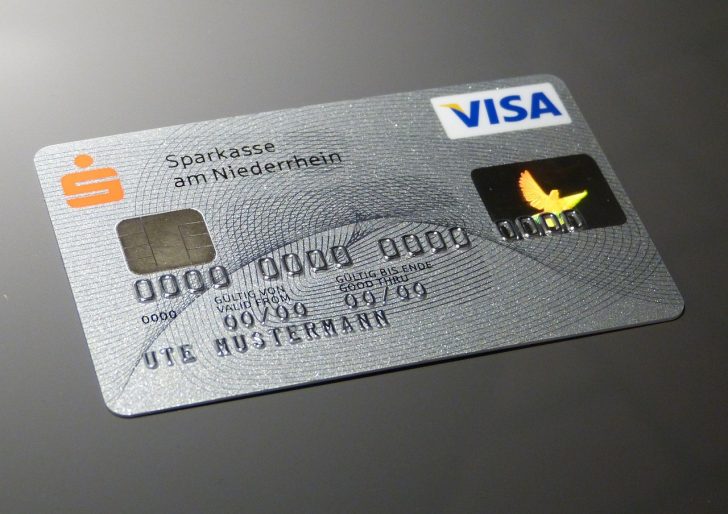
Your younger brother calls. He needs to make an urgent transfer, but his banking app is not working. Your mother asks you to help her withdraw money because she finds mobile banking confusing. Your spouse wants your ATM card and PIN so that household expenses can be paid without disturbing you at work.
Perhaps your adult child handles your banking whenever you travel. Or you have given a sibling your account details because you trust them and believe family should not have financial secrets.
It sounds like an ordinary family arrangement.
Until something goes wrong.
A transfer is made that you did not authorise. Money disappears. A family member refuses to return your ATM card. Someone takes a loan in your name. Or a disagreement over money turns into an argument about who has the right to control your account.
The question is not whether you love your family or trust your relatives.
It is whether giving someone access to your bank account is a sensible way to manage family finances.
Should you give family members access to your bank account? Sometimes, yes. But the type of access, the authority granted and the safeguards around it matter far more than the relationship.
1. Trusting someone with your money is not the same as giving them access to your account
There is a difference between asking a family member to help you make a payment and giving that person the ability to withdraw, transfer or otherwise operate your bank account.
Consider these situations:
- You give your spouse your ATM card and PIN to buy groceries.
- Your sister knows your mobile banking password and occasionally transfers money for you.
- Your adult son receives your bank alerts and helps you monitor transactions.
- Your brother is formally authorised by your bank to carry out specified transactions.
- You and your spouse operate a joint account for household expenses.
These arrangements may all be described casually as giving a family member access to your account. However, they involve different levels of authority, risk and accountability.
The first important distinction is between informal access and formally authorised access.
Informal access happens when you share your card, PIN, password, phone or other banking credentials. The person can potentially operate your account using your identity and authentication details.
Formal access involves an arrangement recognised by the bank, such as an approved third-party mandate, an accepted power of attorney or a joint account with a clearly defined operating mandate.
The second arrangement is generally more transparent because the bank knows who is authorised to act and under what conditions.
The fact that someone is your husband, wife, parent, sibling or child does not automatically make that person an authorised operator of your individual bank account.
2. What happens when you share your ATM card, PIN or banking password?
This is where a seemingly harmless family arrangement can become risky.
Imagine that you give your younger sister your ATM card and PIN because she frequently helps you withdraw money.
You know her. You trust her. She has never given you a reason to doubt her.
But what happens if she loses the card? What if someone sees her enter the PIN? What if she saves your banking password on her phone? What if her phone is compromised?
The risk is not limited to deliberate theft. It includes accidental exposure, unauthorised transactions, identity compromise and disputes over what you actually permitted.
The Central Bank of Nigeria (CBN) explicitly advises customers to protect their cheque books, ATM cards, PINs, passwords and other account information. Its consumer education guidance also warns against disclosing debit-card details and PINs to third parties. Central Bank of Nigeria+1
There is another problem: sharing credentials can make it difficult to establish who initiated a disputed transaction.
If a transfer is made using your authenticated banking profile, the bank’s records may show that your credentials were used. Establishing that a relative, rather than you, initiated the transaction can become complicated.
You may know who used the account. The bank may not have an authorised record of that person operating it.
Your PIN is not a family convenience tool. It is a security credential.
If someone needs to operate your account regularly, explore a formal arrangement with the bank rather than handing over your credentials.
3. The financial risks go beyond someone withdrawing your money
Giving a family member access can expose you to several risks, some of which may not become apparent immediately.
Unauthorised withdrawals
A relative may initially withdraw only the amount you requested. Over time, however, they may begin making additional withdrawals without asking.
The amounts may be small enough to escape immediate attention, particularly if you do not regularly check your statements.
Unauthorised transfers
Someone with access to your banking app may transfer funds to another account, pay bills or send money to recipients you do not recognise.
Borrowing and financial commitments
Access to your account does not automatically authorise someone to borrow money in your name. However, if a person also has access to your phone, identity documents, passwords or other personal information, the risk of impersonation and fraudulent applications increases.
Exposure of financial information
A family member who can view your account may see your income, savings, business transactions, debt repayments and payments to other people.
This can create tension, especially in families where money is a sensitive subject.
Family disputes
A relative may believe that money in your account is available for family use. You may consider it reserved for rent, school fees, business operations or an emergency.
Without clear boundaries, the two of you may have very different interpretations of what access means.
Difficulty recovering money
If a family member withdraws or transfers money and refuses to return it, recovering the funds may require difficult conversations, formal complaints or legal action.
The fact that the person is related to you does not automatically resolve the financial dispute.
4. What if the person is your spouse?
Marriage introduces a particularly complicated dimension to this question.
Some couples share everything financially. Others maintain separate accounts but contribute to household expenses. Some have one partner managing the family’s finances while the other concentrates on work or business.
None of these arrangements is automatically wrong.
The problem arises when financial access is confused with financial ownership or when one partner has control without transparency.
For instance, a husband may give his wife his ATM card and ask her to manage household expenses. A wife may give her husband access to her salary account because he handles investments and major payments.
These arrangements may work well when both partners understand the responsibilities involved.
But consider a few questions:
- Does the person have permission to withdraw any amount or only what is needed for agreed expenses?
- Is there a spending limit?
- Can the account holder see every transaction?
- Must large transfers receive approval?
- Is the person allowed to use the account for personal expenses?
- What happens if the relationship breaks down?
- Does either partner have an independent emergency fund?
A particularly important distinction is that marital trust does not eliminate the need for financial boundaries.
A spouse should not have to surrender every financial privacy right to demonstrate commitment. Nor should a partner be denied access to money needed for agreed household responsibilities simply because the account is in the other person’s name.
A joint household account may be a more appropriate arrangement for some couples. Each partner can contribute an agreed amount while retaining control of their individual accounts.
This can make shared responsibilities easier to manage without making either partner entirely dependent on the other’s personal account.
5. What if you are giving your parents or an elderly relative access?
This is one situation where account assistance may be genuinely necessary.
An older parent may struggle with mobile banking, online transfers, ATM operations or remembering multiple passwords.
A child may therefore begin handling payments, checking balances and withdrawing money on the parent’s behalf.
The arrangement can be useful, but it should not depend entirely on informal trust.
As a person’s ability to manage financial affairs changes, the family should establish an appropriate arrangement while the account holder can still express their wishes and understand the consequences.
Consider:
- Is the parent still able to make independent financial decisions?
- Does the parent understand the authority being granted?
- What transactions should the helper be allowed to perform?
- Should the parent receive transaction alerts?
- Is there a record of money withdrawn and how it was used?
- Is another trusted person available to provide oversight?
It is also important to recognise the possibility of financial abuse.
A relative may begin by helping an elderly parent pay bills and eventually take control of the parent’s pension, savings or other income.
Warning signs include unexplained withdrawals, pressure to disclose banking credentials, sudden changes to account arrangements, missing funds and a family member refusing to explain transactions.
The aim should be to preserve the older person’s financial independence for as long as possible while providing assistance that is necessary and properly authorised.
6. What if you give access to a sibling or other relative because of an emergency?
Emergencies often create the conditions for poor financial decisions.
Your brother is stranded. Your sister needs urgent medical assistance. Your mother is unable to make a payment. A family member needs money transferred immediately.
You share your PIN or banking app details because there is no time to think about the risks.
The immediate problem may be solved, but the access arrangement can continue long after the emergency has passed.
A safer approach is to make the specific payment yourself where possible, transfer the required amount to the relative’s account or use an approved payment arrangement.
If the relative needs recurring access because of an ongoing responsibility, discuss a formal arrangement with your bank.
The important thing is to avoid turning a temporary emergency into permanent, uncontrolled access.
7. What does Nigerian banking practice allow?
In Nigeria, banks recognise that there are circumstances in which someone other than the account holder may be authorised to act on an account.
The CBN’s rules on powers of attorney and third-party mandates recognise these arrangements as business relationships requiring appropriate identification and record-keeping. The financial institution is expected to identify the person holding the authority and assess the reason for granting it. Central Bank of Nigeria
There are several possible arrangements, depending on the bank’s policies and the circumstances.
Option A: A formal third-party mandate
You may ask your bank whether it allows you to appoint another person to carry out specified transactions on your behalf.
The bank will explain its documentation requirements, verify the identity of the person and determine what activities that person may perform.
This is generally more appropriate than sharing your personal banking credentials.
Option B: A power of attorney
A power of attorney is a legal instrument through which you authorise another person to act on your behalf within the scope of the authority granted.
For example, you may want a trusted relative to manage specified financial transactions while you are outside Nigeria for an extended period.
However, do not assume that simply preparing a power of attorney automatically gives someone unrestricted access to your bank account.
The bank must review the document and confirm whether it accepts it for the relevant transactions. Some institutions may require their own forms or additional documentation.
The authority should be clearly drafted and limited to what is necessary.
Option C: A joint account
A joint account is opened in the names of two or more people.
It can be useful for spouses, parents and adult children, or relatives managing a shared financial responsibility.
However, the account’s operating mandate matters.
For example:
- Either-to-sign: Any one authorised account holder can give instructions independently.
- Both-to-sign: The specified account holders must jointly authorise transactions.
The exact arrangements and available features depend on the bank’s account terms.
A joint account should not be opened casually simply because two people trust each other. Both parties need to understand the rights, responsibilities and consequences of operating it.
8. Is your next of kin entitled to access your bank account?
This is one of the most misunderstood aspects of family banking in Nigeria.
Many people provide a parent’s, spouse’s or sibling’s name as their next of kin when opening a bank account. Some assume that doing so means the person can access the account whenever necessary.
That is not what the designation ordinarily means.
A next of kin is generally a contact person the bank may reach in specified circumstances. It does not automatically make that person an account operator, joint owner or beneficiary of the funds.
The CBN’s dormant-account guidance, for example, provides for contacting the next of kin in certain circumstances when the bank cannot reach the account holder. That does not confer unrestricted withdrawal authority. Central Bank of Nigeria+1
The distinction becomes especially important when the account holder dies.
A relative may be the next of kin, but that status alone does not generally authorise the person to withdraw the deceased customer’s money.
Where an estate requires administration, the bank will typically require the appropriate legal authority, such as a grant of probate or letters of administration, depending on the circumstances. Punch Newspapers+1
So if your intention is to make sure someone can manage your finances while you are alive, do not rely on the next-of-kin section of your account-opening form.
Discuss the appropriate authority with your bank and, where necessary, a lawyer.
9. What happens if you give someone access and later change your mind?
This is another reason to avoid informal arrangements.
Suppose you give your brother your ATM card and PIN. Six months later, you have a disagreement and decide that you no longer want him handling your money.
You can change your PIN and passwords, block or replace compromised cards and contact your bank to secure your account.
But if you have given the person a formal mandate or power of attorney, you may need to follow the bank’s procedures to revoke or amend that authority.
Do not assume that telling the relative verbally is enough.
Ask your bank:
- What is the procedure for revoking third-party authority?
- Does the bank require written notice?
- What happens to existing standing instructions?
- How quickly will the change take effect?
- Are there any other linked services or permissions that need to be cancelled?
Where a power of attorney is involved, obtain appropriate legal advice about revocation and notification requirements.
The principle is simple: if you can grant access, you should understand how to withdraw it.
10. Safer alternatives to giving family members full access
Sometimes the real problem is not that a relative needs your bank account. It is that the family needs a better way to manage shared financial responsibilities.
There are several alternatives.
| What you need | A safer arrangement |
|---|---|
| Someone to pay your bills | Set up standing instructions or make specific transfers |
| A spouse to manage household spending | Open a joint household account |
| A relative to help with banking | Ask the bank about a formal third-party mandate |
| An elderly parent to receive assistance | Arrange limited, documented authority with the bank |
| Someone to monitor your transactions | Enable your own transaction alerts and review statements together |
| A family member to handle expenses while you travel | Use an approved authority arrangement with defined limits |
| Shared savings for a family project | Open a dedicated joint account with an agreed mandate |
A dedicated family account can be particularly useful.
Instead of giving your sibling access to your personal salary account, you could open a separate account for a shared responsibility, such as:
- Parents’ medical expenses.
- Family property maintenance.
- Children’s school fees.
- Household expenditure.
- A family business.
- A jointly funded emergency reserve.
This creates a clearer distinction between personal money and shared family money.
It also makes it easier to track contributions and expenditure.
11. Seven rules to follow before giving a family member access
If you decide that someone should have access to your account through an arrangement accepted by your bank, establish clear rules.
1. Define the purpose.
Explain exactly why the person needs access. Is it for bill payments, withdrawals, account monitoring or managing finances while you are away?
2. Limit the authority.
Do not grant more access than the person needs. If the bank offers different levels of authority, choose the narrowest appropriate option.
3. Set financial boundaries.
Agree on transaction limits, approved expenses and whether additional approval is required for large payments.
4. Keep records.
Maintain records of withdrawals, transfers, receipts and expenses. This protects both parties.
5. Preserve account security.
Do not share your PIN, OTP, password or other security credentials. Use the bank’s approved procedures for authorised access.
6. Review the arrangement.
Check statements and account activity regularly. Remove authority that is no longer needed.
7. Have an exit plan.
Agree on what happens if the relationship changes, the person becomes unavailable or you decide to manage the account independently.
A good financial arrangement should not depend on everyone remaining happy forever. It should still protect the account holder if circumstances change.
12. A simple family banking access agreement
Families do not always need complicated legal documents to establish everyday financial boundaries. But a written understanding can prevent misunderstandings.
For routine shared expenses, the following questions are a useful starting point:
Family banking arrangement planner
Use these prompts to discuss boundaries before granting access. This is a planning aid, not a bank mandate or legal agreement.
1. What is the specific purpose of the access?
2. Which transactions may the family member carry out?
3. What is the maximum amount they may spend or transfer without further approval?
4. How frequently must receipts and transaction records be shared?
5. Which transactions require the account holder’s prior approval?
6. How will the account holder monitor activity?
7. How and when can the arrangement be ended?
For formal authority over an account, the bank’s documentation and applicable legal requirements still take precedence over a private family understanding.
THE LION TAKE
Family should be able to rely on one another without having to surrender financial independence.
There is nothing wrong with helping a parent manage money, allowing a spouse to handle household payments or supporting a sibling during a difficult period.
In fact, well-organised financial cooperation can make family life considerably easier.
But trust should not be confused with unlimited access.
A person can love you, support you and genuinely have your best interests at heart while still making poor financial decisions. A relative can also misunderstand the boundaries of an arrangement, particularly when money is involved.
And when relationships change, informal financial arrangements can become difficult to unwind.
The better approach is to separate three things: trust, authority and accountability.
Trust is about the relationship. Authority determines what someone is permitted to do. Accountability establishes how their actions will be monitored and explained.
All three matter.
For Nigerian professionals, particularly those supporting parents, spouses, children and extended family members, financial independence should not mean refusing to help relatives. It should mean building arrangements that allow support without exposing personal finances to unnecessary risk.
Your family may need your help. That does not mean everyone needs your PIN.
Help your family. Share responsibilities. Protect your money. Keep the boundaries clear.