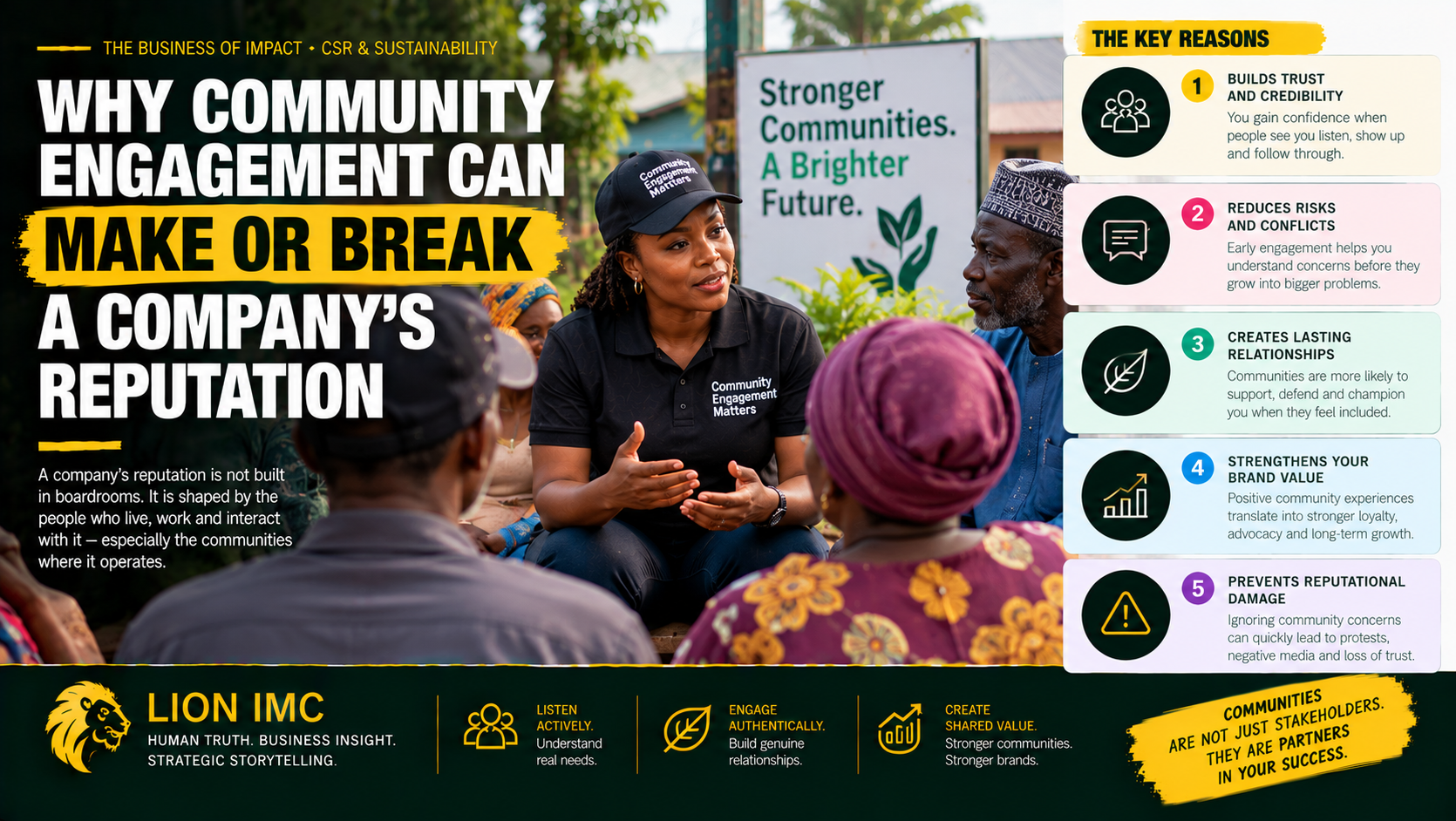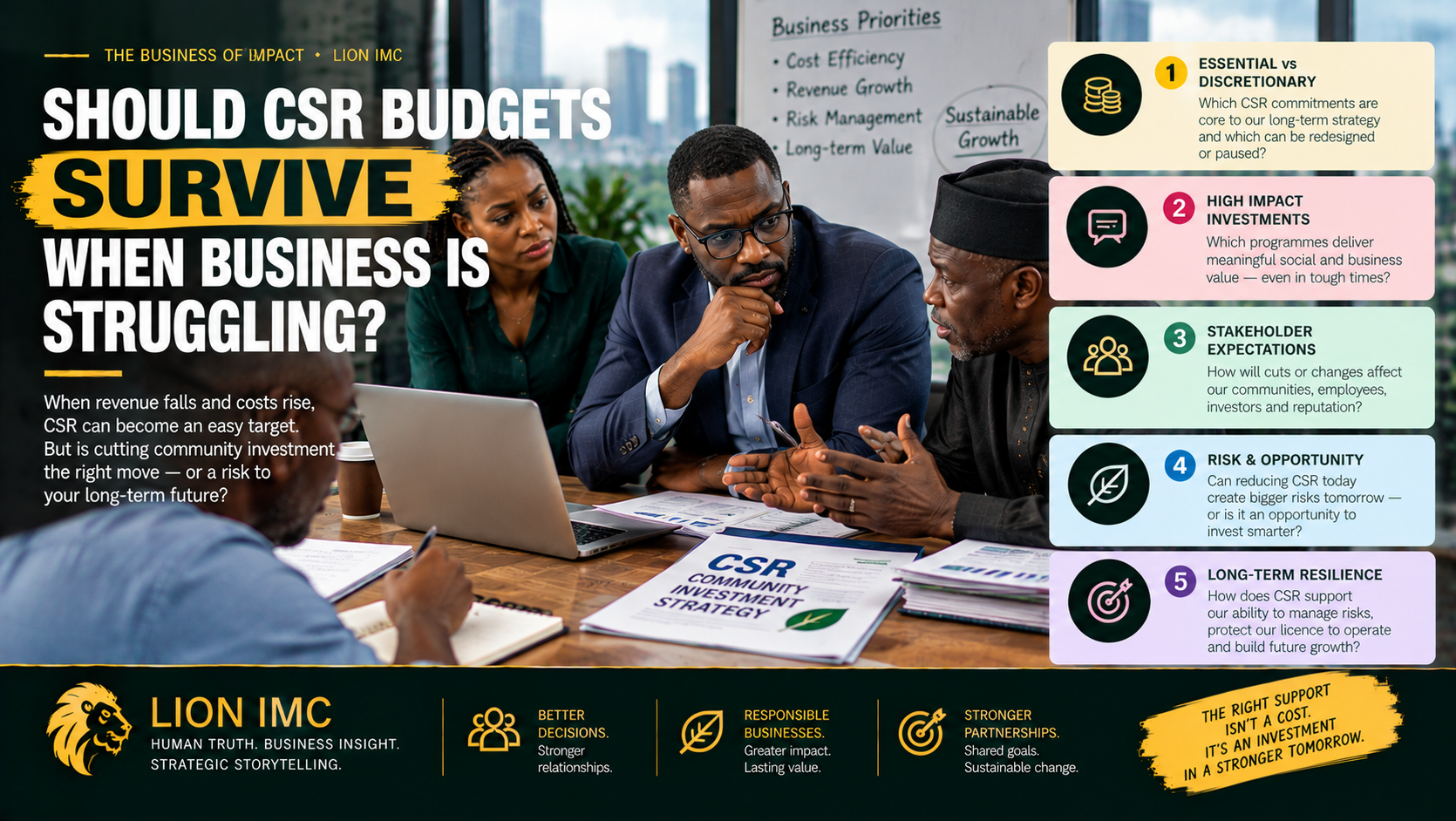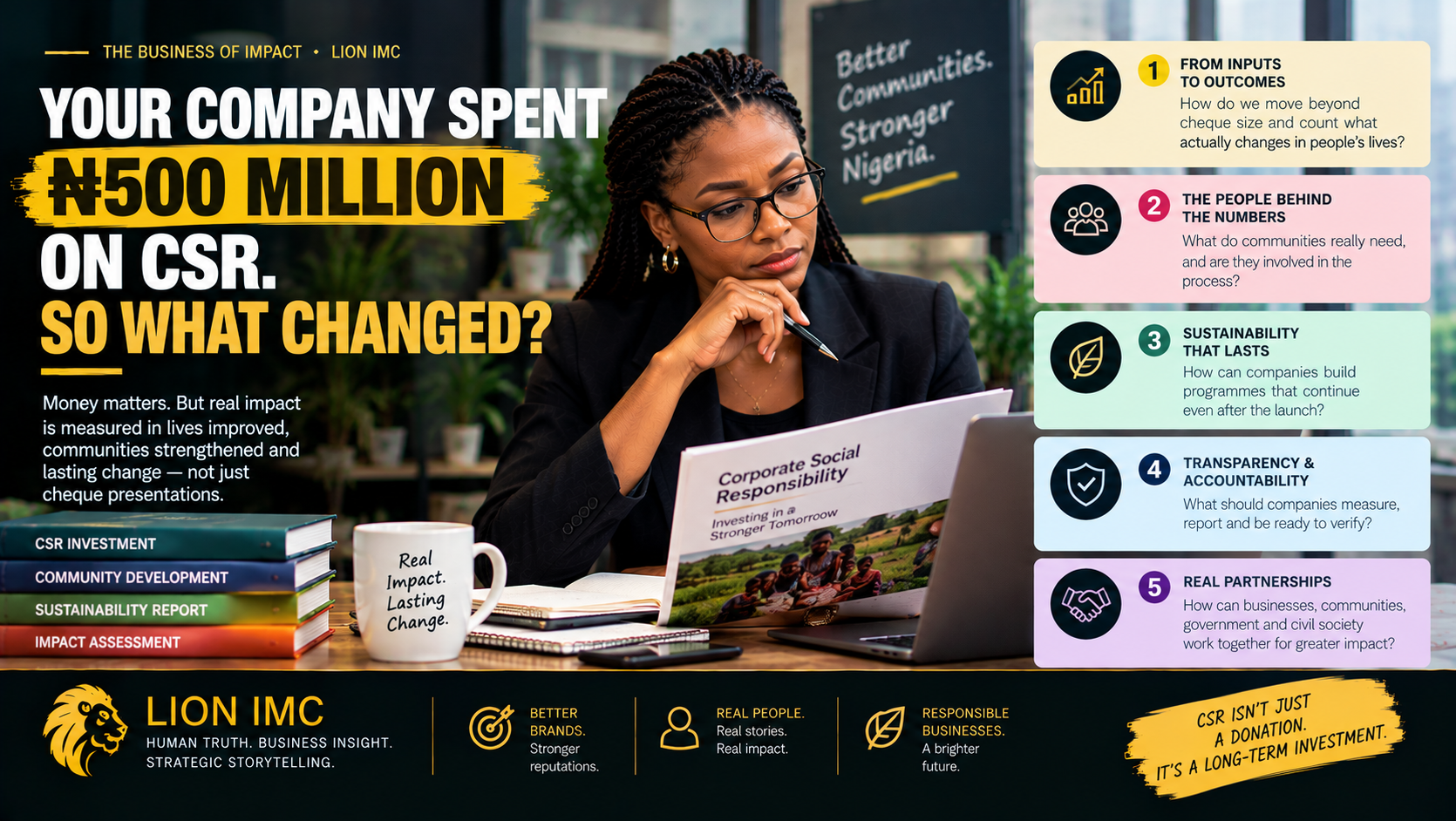








Corporate social responsibility should make a difference beyond the company. Reputation management helps people understand and judge the company. The two can reinforce each other, but when the communication becomes more important than the impact, the line starts to blur.
The company donated. The cameras arrived. What happened next?
A company donates equipment to a school in a community where it operates. There are photographs, branded shirts, a speech from an executive and a press release describing the organisation’s commitment to giving back.
The story appears in the media. The company shares the photographs on LinkedIn. The communications team records the coverage. Management is pleased.
But months later, nobody has checked whether the equipment is being used, whether the school can maintain it or whether the donation addressed the need the community identified in the first place.
What, exactly, has succeeded?
The company has completed a visible activity. It may have earned positive publicity. But the actual social outcome remains uncertain.
This is where a useful conversation about corporate social responsibility (CSR) and reputation management begins.
Both matter to business. Both involve stakeholders. Both can contribute to trust and long-term value. Yet they answer different questions.
CSR asks what responsibility a company is taking for its impact on society and the environment. Reputation management asks how the organisation is perceived, understood and trusted.
The distinction is not that one is good and the other is bad. The question is whether the company’s public image reflects what it actually does.
CSR is bigger than corporate donations
CSR is often reduced to donations, scholarships, medical outreaches, school renovations and community projects. These activities can be valuable, but they represent only part of the picture.
The International Organization for Standardization’s ISO 26000 guidance describes social responsibility in terms of an organisation’s impacts on society and the environment, ethical behaviour, stakeholder expectations and contribution to sustainable development. It also emphasises that responsibility should be integrated into organisational practices, not treated simply as a separate charitable activity.
That broader understanding changes the questions a company should ask.
A manufacturer might fund a school project while failing to address pollution associated with its operations. A bank might sponsor financial literacy programmes while customers struggle to resolve complaints. An employer might donate to a community while neglecting the welfare and safety of its own workers.
These examples do not automatically make the community projects worthless. They do, however, raise a more important question: is the organisation addressing its wider responsibilities, or highlighting a visible contribution while overlooking other impacts?
Responsible business conduct includes identifying and addressing negative effects associated with operations, products, services and supply chains, as well as contributing positively to society. The OECD’s guidance emphasises assessing impacts, preventing or mitigating harm, tracking results and explaining how issues are addressed.
CSR is not only about what a company gives. It is also about how the company behaves.
Reputation management is not simply publicity
Reputation management is sometimes misunderstood as the art of keeping a company in the news for the right reasons.
Media coverage can contribute to reputation, but it is not reputation itself.
An organisation’s reputation develops through the way people experience and interpret its conduct. Customers consider whether products deliver on their promises. Employees judge how they are treated. Investors assess management and performance. Communities evaluate the organisation’s presence and impact. Journalists and other stakeholders examine what the company says against what they can observe.
Communications can help explain decisions, provide evidence, respond to concerns and correct misinformation. It can also help an organisation listen to stakeholders and identify issues before they escalate.
But a company cannot sustainably communicate its way out of every problem.
If the product is unreliable, the service is poor or the organisation repeatedly breaks its commitments, more publicity may simply make more people aware of the problem.
Reputation management is therefore strongest when communication reflects reality, acknowledges legitimate concerns and helps the organisation respond appropriately.
The purpose is not to make every stakeholder think well of the company at all times. It is to build and protect credibility through conduct and communication.
Where the line becomes blurred
1. When visibility becomes the main measure of success
A CSR team may report the number of photographs, media mentions, social media impressions and executives who attended a project.
These measures can tell the organisation how widely an activity was communicated. They do not establish whether the project improved lives or addressed an identified problem.
A successful communication campaign and a successful social intervention are different achievements. A company should understand both rather than use one as proof of the other.
2. When the company decides what the community needs without listening
A project may be well-intentioned and attract positive attention, yet fail to address the community’s most pressing priorities.
Meaningful stakeholder engagement helps organisations understand actual and potential impacts, consider affected people’s perspectives and develop more appropriate responses. This is a core element of the OECD’s responsible-business guidance.
The reputational benefit should not determine whose needs count. The people affected by a project deserve a voice in defining its purpose and assessing its results.
3. When the report tells a better story than the evidence
An organisation might announce that it has trained hundreds of young people. That is an output: the number of people trained.
Whether participants acquired useful skills is a different question. Whether they subsequently secured employment, started businesses or improved their earnings is another.
A credible CSR report distinguishes activities from outcomes and longer-term impact. Reputation management can communicate the findings, including limitations and lessons learned, without overstating what the programme achieved.
4. When CSR is used to distract from unresolved problems
Imagine an organisation celebrating a community donation while avoiding reasonable questions about the effects of its operations on that same community.
The donation may still be useful. But it does not erase the need to address the underlying concern.
Responsible business conduct requires organisations to identify and address adverse impacts, rather than relying on positive initiatives to tell the whole story.
When communications become a substitute for corrective action, the problem is no longer just a question of messaging. It is a question of organisational responsibility.
Can CSR improve a company’s reputation?
Yes. A company that consistently addresses social and environmental responsibilities, listens to stakeholders and demonstrates credible results may strengthen trust and its standing with important audiences.
But the relationship is not automatic.
A project may create real value without receiving much media coverage. A highly visible initiative may generate short-term goodwill without producing lasting change. And a company with a strong reputation in one area may still face legitimate criticism in another.
This is why CSR should not be designed solely around the question, “What will this do for our brand?”
A more useful starting point is:
- What problem are we trying to address?
- Why is this issue relevant to our business and its stakeholders?
- Have the people affected helped shape the response?
- What would meaningful progress look like?
- How will we know whether anything changed?
- What should we disclose if the results fall short?
Reputation is a legitimate business consideration. The mistake is treating it as the only reason to act responsibly.
A practical test for CSR and communications teams
Before launching a CSR initiative or publicising its results, organisations can use the following questions to check whether they are keeping impact and image in their proper relationship.
| The question | What it helps establish |
| Is the initiative addressing a genuine social or environmental need? | Purpose |
| Have affected stakeholders been consulted? | Relevance and legitimacy |
| Is the programme connected to the company’s actual impacts and responsibilities? | Accountability |
| Are we measuring outcomes as well as activities and publicity? | Evidence of progress |
| Can we substantiate the claims in our communications? | Credibility |
| Are we prepared to discuss limitations or disappointing results? | Transparency |
| Will we continue addressing the issue if the media stops paying attention? | Commitment beyond visibility |
These questions are not a certification or a guarantee of success. They are a practical way to prevent a communication objective from quietly replacing the original social objective.
What should the relationship between CSR and reputation management look like?
The two functions should not operate as rivals, nor should one be used to disguise the absence of the other.
CSR and sustainability teams should help establish priorities, engage affected stakeholders, oversee programmes and assess results. Communications and reputation professionals should help explain those priorities, translate evidence into clear messages, listen to stakeholder concerns and ensure that public claims remain credible.
Management must support both by providing resources, setting expectations and taking responsibility for decisions that affect people and the environment.
In practice, this means the communications team should be involved early enough to understand the programme not invited only when the cameras are ready. It also means the CSR team should not be pressured to manufacture impressive claims simply because management wants a stronger public profile.
The strongest relationship is one in which real work produces evidence, and communication helps people understand that evidence.
Sometimes that evidence will be encouraging. Sometimes it will show that a project needs to change. Both findings are useful if the organisation responds honestly.
THE LION TAKE
CSR and reputation management are not opposites. A responsible initiative can strengthen reputation, and effective communication can help people understand genuine social progress.
The line is crossed when the organisation becomes more concerned with looking responsible than with understanding and managing the consequences of its actions.
A company does not prove its commitment to society by publishing more photographs, issuing a more polished sustainability report or attracting more media coverage. Those things may help communicate its work, but they cannot replace the work itself.
The real test is whether the organisation would still consider the initiative worthwhile if the cameras never arrived.
THE BIG QUESTION
If a company’s CSR project generates excellent publicity but produces little measurable change for the people it was meant to help, has it succeeded and by whose definition?