



Ohhh…This is exactly the kind of CSR story a Lion like you should own. Recall that the obvious CSR piece would celebrate companies giving scholarships, boreholes, hospitals and donations. The Lion story asks the uncomfortable question: after the ribbon-cutting, did the problem actually change?
And there is fresh Nigerian evidence worth bringing into it. A 2026 study found that public perceptions of CSR impact in Nigeria were not significantly connected to participatory communication under the framework studied, and argued that many initiatives need stronger community engagement, local knowledge and collective problem-solving. Earlier Niger Delta research likewise found that the impact of CSR varied substantially depending on whether communities participated in shaping interventions.
A company arrives in a community.
There is a banner.
There are dignitaries.
Traditional rulers.
Government officials.
Children in uniforms.
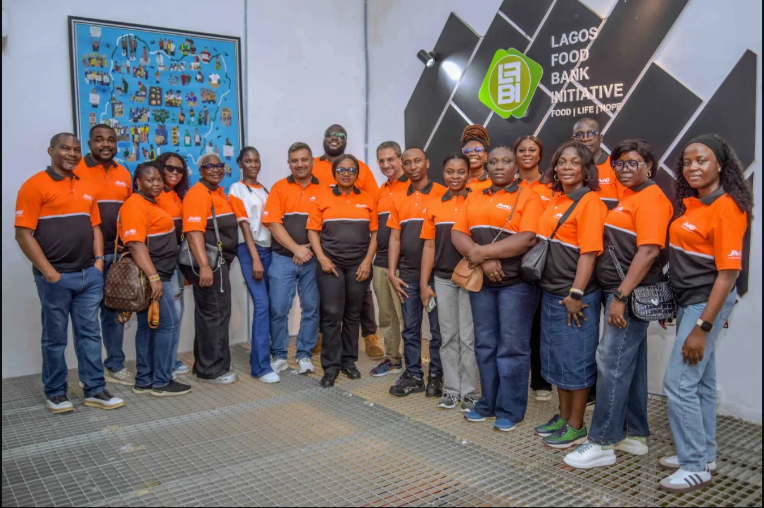
Company executives in branded shirts.
Someone gives a speech about giving back.
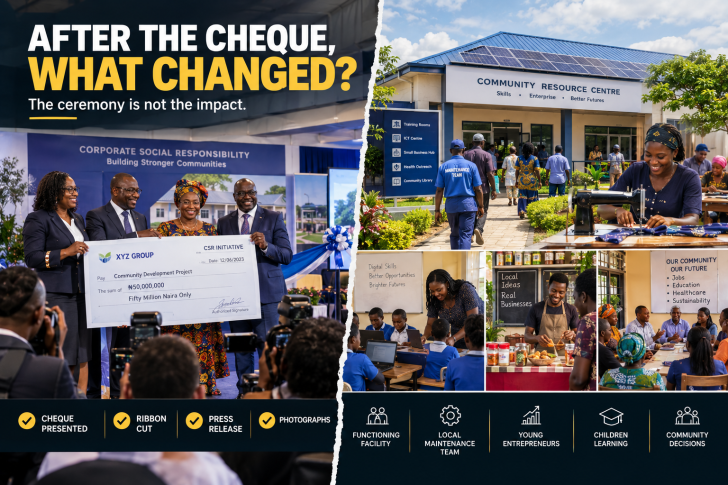
A cheque is presented.
A ribbon is cut.
Photographs are taken.
Everyone smiles.
The company publishes the story.
“Company X Gives Back to Community.”
And perhaps, genuinely, something useful has happened.
A school has been renovated.
A borehole has been installed.
Students have received scholarships.
A clinic has received equipment.
Women have received business grants.
Young people have received training.
These things matter.
But there is a question that rarely receives as much attention as the ceremony:
DID THE PROBLEM GET SOLVED?
Because giving money to a problem is not necessarily the same thing as solving it.
And this is where corporate philanthropy becomes much more complicated.
A BOREHOLE IS NOT THE SAME AS WATER SECURITY
Imagine a community has no reliable access to clean water.
A company installs a borehole.
The project is completed.
Photographs are taken.
The company has genuinely spent money.
The community genuinely has a borehole.
But what happens two years later?
Who maintains it?
Who pays for repairs?
Who controls access?
What happens when the pump breaks?
Was the location chosen because residents actually needed it there?
Was the water source sustainable?
Did the project reduce the amount of time women and children spend searching for water?
Did household access to safe water actually improve?
The borehole may be a perfectly good project.
But the project is not the same thing as the outcome.
That distinction should change how companies think about philanthropy.
CORPORATE GIVING IS OFTEN EASIER TO COUNT THAN IMPACT
This is one of the biggest problems.
Companies can easily report:
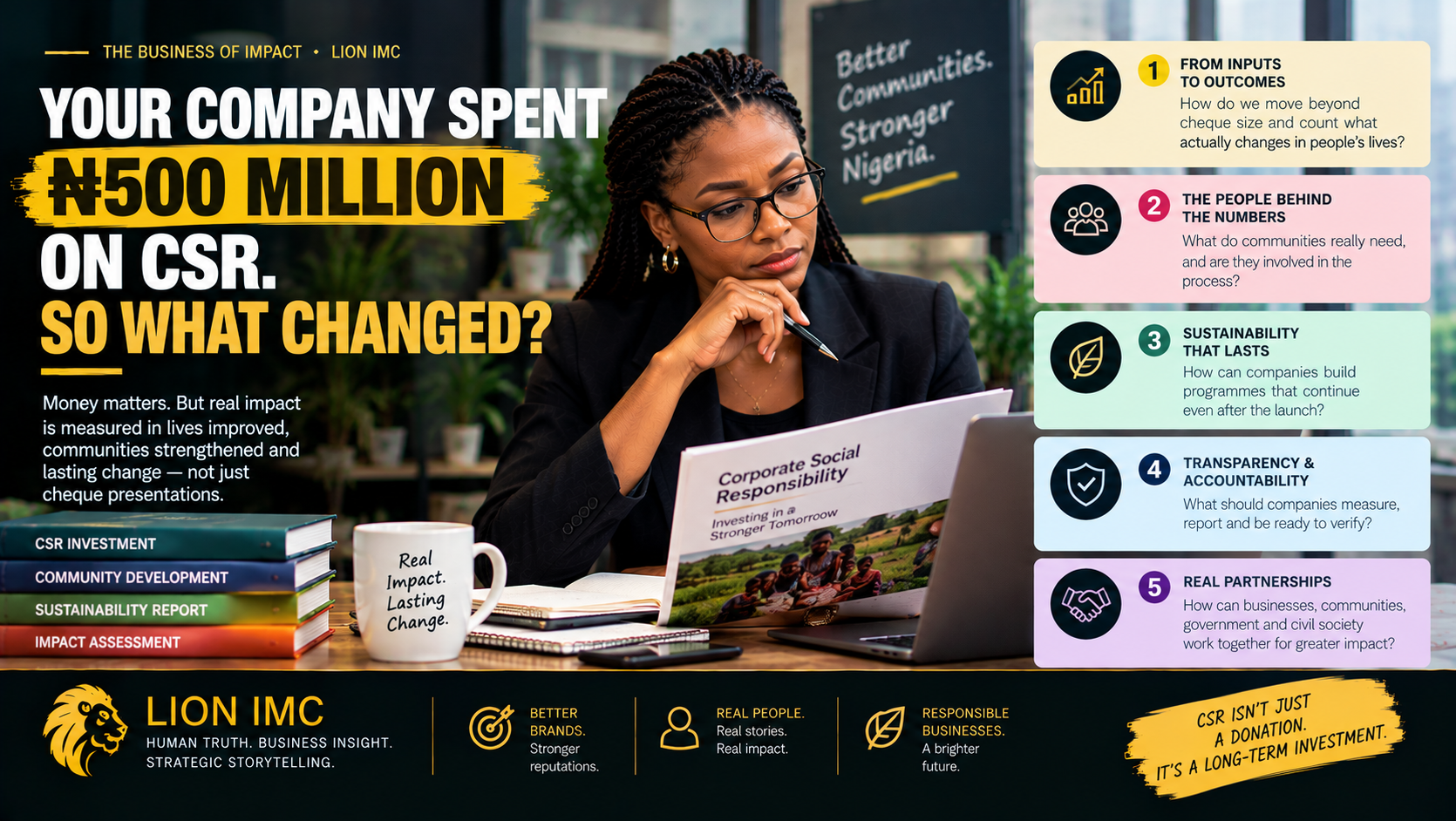
₦500 million invested.
20 schools renovated.
10,000 beneficiaries reached.
5,000 scholarships awarded.
100 entrepreneurs trained.
Those are outputs.
They matter.
But they do not necessarily tell us what changed.
How many of those entrepreneurs increased their income?
How many businesses survived?
How many students completed their education?
How many graduates found work?
How many households gained sustainable access to clean water?
How many health outcomes improved?
How long did the benefit last?
That is impact.
And impact is harder to measure.
A 2026 study examining perceptions of CSR initiatives in Nigeria argued that current frameworks often fail to resonate with deeper community needs and emphasised stronger community engagement, local knowledge and collective problem-solving.
That is an important distinction.
Counting what you gave is not the same as measuring what changed.
SOMETIMES THE COMMUNITY DIDN’T ASK FOR WHAT YOU GAVE
This is where corporate philanthropy can become surprisingly disconnected from the people it is supposed to help.
Imagine a company decides:
“We will build a computer centre.”
Wonderful.
Except the community’s most urgent problem is water.
Or maternal healthcare.
Or access to electricity.
Or transport.
Or youth unemployment.
Or the absence of teachers.
Or a collapsed road.
Or a market that cannot function properly.
The company may have spent millions.
The project may look impressive.
The photographs may be excellent.
And the intervention may still be poorly matched to the actual problem.
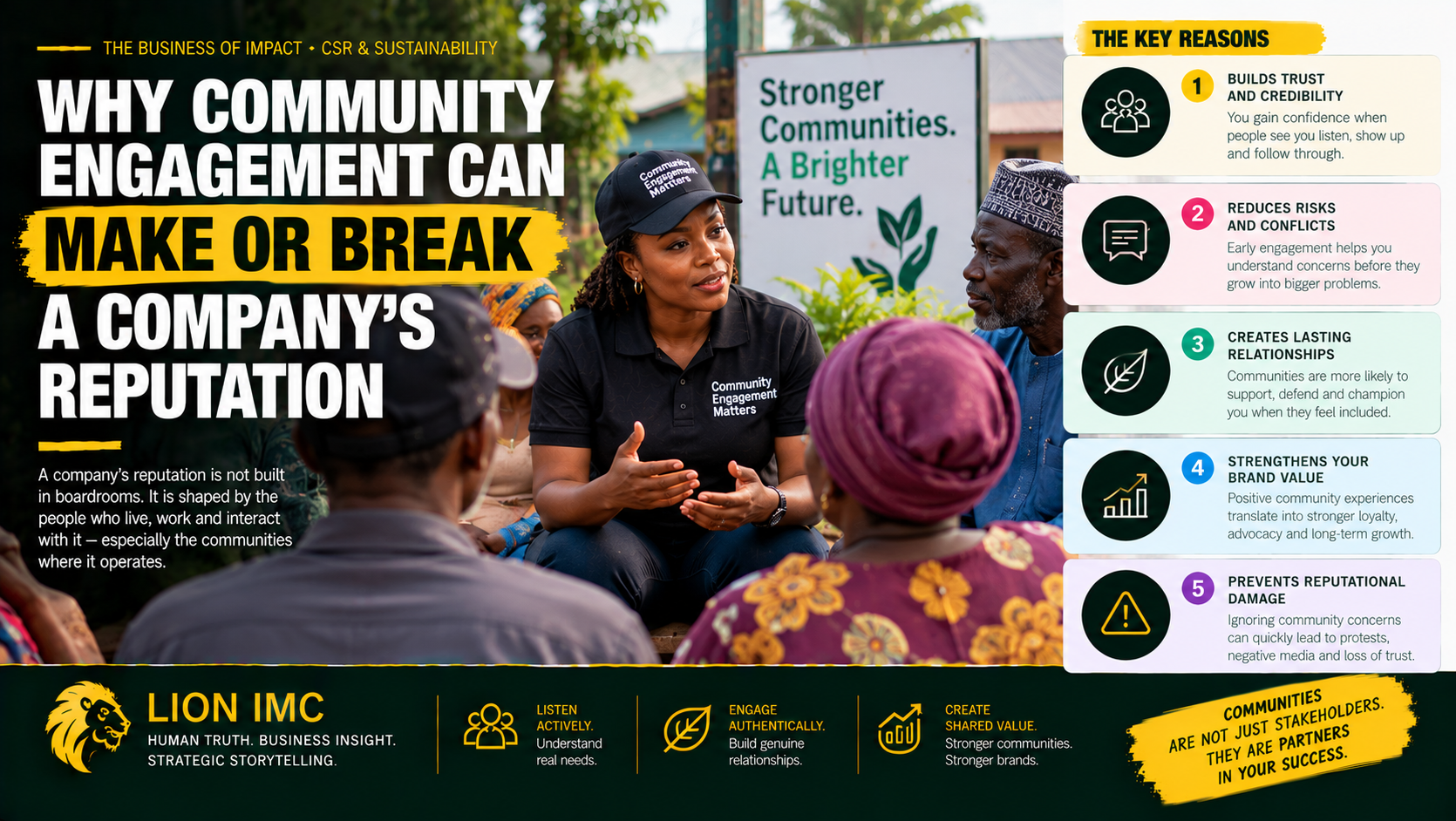
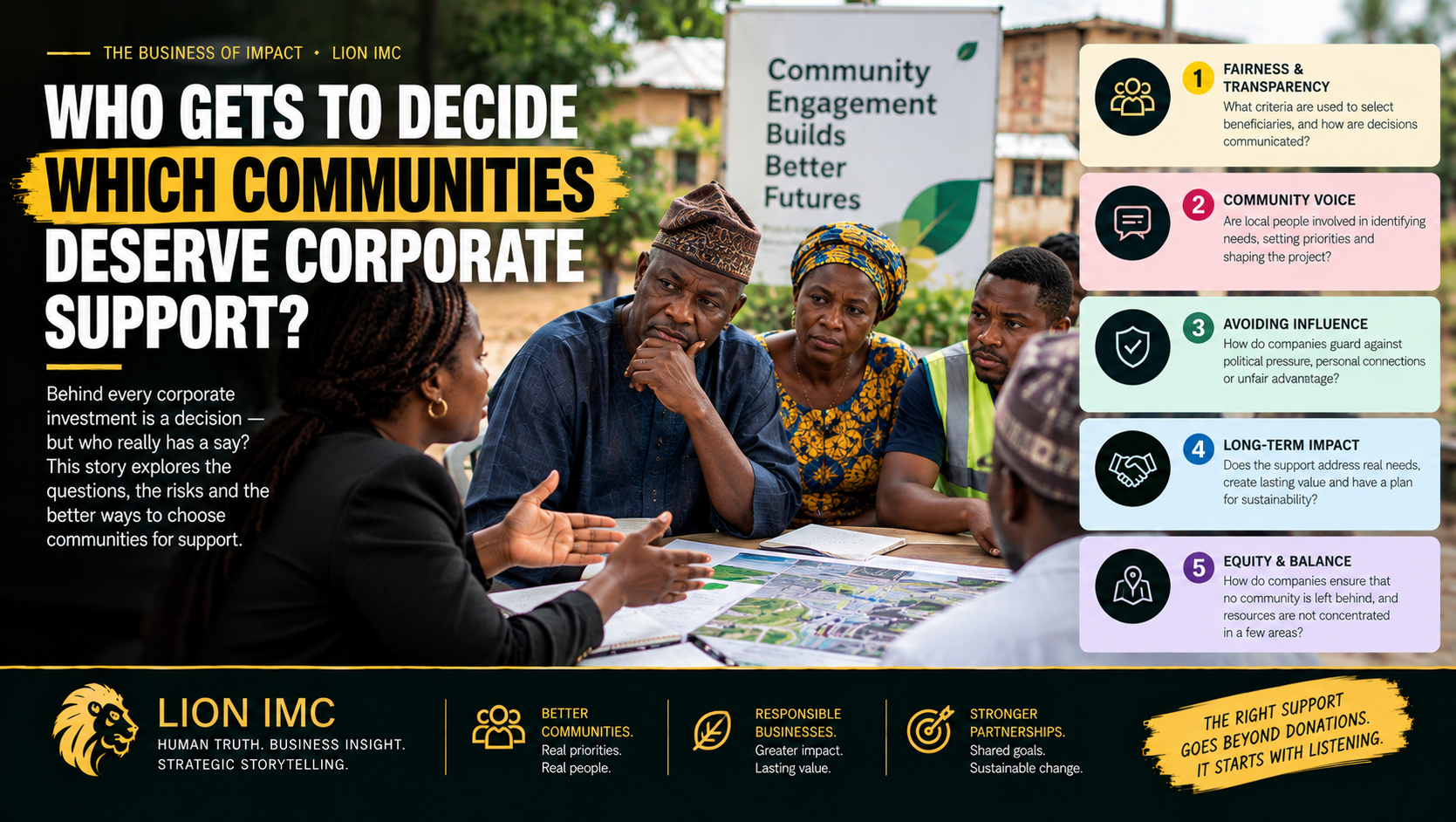
This is why participation matters.
Research on CSR in Nigeria has repeatedly highlighted the importance of understanding community perceptions and involving communities in designing interventions. Studies of Niger Delta initiatives found that participatory approaches produced different outcomes from top-down interventions.
The people living with a problem often understand things outsiders cannot see.
THE COMMUNITY IS NOT A BENEFICIARY LIST
This may be one of the most important mindset changes.
A community should not simply appear in a company’s CSR report as:
BENEFICIARIES: 4,700
People are not numbers attached to a project.
They have knowledge.
They have priorities.
They have institutions.
They have relationships.
They have conflicts.
They have leaders.
They have women and young people whose priorities may differ from those of the traditional leadership.
They know what has failed before.
They know which facilities nobody uses.
They know why a previous project stopped working.
They know which intervention will survive after the company leaves.
And they may know something the company’s consultant missed:
why the problem exists in the first place.
THE COMPANY CANNOT SOLVE EVERY COMMUNITY PROBLEM
There is another uncomfortable truth.
Sometimes companies are asked to solve problems that are fundamentally larger than philanthropy.
Education.
Healthcare.
Roads.
Electricity.
Water.
Poverty.
Security.
Employment.
Environmental remediation.
These are not small problems.
They require government.
Communities.
Civil society.
Businesses.
Development organisations.
Institutions.
And long-term public investment.
Nigeria’s history with oil-producing communities makes this particularly complicated. Research has found that despite substantial CSR spending by oil companies, community development outcomes have often remained limited, with scholars pointing to issues including government failure and weak alignment with community needs.
This raises an important question:
When does corporate philanthropy complement government — and when does it begin to substitute for government?
Those are not the same thing.
SHOULD COMPANIES BE EXPECTED TO FIX WHAT GOVERNMENT HAS NOT?
Suppose a community has no functioning health centre.
A company builds one.
Should we celebrate the company?
Yes.
Should we also ask who will staff it?
Who supplies medicines?
Who pays for maintenance?
Who funds it when the company changes priorities?
Who owns it?
Who is responsible for it ten years later?
Those questions do not diminish the company’s contribution.
They make the contribution more serious.
Because a building can be inaugurated in one afternoon.
An institution has to survive.
THE PHILANTHROPY TRAP: BUILDING THINGS PEOPLE CAN PHOTOGRAPH
There is an obvious incentive in corporate philanthropy.
Some projects are highly visible.
A new school building looks impressive.
A borehole looks impressive.
A hospital wing looks impressive.
A donation ceremony looks impressive.
A cheque looks impressive.
But some of the most important interventions are less photogenic.
Teacher training.
Maintenance systems.
Data collection.
Community governance.
Small-business mentoring.
Agricultural extension.
Mental-health support.
Supply chains.
Skills development.
Monitoring.
Follow-up.
Institution building.
Nobody gets a spectacular photograph of a maintenance system working properly.
But the maintenance system may be what determines whether the original project survives.
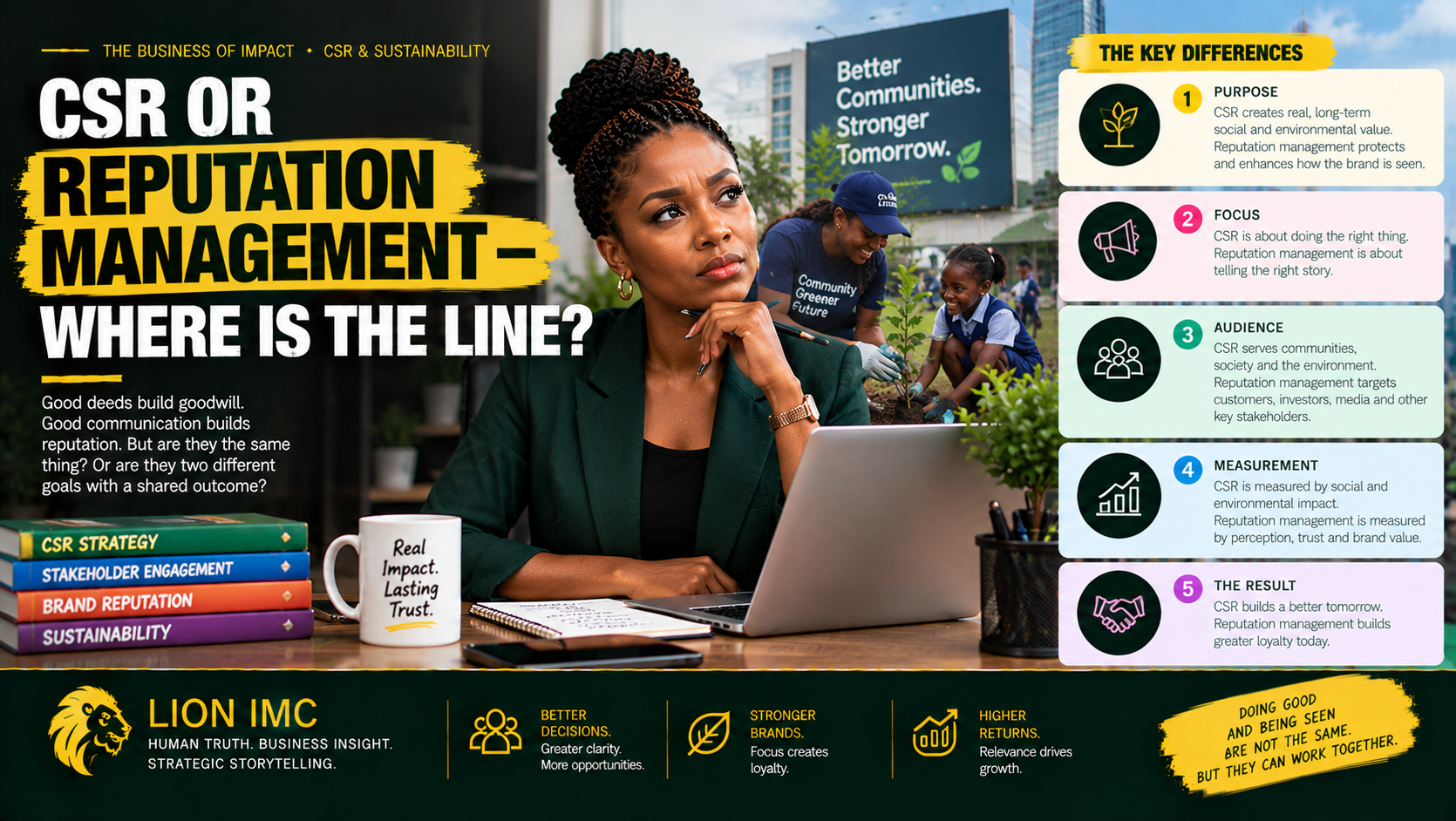
THEN THERE IS THE BRANDING QUESTION
Corporate philanthropy and corporate communications have always had an interesting relationship.
A company gives.
The company communicates the giving.
The communication builds reputation.
There is nothing inherently wrong with that.
Companies are entitled to tell stakeholders what they are doing.
The problem begins when the publicity becomes more developed than the intervention.
Twenty photographs.
A beautifully produced video.
A press release.
A social media campaign.
A newspaper spread.
And perhaps very little information about what happened six months later.
That creates an uncomfortable possibility:
Are we communicating impact — or communicating the appearance of impact?
THE BEST CSR MAY BE BORING
This is a strange thing to say in a media business.
But some of the most effective community interventions may not make exciting headlines.
A company quietly funds agricultural extension for five years.
Another develops a reliable maintenance system for water infrastructure.
Another works with local entrepreneurs for several years instead of giving one-off grants.
Another improves a school’s teaching capacity rather than simply repainting the building.
Another helps communities establish structures that can continue after the company’s funding reduces.
Those stories may not generate the biggest launch-day photographs.
But they may produce something more valuable:
continuity.
COMMUNITY OWNERSHIP CHANGES THE EQUATION
There is a huge difference between:
“The company built this for the community.”
and:
“The community helped design, own and sustain this.”
Ownership changes behaviour.
If residents have participated in deciding what is needed, choosing priorities and developing maintenance arrangements, the project is no longer simply something dropped into the community.
It becomes part of the community’s own system.
This does not guarantee success.
But it changes the relationship.
Research on corporate-community relations in Nigeria has long identified failure to adequately understand and integrate community perceptions as one reason CSR interventions can struggle.
The lesson is simple:
Don’t just ask what you can give the community. Ask what the community can help build.
AND THEN THERE IS THE QUESTION OF TIME
A community problem rarely follows a company’s annual reporting cycle.
Poverty does not end in December.
A school does not become excellent because its renovation was completed.
A young entrepreneur does not become successful because they attended a two-day workshop.
A community does not become economically resilient because a company donated equipment.
Real development takes time.
Sometimes years.
Sometimes generations.
This is why one-off philanthropy can have limited power.
A cheque can solve an immediate problem.
But systemic problems require systems.
WHAT IF COMPANIES STOPPED ASKING “HOW MUCH DID WE GIVE?”
Imagine a different CSR report.
Instead of opening with:
₦2.4 billion invested.
It begins:
Average household income among participating entrepreneurs increased by X over three years.
Instead of:
5,000 students reached.
It says:
School retention among participating students increased from X to Y.
Instead of:
20 communities supported.
It says:
The proportion of households with reliable access to clean water changed from X to Y, and the infrastructure remained operational after three years.
That would be a very different conversation.
It would also be much harder.
Because now the company has to measure things that cannot be created simply by writing a cheque.
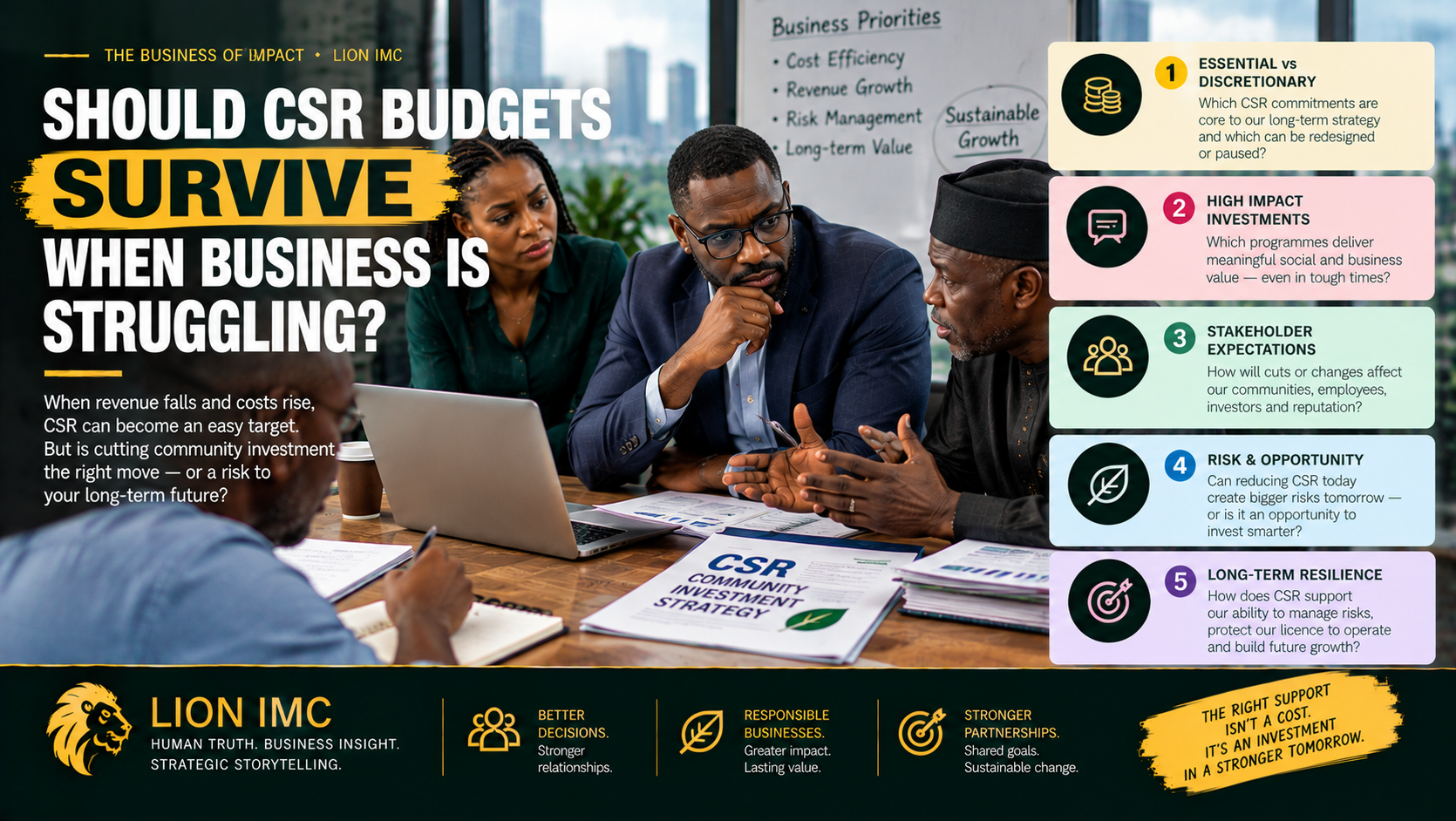
PHILANTHROPY CAN WORK — BUT THE CHEQUE IS NOT THE STRATEGY
This is important.
The answer is not:
“Corporate philanthropy doesn’t work.”
That would be too simplistic.
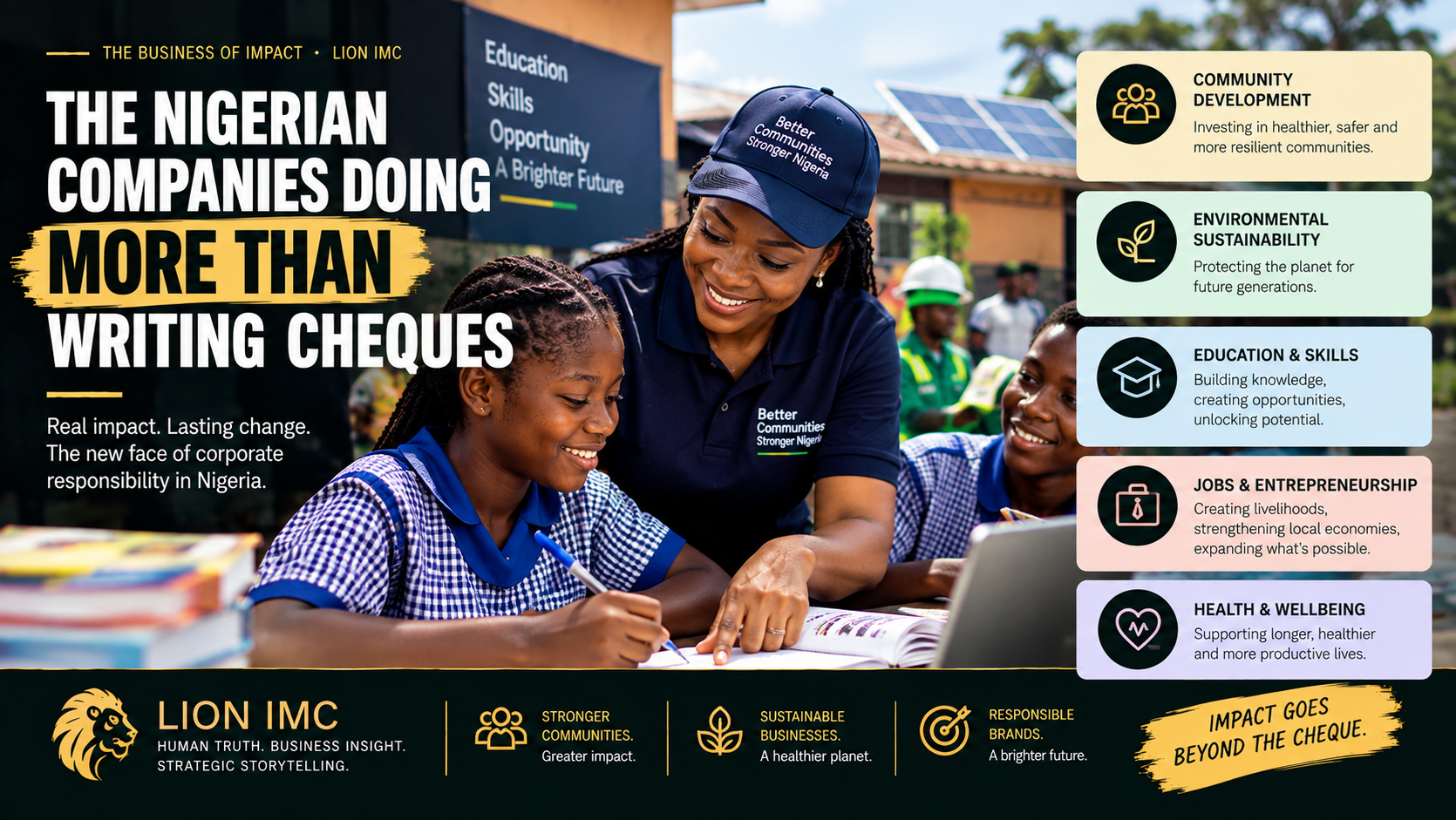
Evidence from Nigeria shows that corporate interventions can contribute to meaningful social outcomes when they are targeted, participatory and connected to specific problems. A 2025 study of CSR initiatives in Nigerian oil-producing communities, for example, found evidence that targeted interventions focused on women were associated with improvements in women’s political, social and economic participation in the communities studied.
And recent Nigerian reporting has highlighted long-running corporate programmes that have moved beyond one-off donations toward sustained educational or community-development interventions.
So yes.
Corporate philanthropy can contribute to solving community problems.
But the important word is:
CONTRIBUTE.
A corporation rarely solves a complex community problem alone.
It can finance.
Build.
Train.
Connect.
Innovate.
Pilot.
Scale.
Advocate.
Partner.
But lasting change usually requires more than one actor.
THE QUESTION COMPANIES SHOULD ASK BEFORE WRITING THE CHEQUE
Perhaps there should be five questions.
- WHAT PROBLEM ARE WE ACTUALLY SOLVING?
Not:
“What project can we launch?”
But:
“What problem needs to change?”
- WHO SAYS IT IS A PROBLEM?
Did the company identify it?
Government?
Consultants?
Community leaders?
Women?
Young people?
Households?
All of them?
- WHAT WILL CHANGE IF WE SUCCEED?
Define the outcome before celebrating the activity.
- WHO OWNS THE SOLUTION AFTER WE LEAVE?
If the answer is nobody, sustainability is already in trouble.
- HOW WILL WE KNOW WHETHER IT WORKED?
Not how many photographs were taken.
Not how many press mentions appeared.
Not how many people attended the ceremony.
What changed?
THE CEO SHOULD BE ABLE TO ANSWER ONE UNCOMFORTABLE QUESTION
Imagine the board asks:
“If we stopped funding this programme tomorrow, what would remain?”
If the answer is:
“A building.”
That’s something.
If the answer is:
“A functioning institution, trained people, local capacity, sustainable income, community ownership and a system that continues operating…”
That is something else.
The difference is enormous.
CSR SHOULD NOT MAKE COMMUNITIES PERMANENTLY DEPENDENT
There is a subtle danger in well-intentioned giving.
A company becomes the answer to everything.
Need a road?
Call the company.
Need a school?
Call the company.
Need electricity?
Call the company.
Need scholarships?
Call the company.
Need a clinic?
Call the company.
At some point, philanthropy can accidentally create dependency.
The company’s presence becomes part of the community’s survival mechanism.
Then what happens when the company leaves?
This is why empowerment is often more difficult — and potentially more durable — than charity.
Give someone something useful today.
But also ask what could make them less dependent on the same intervention tomorrow.
WHAT SHOULD CORPORATE PHILANTHROPY ACTUALLY AIM FOR?
Perhaps not gratitude.
Not photographs.
Not awards.
Not headlines.
Not even immediate visibility.
The ultimate objective should be reduced dependence on the intervention itself.
A successful skills programme should eventually produce people who no longer need the programme.
A successful enterprise programme should produce businesses that can survive without permanent subsidy.
A successful infrastructure intervention should have a maintenance system.
A successful education programme should strengthen the educational ecosystem.
A successful health intervention should leave behind capability.
The company’s greatest achievement may be the moment when its presence becomes less necessary.
That is a very different definition of success.
THE NEW CSR QUESTION
Corporate philanthropy has traditionally asked:
“How much can we give?”
Then:
“How many people can we reach?”
Perhaps the next generation of corporate responsibility needs to ask:
“How much lasting change can our involvement create?”
That changes everything.
It changes the budget.
It changes the partnership.
It changes the role of the community.
It changes the role of government.
It changes measurement.
It changes communication.
And it changes what the CEO should want to see in the annual report.
THE LION TAKE
Corporate philanthropy can build a school.
It can provide water.
It can fund scholarships.
It can support healthcare.
It can create jobs.
It can help communities survive difficult periods.
But a project is not automatically a solution.
The real test begins after the cheque.
After the ribbon-cutting.
After the press release.
After the photographs.
After the executives return to headquarters.
Is the problem smaller?
Are people more capable?
Is the community more resilient?
Does the intervention still work?
Can the community sustain it?
Did the people affected have a meaningful role in shaping it?
And if the company stopped funding it tomorrow:
Would anything continue?
Because perhaps the highest form of corporate philanthropy is not making a community grateful that your company came.
It is helping create a community that can eventually say:
“We can take it from here.”