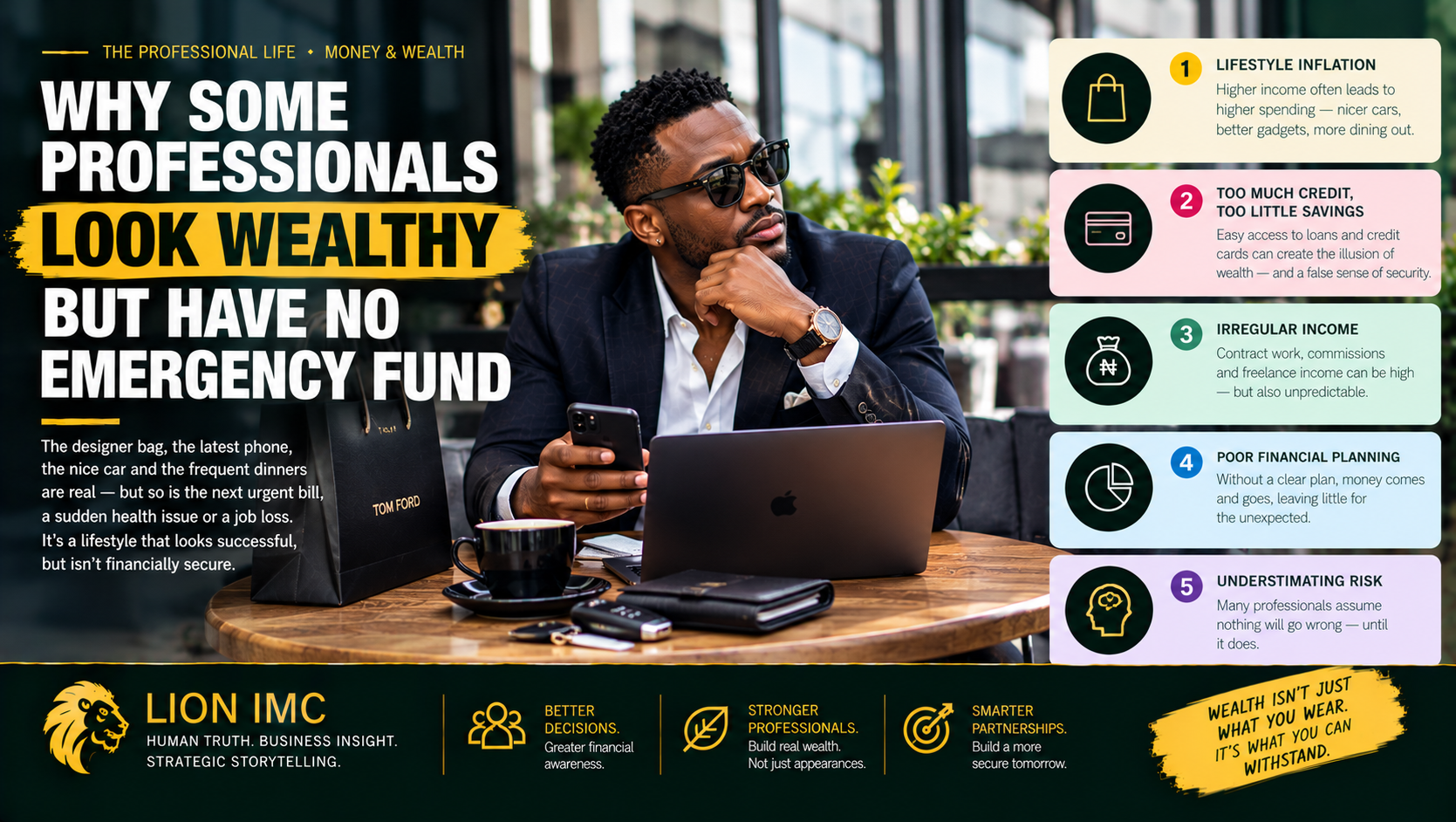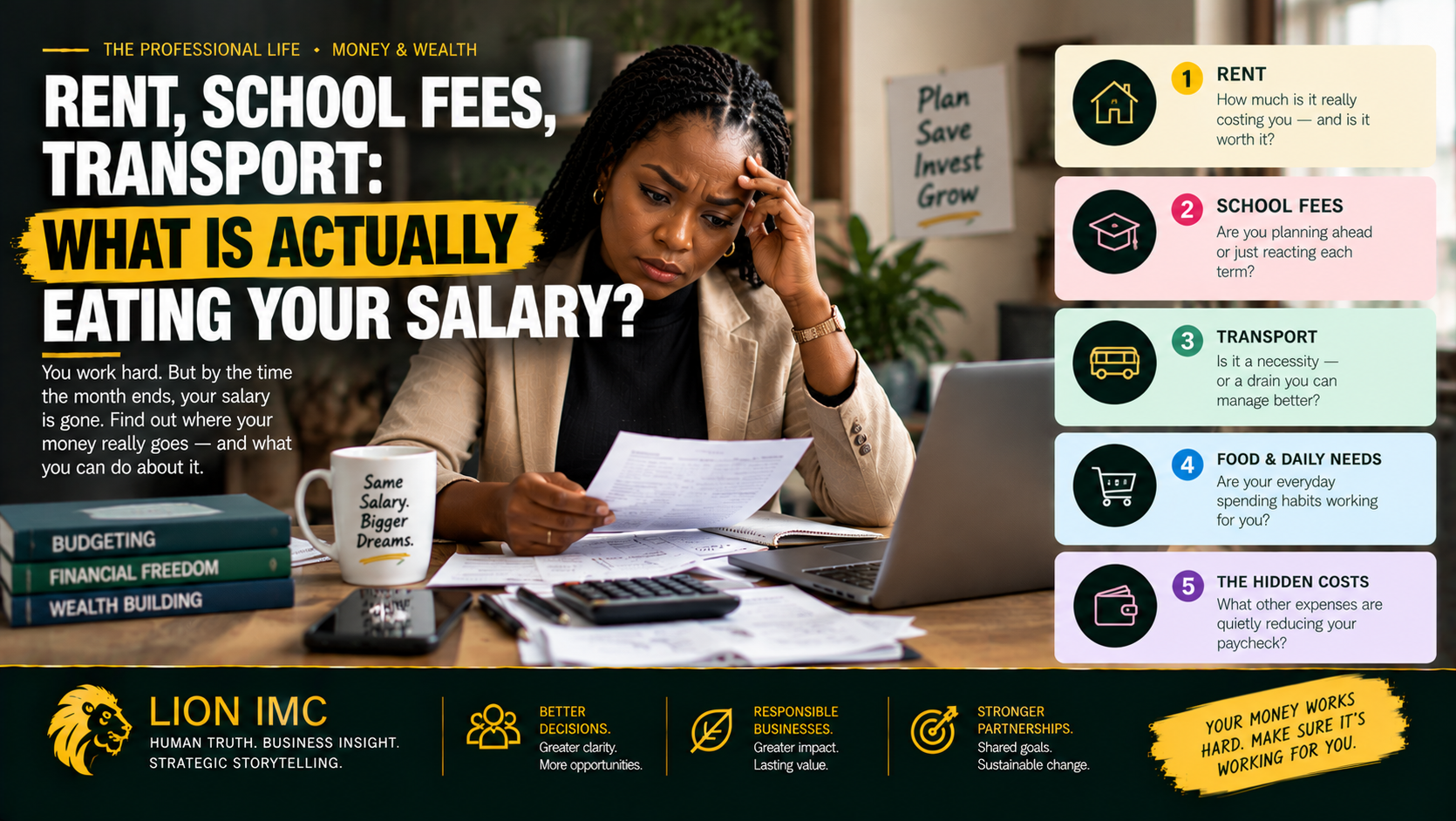






Lion, this one should sit right beside our AI/work stories. But let’s not write another “AI is killing jobs” piece. The sharper Lion question is whether the thing we used to call job security, staying with one employer for years was ever the real security. So the story becomes: Maybe job security has moved from the employer to the professional.
The evidence points to a labour market where jobs are being created and displaced simultaneously: The WEF projects 170 million jobs created and 92 million displaced globally by 2030, while employers expect 39% of workers’ core skills to change.
For decades, job security meant staying employed by the same organisation. In a changing economy, security may mean something very different.
There was a time when getting a permanent job felt like crossing a finish line.
You joined a reputable organisation.
You worked hard.
You gained experience.
You received promotions.
You stayed.
Perhaps you retired there.
That was the dream.
Your company was not simply where you worked.
It was your security.
But something has changed.
Companies restructure.
Industries disappear.
Technology changes jobs.
Businesses merge.
Roles are redesigned.
Skills become outdated.
And sometimes the person who has been with an organisation for 15 years discovers that loyalty cannot protect a position that no longer exists.
So perhaps the uncomfortable question is no longer:
“Is my job secure?”
Perhaps it is:
“If this job disappeared tomorrow, how secure would I still be?”
THE OLD DEFINITION OF JOB SECURITY
The old model was relatively simple.
Job security meant:
I have a job, and my employer intends to keep me.
Security therefore lived largely outside the individual.
You trusted the organisation.
The organisation provided continuity.
Your experience accumulated inside one system.
Your pension, relationships, reputation and professional identity could all grow around that employment.
There was enormous psychological comfort in this arrangement.
You knew where your next salary was coming from.
You knew who your employer was.
You knew what your job was.
You could plan.
But there was a weakness hidden inside the model.
Your security depended heavily on the organisation remaining stable enough to need the version of you it hired.
That assumption is becoming harder to make.
THE JOB MAY BE STABLE. THE WORK MAY NOT BE.
This is one of the most important distinctions in today’s labour market.
A company can retain an employee while completely changing the employee’s work.
AI may automate some tasks.
Software may eliminate others.
A department may be reorganised.
A role may be merged with another.
A new business model may require different capabilities.
The employee technically still has a job.
But the job they originally learned may be disappearing underneath them.
The World Economic Forum’s Future of Jobs Report 2025 estimates that 22% of today’s formal jobs could be disrupted by 2030 through a combination of job creation and displacement. It projects 170 million new jobs alongside 92 million displaced roles, for a net increase of 78 million globally.
That is not a prediction that everybody will lose their jobs.
It is something more interesting.
The job market can grow while individual jobs become less predictable.
MAYBE LOYALTY IS NO LONGER ENOUGH
There is nothing wrong with loyalty.
But loyalty and security are not the same thing.
An employee can be deeply loyal to a company whose business model is changing.
A professional can have 15 years of experience and still discover that the market now wants a different 15 years of experience.
This is where many careers become vulnerable.
Not because the professional was lazy.
Not because they were incompetent.
But because their value became too closely attached to one organisation, one process, one technology or one way of working.
You can be extremely experienced and still become professionally exposed.
THE NEW QUESTION: IF YOUR JOB DISAPPEARED, WHAT WOULD REMAIN?
Imagine your employer disappears tomorrow.
Not necessarily the company itself.
Your particular role.
What remains?
Your skills?
Your professional network?
Your reputation?
Your portfolio?
Your knowledge of the industry?
Your ability to solve problems?
Your digital presence?
Your relationships with clients?
Your understanding of technology?
Your ability to learn something new quickly?
Your professional credibility outside your current employer?
This is where the meaning of security starts to change.
Because a professional with a secure job may not necessarily be a secure professional.
And a professional without a permanent-looking career path may actually have considerable resilience if their skills, network and reputation travel with them.
SECURITY MAY BE BECOMING PORTABLE
Perhaps the most useful way to think about modern job security is portability.
Can your value move?
Can your skills move from one company to another?
Can your experience move from one industry to another?
Can your professional reputation survive a redundancy?
Can you learn a new tool when your old one becomes obsolete?
Can you generate income in more than one way?
Can someone outside your organisation understand what you are good at?
Can you demonstrate what you have done?
Can your professional network open another door?
That is a very different kind of security from having a permanent contract.
It is less comforting.
But it may be more realistic.
THE MOST SECURE PERSON IN THE ROOM MAY NOT BE THE PERSON WITH THE LONGEST TENURE
Consider two professionals.
One has worked for the same company for 17 years.
Almost everything they know is specific to that company’s systems, relationships and processes.
Another has worked across three organisations.
They have changed technologies, managed different teams, built a professional network, maintained a portfolio of work and continuously learned.
The first person may have the more secure job today.
The second may have the more portable career.
Neither situation automatically makes one person safer.
But they illustrate an important distinction:
Employment security and career security are not the same thing.
THIS IS WHERE AI MAKES THE QUESTION MORE URGENT
AI is not simply threatening jobs.
It is changing what employers need people to be good at.
The WEF says employers expect 39% of workers’ core skills to change by 2030. AI and big data, technological literacy, analytical thinking, creative thinking, resilience, flexibility and lifelong learning are among the skills expected to rise in importance.
And the response is not simply “replace humans with machines.”
The same report says 77% of surveyed employers expect to pursue upskilling and reskilling by 2030, while 41% anticipate reducing their workforce where AI automates certain tasks.
That distinction matters.
The future may not belong simply to people whose jobs are impossible to automate.
It may increasingly belong to people who can keep becoming useful as the work changes.
BUT “LEARN NEW SKILLS” IS NOT THE WHOLE ANSWER
This conversation can become annoyingly simplistic.
Every time technology changes, professionals are told:
Upskill.
Learn AI.
Learn data.
Learn coding.
Learn digital marketing.
Learn something new.
But there is a deeper issue.
A professional cannot endlessly collect skills like certificates on a wall.
The real question is whether those skills solve problems that someone values.
A person with 20 courses and no evidence of application may be less employable than someone with three relevant skills and a track record of using them well.
So modern security is not merely:
“What do you know?”
It is:
“What can you do, what problems can you solve, and can you prove it?”
YOUR NETWORK MAY BE PART OF YOUR SECURITY
This is another uncomfortable shift.
The old model said:
My company will take care of me.
The emerging model may say:
I need relationships strong enough that people know what I can do even when I am no longer inside this company.
That does not mean networking for favours.
It means building genuine professional relationships.
Being known for something.
Contributing to your industry.
Maintaining relationships after projects end.
Helping people.
Sharing knowledge.
Being visible for the right reasons.
Because when employment changes, relationships can become bridges.
YOUR REPUTATION TRAVELS FASTER THAN YOUR CV
A CV is a record of what you say you have done.
Your professional reputation is what other people believe you can do.
That reputation increasingly travels through digital spaces.
Your LinkedIn profile.
Your portfolio.
Your published work.
Your professional conversations.
Your presentations.
Your projects.
Your recommendations.
Your contributions to your field.
Your digital footprint.
This does not mean every professional needs to become an influencer.
Quite the opposite.
You can be professionally visible without being publicly noisy.
The goal is not fame.
It is discoverability.
If an opportunity appears tomorrow, can the person considering you find credible evidence that you are capable of doing the work?
THERE IS ALSO A LIMIT TO PERSONAL RESPONSIBILITY
This is important.
It would be unfair to turn job insecurity into:
“If you lose your job, you didn’t prepare enough.”
People can do everything reasonably well and still lose employment.
Companies fail.
Economies contract.
Industries change.
Organisations restructure.
People are affected by decisions they did not make.
Not every employment loss is a personal failure.
And employers also have responsibilities.
If companies expect adaptable workers, they have a role in providing training, communicating change honestly and treating people fairly during transitions.
The WEF identifies skills gaps as the biggest barrier to business transformation among its surveyed employers, with 63% citing them. It also reports that reskilling and upskilling are among the major workforce strategies employers expect to use.
The future of work therefore cannot simply become:
“Employees, keep yourselves employable.”
Organisations are part of the equation too.
SO, IS JOB SECURITY DEAD?
Not exactly.
It is being redistributed.
The idea that security means “this organisation will employ me indefinitely” is becoming harder to rely on.
But security itself has not disappeared.
It may simply have moved.
From tenure to adaptability.
From one employer to multiple options.
From one job description to transferable capability.
From organisational loyalty alone to a combination of skills, relationships, reputation, savings and resilience.
From:
“My company will keep me.”
To:
“I can keep creating value even when the environment changes.”
That is a harder kind of security.
It requires more personal responsibility.
But it also gives the professional something the old model did not always provide:
mobility.
THE CAREER YOU SHOULD PROTECT MAY NOT BE YOUR CURRENT JOB
This may be the biggest mindset shift.
Your job is what you do now.
Your career is the accumulated capacity to keep doing valuable work over time.
Those are not the same thing.
Protecting your job may mean becoming very good at preserving your current position.
Protecting your career may mean occasionally stepping outside your comfort zone so that you remain capable of occupying the next position.
Sometimes career security requires leaving the thing that feels secure.
Learning something uncomfortable.
Building a network before you need it.
Saving money before you need it.
Documenting your work.
Developing a reputation beyond your employer.
Learning technology before your industry forces you to.
Asking:
“What would make me valuable five years from now?”
Not just:
“What makes me valuable today?”
THE LION TAKE
Job security may not be dead. But the idea that security comes from one employer keeping one version of you employed indefinitely is becoming increasingly difficult to sustain.
The new professional security may be more portable.
Your skills.
Your judgement.
Your reputation.
Your network.
Your financial cushion.
Your ability to learn.
Your ability to adapt.
Your evidence of what you can do.
None of these guarantees employment.
Nothing does.
But perhaps that is the point.
The goal may no longer be to find a job that can never disappear.
It may be to become the kind of professional who can keep finding valuable work when jobs change.
And that leads to a much more uncomfortable question:
If your current job disappeared tomorrow, what would still make you employable?