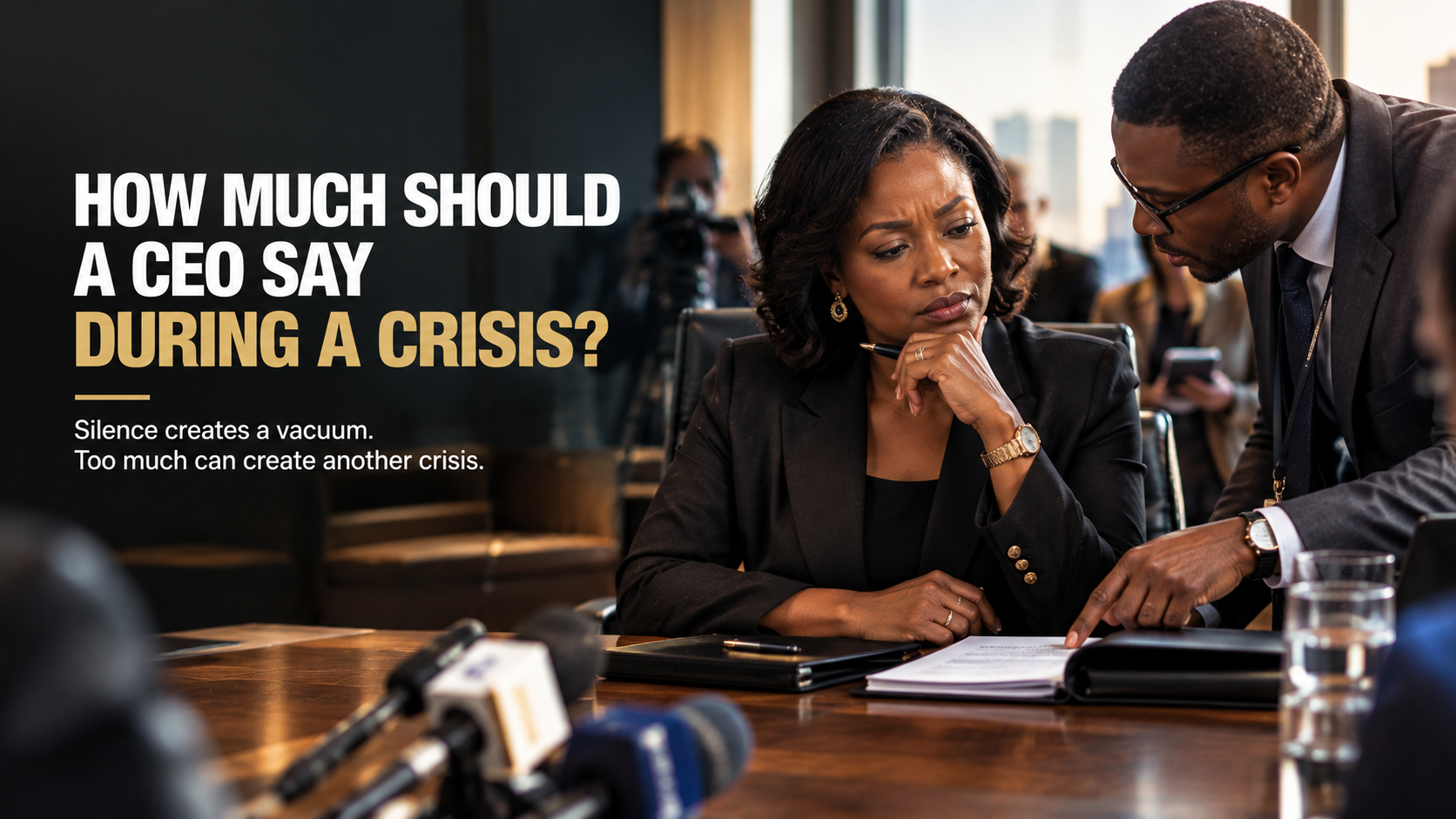









Hi Lion, feel free to roar at this one as this is a very strong CEO story because the obvious answer “fire the difficult star” is actually too simplistic. The real leadership question is: When someone’s contribution is exceptional but their behaviour is becoming expensive, what exactly is the CEO supposed to protect?
The research is useful here. High performers can create enormous value, but research also documents the organisational spillovers of toxic behaviour, including harm to colleagues and performance. HBR’s 2024 discussion of the classic “top performer who mistreats colleagues” dilemma also puts the issue squarely on managerial accountability.
Every CEO loves a star employee.
The person who consistently delivers.
The person clients ask for by name.
The salesperson who keeps beating target.
The executive who can solve problems nobody else can.
The employee who walks into a difficult situation and somehow gets things moving.
Stars are valuable.
And because they are valuable, organisations often give them something other employees may not receive:
More freedom.
More money.
More access.
More patience.
More exceptions.
Sometimes, more power.
That is where the trouble can begin.
Because what happens when the same employee who is producing extraordinary results becomes increasingly difficult to manage?
Perhaps they are dismissive of colleagues.
Perhaps they bully junior employees.
Perhaps they refuse to follow processes.
Perhaps they constantly challenge management.
Perhaps they hoard information.
Perhaps they take credit for other people’s work.
Perhaps they know exactly how valuable they are — and have started behaving as though the organisation needs them more than they need the organisation.
Now the CEO faces an uncomfortable question:
Do you protect the star because of the results, or protect the organisation from the behaviour?
The answer is rarely as simple as either.
The star employee problem is not really about personality
“Difficult” is an extremely convenient word.
It can mean almost anything.
A brilliant employee who challenges weak decisions may be called difficult.
So may an arrogant employee who humiliates colleagues.
A highly independent employee may be called difficult because they dislike unnecessary bureaucracy.
A bully may also be called difficult because nobody wants to describe the behaviour honestly.
So the first thing a CEO has to do is separate discomfort from damage.
Is this person simply unconventional?
Are they demanding?
Do they have a strong personality?
Do they disagree with management?
Or are they creating measurable harm?
That distinction matters.
Because companies can lose exceptional talent by confusing independence with misconduct.
But they can also protect destructive behaviour by disguising it as “that’s just how our star is.”
The numbers can become a blindfold
This is where CEOs get into trouble.
A star employee produces ₦X in revenue.
So management tolerates the shouting.
The star wins the account.
So management ignores the bullying.
The star knows the technology.
So nobody challenges the arrogance.
The star brings in clients.
So everyone quietly accepts that colleagues are afraid to work with them.
The star gets results.
And the results become an unofficial exemption from the rules.
Research on toxic workers has highlighted precisely this tension: harmful behaviour can coexist with high individual productivity, making organisations prone to overvalue output while overlooking the wider cost. In a large dataset covering more than 50,000 workers, researchers found evidence of negative spillovers from toxic behaviour on peers and argued that avoiding or removing toxic workers could produce larger performance benefits than simply adding a superstar.
The lesson is not that every difficult high performer is toxic.
It is much more uncomfortable:
Individual performance is not the same thing as organisational value.
What does the star actually cost the company?
This is the question the CEO should ask.
Not:
“How much money does this person make for us?”
But:
“What is this person costing us while making us money?”
Perhaps three good employees have stopped speaking up.
Perhaps a junior employee resigned.
Perhaps colleagues spend hours managing the star’s moods.
Perhaps information is being withheld.
Perhaps managers avoid confronting problems because they know the star will threaten to leave.
Perhaps other employees have learned that performance excuses bad behaviour.
Perhaps clients are beginning to notice.
Perhaps the organisation is becoming dependent on one person.
Now the calculation changes.
The star is no longer simply a revenue generator.
The star is part of an organisational system.
And systems have consequences.
The most dangerous sentence in the room may be:
“But we can’t afford to lose her.”
Maybe.
But the CEO should ask a second question:
“What are we teaching everybody else by keeping her?”
Because employees watch what leaders tolerate.
If the highest performer gets away with behaviour that would trigger disciplinary action for everyone else, the organisation has communicated something very clearly:
Results matter more than behaviour.
That message can travel much further than the star employee’s performance.
It can influence how managers treat people.
How employees treat one another.
How junior staff interpret leadership.
And what future high performers believe they are entitled to do.
HBR has described this as the problem of the “toxic rock star”: high performance can become a reason organisations continue rewarding behaviour that damages the wider workplace.
But CEOs should also be careful not to punish excellence
There is another side.
A company can become so obsessed with “culture” that it becomes uncomfortable with strong personalities, difficult questions and ambitious employees.
That is dangerous too.
The employee who says:
“This strategy is wrong”
may be exactly the person the CEO needs.
The employee who asks:
“Why are we wasting ₦50 million on this?”
may be annoying.
The employee who refuses to accept a weak process may be challenging.
The employee who pushes the CEO may be uncomfortable.
None of that automatically makes somebody toxic.
In fact, organisations need people who disagree.
The question is not whether the star is easy to manage.
The question is whether the star can be held accountable.
There is a difference.
A CEO should investigate the behaviour, not the reputation
This is where leadership gets more disciplined.
Don’t act on rumours.
Don’t act because the employee is unpopular.
Don’t act because somebody senior dislikes their personality.
Don’t act because the HR team says, “Everyone is complaining.”
Find out what is actually happening.
Who was affected?
What happened?
How often?
What was said or done?
What policy or expectation was violated?
What was the impact?
Has the employee been told?
Did they have an opportunity to respond?
Is the problem improving?
Is the behaviour connected to workload, incentives, role ambiguity or a management failure?
That last question matters.
Sometimes organisations create the behaviour they later complain about.
If you reward a salesperson exclusively for revenue and then become shocked when they disregard collaboration, the incentive system deserves some scrutiny too.
HBR’s analysis of top-performer dilemmas similarly points to managers’ responsibility for understanding the incentives that shape employee behaviour.
Then comes the uncomfortable conversation
A CEO should not outsource every difficult conversation to HR.
HR may need to be involved.
Legal may need to be involved in serious cases.
But leadership accountability cannot be delegated completely.
The star needs to hear something very clear:
“Your results are valuable. Your behaviour is also part of your performance.”
Not:
“You are a problem.”
Not:
“Everyone hates you.”
Not:
“Change your personality.”
Those statements invite defensiveness.
Instead:
“Here is what you are doing. Here is who it affects. Here is what the organisation expects. Here is what needs to change. And here is how we will measure that change.”
That is management.
Don’t ask the star to become a different person
This is another mistake.
You cannot coach somebody into having a completely different personality.
You can, however, hold them accountable for behaviour.
You can say:
You can be direct.
You cannot insult people.
You can disagree.
You cannot sabotage decisions after they are made.
You can negotiate aggressively.
You cannot threaten colleagues.
You can expect high standards.
You cannot humiliate people who are still learning.
You can be independent.
You still have to follow critical controls.
That is a much more useful conversation than:
“Please be nicer.”
And give the employee a chance to fix it
Some difficult stars know exactly what they are doing.
Others genuinely don’t.
A high performer may have received years of positive reinforcement for being forceful.
Nobody challenged them because they kept delivering.
They may have mistaken tolerance for approval.
They may not understand how much damage their behaviour is causing.
That is why the first serious conversation should not always be a termination conversation.
Sometimes it should be an accountability conversation.
Make the standard clear.
Give the person support.
Set a time frame.
Observe.
Document.
Then act according to what happens next.
But the CEO must mean what they say
This is where many organisations fail.
They have the conversation.
The employee behaves better for three weeks.
Then the old behaviour returns.
Management looks away because the next quarter’s target is coming.
Everyone learns the lesson.
The rules are negotiable if you are valuable enough.
That is how culture deteriorates.
If behaviour matters, it must matter consistently.
Not just when the person is performing badly.
Not just when the victim is powerful enough to complain.
Not just when the issue becomes public.
What if the star threatens to resign?
This is where leadership gets tested.
The employee says:
“If this is how you’re going to treat me, I’ll leave.”
The CEO panics.
“Please don’t go.”
Sometimes that is the right response.
Sometimes it isn’t.
The CEO needs to know whether the organisation is dependent on a person or whether it has built a system.
Can the clients be transferred?
Can the knowledge be documented?
Can someone else lead the team?
Can the sales relationships be distributed?
Can the company recruit?
Can the work be redesigned?
Can the organisation survive?
This is why succession planning is not only for CEOs.
If losing one employee could seriously damage the company, the company has a concentration risk.
And concentration risk is a leadership problem.
Don’t confuse indispensability with health
There is something seductive about becoming indispensable.
The star knows:
“They need me.”
And sometimes they are right.
But an organisation that cannot function without one employee has not necessarily created a great employee.
It may have created a single point of failure.
The smartest CEO therefore asks:
“How do we make this person’s brilliance transferable?”
Can they mentor?
Can they document?
Can they build a team?
Can they develop successors?
Can they share relationships?
Can the organisation learn what they know?
This is where the star can become even more valuable.
Not simply by doing extraordinary work.
But by making extraordinary capability less dependent on one person.
The best outcome may be transformation
Imagine the star who once hoarded information beginning to mentor younger employees.
The salesperson who used to dominate meetings learning to develop the team.
The technical expert who resisted documentation finally building systems.
The brilliant executive who constantly challenged management learning how to challenge constructively.
That is a different kind of star.
Not merely high output.
High output plus organisational leverage.
And that is arguably a more mature form of leadership.
But sometimes the answer really is separation
There are situations where coaching, feedback and support are not enough.
If the behaviour involves serious misconduct, harassment, discrimination, threats, fraud, retaliation, safety violations or repeated breaches of policy, the question is no longer simply how to “manage a difficult employee.”
Formal disciplinary processes may be necessary.
And if the employee repeatedly refuses reasonable behavioural expectations after clear intervention, the organisation may ultimately have to decide that the cost is too high.
The important point is that the decision should not be:
“She is difficult, therefore remove her.”
Nor should it be:
“She makes too much money, therefore tolerate anything.”
It should be based on evidence, policy, impact, proportionality and the organisation’s obligations.
The CEO’s real job is bigger than protecting the star
A CEO is not employed to maximise the output of one brilliant person.
The CEO is responsible for the organisation.
That includes the people who produce the results.
The customers who pay for them.
The systems that support them.
The culture that shapes behaviour.
The reputation attached to the company.
And the future leaders being developed underneath them.
That means the CEO has to hold two truths at once:
“This person is exceptionally valuable.”
And:
“This person’s behaviour cannot be exempt from accountability because they are exceptionally valuable.”
Those statements can coexist.
In fact, mature leadership probably requires them to.
The final test
Here is perhaps the simplest question a CEO can ask:
If every employee behaved like this star employee, would the company become stronger or weaker?
If the answer is stronger, perhaps the organisation needs to understand why the behaviour is being labelled difficult.
If the answer is weaker, the CEO has a different problem.
The star may be producing excellent individual results while demonstrating a model the organisation cannot afford to reproduce.
That is when leadership has to stop asking:
“How do we keep our star?”
And start asking:
“What kind of organisation are we building around the star?”
Because the greatest risk is not necessarily losing a brilliant employee.
It may be keeping one in a way that teaches everybody else that brilliance comes with permission to behave badly.
THE LION TAKE
A star employee should not get a free pass because they make money for the company.
But neither should a CEO confuse a strong personality with a toxic one.
Measure the behaviour.
Understand the impact.
Fix the incentives.
Have the difficult conversation.
Give the person a chance to change.
And then hold the line.
Because the CEO is not only managing the star.
The CEO is teaching the entire organisation what success is allowed to look like.
If your highest-performing employee is also damaging team morale, how much behavioural latitude should exceptional performance buy?