







To capture high-value global specialty beverage markets and diversify away from traditional bulk commodities, Kenyan conglomerate Kipchimchim Group has officially unveiled the Sangalo Green Tea Factory in Nandi County, Kenya.
Described by the group as Africa’s premier facility dedicated exclusively to processing green orthodox tea, the plant operates under Kipchimchim’s Tea Division with a daily processing capacity exceeding 70,000kg of green leaf.
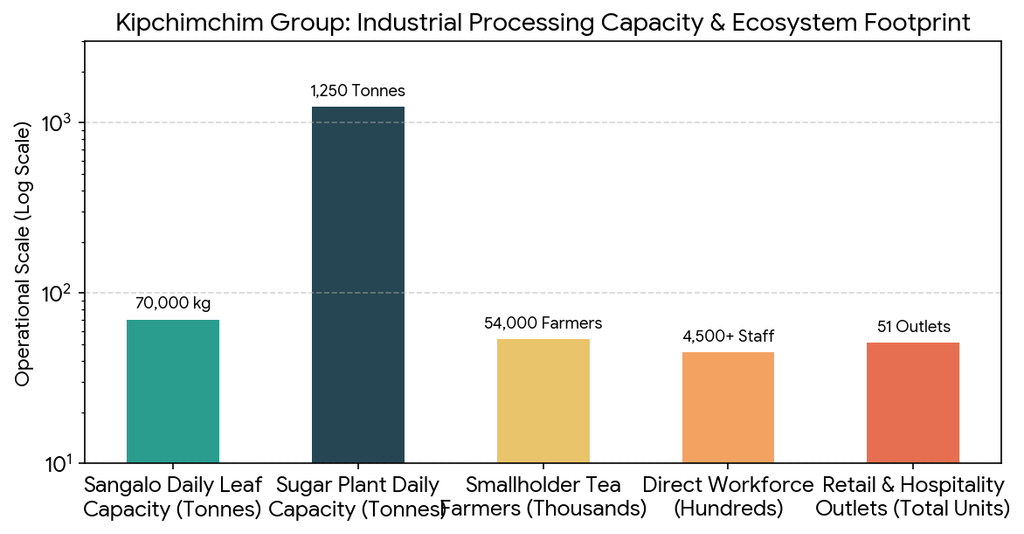
The chart above highlights how the new Sangalo facility integrates into Kipchimchim Group’s multi-sector operational footprint across Kenya.
Boardroom Breakdown: Kipchimchim Group Industrial & Ecosystem Matrix
Founded in 1999 and headquartered in Kericho, Kenya, Kipchimchim Group is a privately held conglomerate spanning tea, sugar, retail, hospitality, mining, construction, and logistics. The new Nandi County plant strengthens an already vast East African value chain:
Corporate Asset & Division Operational Capacity & Scale Geographic Footprint Strategic & Commercial Impact
Sangalo Green Tea Factory 70,000+ kg of green leaf processed daily Nandi County, Kenya Africa’s premier exclusive green orthodox tea plant; unlocks high-margin international specialty buyers.
Broader Tea Division 7 tea factories supporting ~54,000 smallholder farmers Nandi and Bomet counties Expands beyond black CTC and black orthodox teas; Stegro Tea Factory (2023) operates as an Export Processing Zone (EPZ).
Sugar Manufacturing 1,250 tonnes daily processing capacity Western Kenya agricultural belt Diversifies agro-industrial revenue streams alongside core tea operations.
Retail & Hospitality Network 13 supermarkets, 10 bakeries, and 28 restaurants Multi-regional Kenyan footprint Captures downstream consumer spending while employing more than 4,500 people group-wide.
Shifting from Bulk Commodities to Specialty Value Addition
The Sangalo investment marks a deliberate strategic pivot beyond Kipchimchim Group’s established production of black Crush, Tear, Curl (CTC) and black orthodox teas. By targeting international markets where demand for specialty green tea is high, the group aims to position African tea as a global leader in quality, innovation, and local value addition rather than merely reacting to shifting consumer trends.
Key socio-economic and supply chain benefits of the facility include:
- Higher Farmer Returns: Smallholder outgrowers supplying green leaf gain direct market access to premium specialty tea buyers, allowing local farmers to capture higher value-chain payouts.
- Technical Job Creation: Generates direct technical employment at the factory level alongside indirect jobs across transport, agronomy, and wider agricultural services.
- Community Infrastructure: Supports long-term socio-economic development and physical infrastructure upgrades across surrounding Nandi communities.
Strategic Expansion and M&A Pipeline
Kipchimchim Group continues to scale its export infrastructure and explore distressed asset acquisitions across Kenya’s tea belt. Its Stegro Tea Factory, commissioned in 2023, already operates as an Export Processing Zone (EPZ), enabling direct, streamlined sales to international buyers.
Furthermore, in April, the group was reported to be in active discussions to acquire additional tea assets linked to Kenyan businessman David Langat, whose estates have faced forced-auction notices over outstanding bank debts—a move that would further consolidate Kipchimchim’s upstream leaf supply and processing dominance in East Africa.