







To capture higher margins and lead convenience-led foodservice supply across the Middle East, regional fresh produce powerhouse NRTC Group (Nassar Al Rifai Trading Company) has invested AED 50 million (US$13.6 million) in a new 60,000-square-foot Taaza processing facility in Jebel Ali.
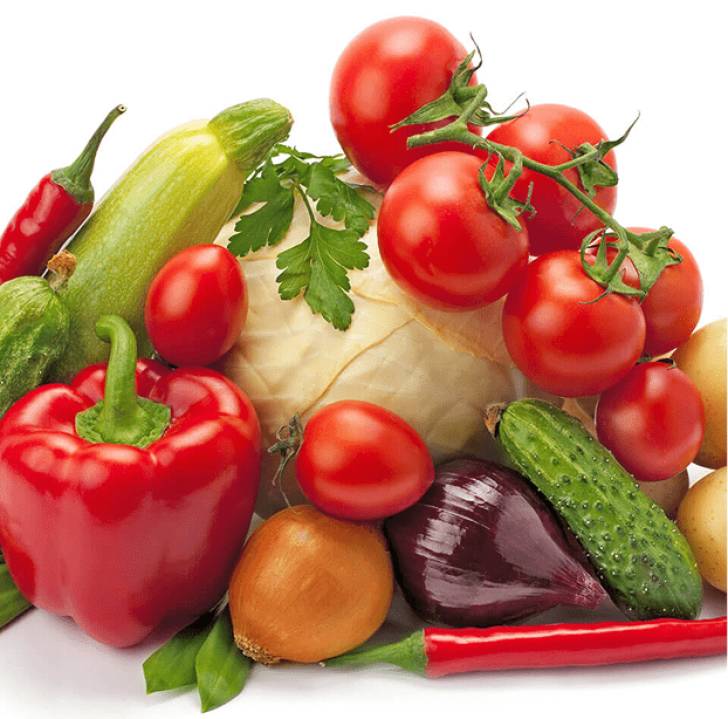
The centralized plant is engineered to expand value-added fresh-food production and deliver customized, ready-to-use solutions directly to quick-service restaurants (QSRs), hotels, retailers, and institutional foodservice operators.
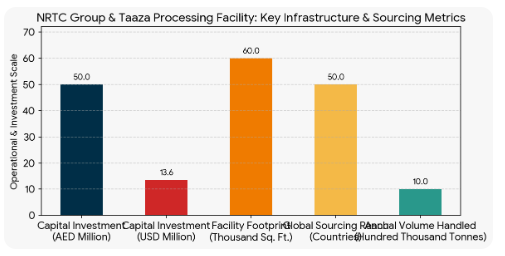
The operational metrics chart above highlights the scale of NRTC’s Jebel Ali capital deployment alongside the global sourcing volume underpinning the Taaza facility.
Boardroom Breakdown: Taaza Processing Facility & Supply Chain Matrix
By unifying multi-stage produce preparation under a single roof, the Jebel Ali facility solves critical operational bottlenecks for commercial hospitality and restaurant buyers:
| Operational Pillar | Facility & Corporate Metrics | Target B2B Segments | Commercial & Margin Advantage |
|---|---|---|---|
| Capital & Footprint | AED 50M (US$13.6M) across 60,000 sq. ft. in Jebel Ali | QSRs, hotels, retailers, and foodservice operators | Strategic port proximity drastically reduces transit times between global import and local processing. |
| Integrated Processing | Washing, cutting, juice processing, and flexible packaging under one roof | Multi-outlet restaurant chains and commercial kitchens | Eliminates in-house kitchen labor costs, reduces raw food waste, and standardizes portion consistency. |
| Category Migration | Sharper focus on ready-to-use and ready-to-eat lines | Fast-growing QSR chains (3-year expansion target) | Shifts revenue away from thin, volatile commodity trading toward high-value, predictable contracts. |
| Global Sourcing Scale | ~1 million tonnes annually sourced from 50+ countries | Operations across the UAE, Saudi Arabia, and Egypt | Insulates buyers against single-origin weather disruptions or phytosanitary restrictions. |
Solving Foodservice Bottlenecks and Moving Up the Value Chain
For hospitality groups and restaurant chains, preparing fresh produce in-house creates heavy labor overheads, high spoilage waste, and product inconsistency across multiple outlets. A centralized facility that washes, cuts, juices, and packages to exact buyer specifications allows operators to outsource prep work, minimize required kitchen square footage, and reallocate staff to higher-value service roles.
Central to NRTC’s corporate strategy is pushing further up the fresh-food value chain, with a sharp focus on ready-to-use and ready-to-eat categories and a clear three-year roadmap to significantly expand Taaza’s contribution to its QSR business. Because margins in raw fresh produce trading are thin and volatile, migrating toward prepared, portioned products commands higher valuations, secures predictable recurring contracts, and locks in sticky B2B buyer relationships that are far harder to displace than standard commodity supply arrangements.
Strengthening UAE Food Security Through Global Scale
Founded in 1973, NRTC Group (Nassar Al Rifai Trading Company) has grown into one of the Middle East’s leading importers, distributors, and processors of fresh fruit and vegetables, maintaining active operational footprints across the UAE, Saudi Arabia, and Egypt.
Handling approximately one million tonnes of produce annually sourced from more than 50 countries provides the Jebel Ali facility with an unmatched competitive moat:
- Supply Continuity: Global origin diversity ensures uninterrupted processing even when individual agricultural regions experience extreme weather disruptions or phytosanitary restrictions.
- Application-Specific Selection: Procurement teams can source exact produce varieties tailored to specific juicing or cutting applications rather than accepting whatever seasonal stock is available.
- National Food Security Alignment: Located directly in Jebel Ali, the port-adjacent facility cuts import-to-processing transit windows while advancing the UAE’s broader local processing and food security ambitions alongside the rapid expansion of regional hotels, restaurants, and QSRs.