




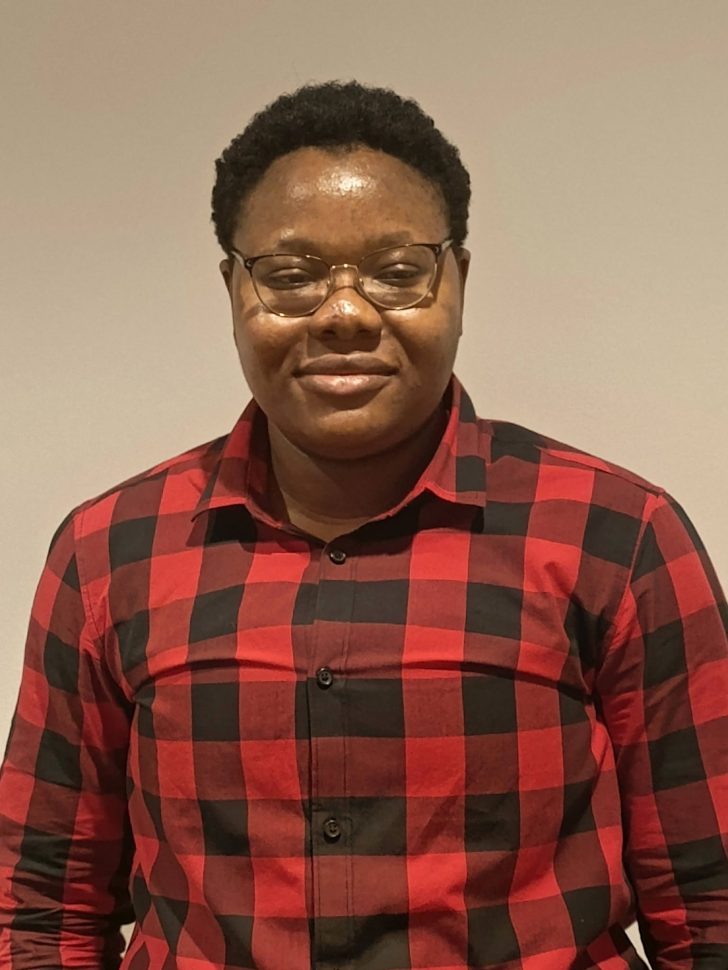
Mary-Brenda Akoda, winner of the 2026 Nigeria Prize for Science and Innovation, says she plans to deploy GenScan AI, her artificial intelligence software that speeds up MRI scans, in hospitals and imaging centres in the second half of next year.
Akoda, 28, is the first woman and the first millennial to win the $100,000 prize as an individual. The award drew a record 237 entries, and no winner was named in 2025. She rejects the millennial label. “I’m not a millennial, I’m a Gen Z,” she said, describing herself as a “zillennial” because she sits on the border between the two generations. She stressed the point because people “seem to look down on Gen Z.”
Her deployment timeline depends on fundraising and work with clinical partners. Because GenScan AI is classified as a software as a medical device, it must also obtain regulatory approval, a process she described as fragmented but one her team is working through. “That’s the first step, basically, towards clinical adoption,” she said, referring to early commitments from government and health officials.
Akoda said a diagnostic centre attended the public prize presentation in Abuja and expressed interest in the technology. She said the Minister of Education pledged to bring the Minister of Health on board, and the Chairman of the Committee of Chief Medical Directors is issuing a letter of intent for a national pilot. Hospitals and imaging centres will be the product’s primary customers.
The company is headquartered in the United Kingdom, but Akoda said she hopes Nigeria will be among the first countries to adopt the technology. “Nigeria is home,” she said. A US provisional patent has been filed, and lawyers are deciding which aspects of the technology to patent and which to protect through copyright, trademarks and trade secrets. She said further innovations are planned, with a focus on higher image quality and faster scans.
“Our grand vision is that no one suffers or dies because of a delayed diagnosis,” she said.
Asked whether the work reflects poorly on science in Nigeria, given that much of it was done abroad, Akoda pointed to her earlier research, which she described as Nigeria’s first AI study on diabetic retinopathy detection. That study was carried out in Nigeria with ophthalmology professors at the University of Calabar Teaching Hospital. “It is a global problem that we are solving,” she said. “There’s no limit to AI research or AI innovation.”
Akoda said the win took time to sink in. She joined the announcement press conference about 15 minutes late because an earlier meeting ran long, and she had sent the link to her mother to watch. She messaged to ask whether they had named the winner. “She responded congratulations and I was like, I won,” Akoda recalled. Even then, she sat through the hour-lon1g event as speakers described MRI scan times falling from 20 minutes to two, and only fully registered the news when the spokesperson mentioned her name in the closing remarks.
Her mother also led her to the competition. “It was actually my mum who sent me the advert for it this year,” she said. The prize went unawarded last year, which she called remarkable. The theme, built around AI, ICT and digital technology, “seemed uniquely suited towards me,” she said, because she is both an AI research scientist and a software engineer.
Akoda credited her family with sustaining her through the work. She has described several projects as the hardest of her life, including her time at the Microsoft Mixed Reality and AI research lab in Cambridge and her postgraduate AI research. Her mother and older brother teased her about it. “They were like, you say that all the time,” she said. “And I was like, no, this is different.” During moments of doubt, she said, “they are your family and your friends who basically believe in you more than you [do].”
Her brother is a lexicographer who recently wrote the first descriptive Yoruba thesaurus, following earlier dictionaries and other books now held in libraries, including those at Harvard and Oxford. Akoda served as chief technology officer at his startup, which builds digital tools to preserve and promote African languages and history, before moving on to her own research and GenScan AI.
Akoda, who mentors upcoming software engineers and research scientists, said the path in research and innovation is neither straight nor smooth. “There are lows, and there are highs,” she said. She advised young Nigerians, particularly women, to look for opportunities and act on them. “Search for opportunities and shoot your shot when you find those opportunities,” she said, adding that anyone who passes up an opportunity has no chance of getting it. On imposter syndrome, she said young people often rule themselves out before anyone else does. “The solution to imposter syndrome is to do it anyway,” she said.
Asked whether her state government had acknowledged the win, Akoda said not that she knew of, though the state newspaper had reported the prize, which she took as the closest thing to recognition.